What Loan Options Are There in South Africa? A Clear Guide to Borrowing Smarter
October 07, 2021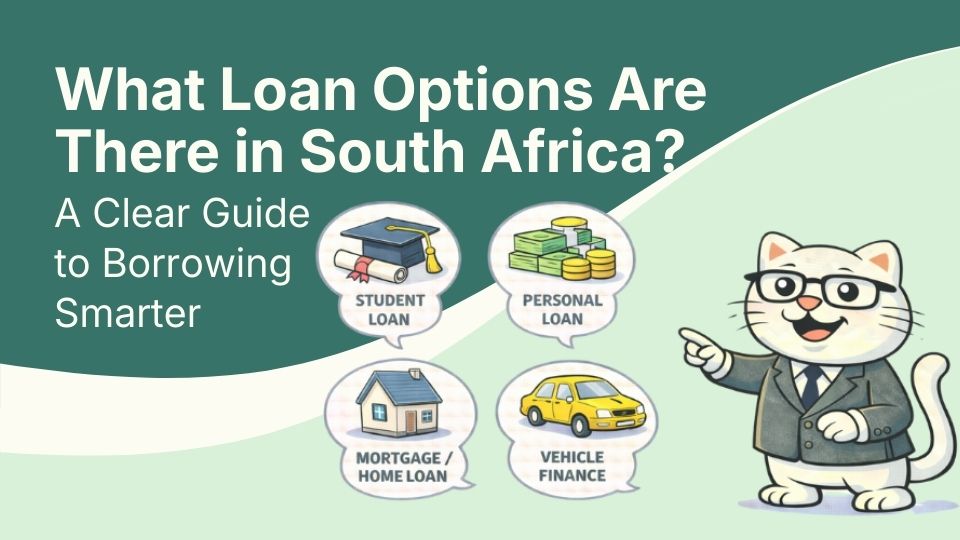
What Loan Options Are There in South Africa?
Updated January 2026
If you’ve ever asked yourself “what loan options are there in South Africa?”, you’re not alone.
Borrowing money is a reality for many South Africans — not because people want to live on debt, but because life can be unpredictable. Sometimes a loan helps you cover a once-off cost, manage cash flow, or handle an emergency without falling behind on essentials.
But there’s a big difference between borrowing wisely and borrowing blindly.
Loans can be helpful tools when used responsibly — but they can also become expensive and stressful when you don’t fully understand the terms, the total cost, or what you can realistically afford each month.
That’s why this guide is designed to make everything clearer. You’ll learn what loan options exist, how they work, what to watch out for, and how to decide which loan type might suit your situation.
At FatCat Loans South Africa, we make it easier to compare personal loan options and apply online through reputable lenders — without the confusion or pressure.
👉 Start by exploring Personal Loans to see what options may be available to you.
Quick Summary: What Loan Options Are There in South Africa?
In South Africa, the most common borrowing options include:
-
Personal loans (unsecured loans)
-
Credit cards and store accounts
-
Overdraft facilities
-
Vehicle finance (secured credit)
-
Business funding options (depending on lender criteria)
Each option comes with different repayment structures, requirements, and total costs — and the right choice depends on your budget, your credit profile, and what you need the money for.
Important transparency note: FatCat Loans does not offer mortgages (home loans) or student loans. This article focuses on credit options that are most relevant to the everyday needs of our customers.
Understanding the Basics: Secured vs Unsecured Loans
Before you compare lenders or apply anywhere, it helps to understand the two main categories most loans fall into.
Secured Loans (Backed by an Asset)
A secured loan is linked to collateral — an asset that supports the agreement. The most common example is vehicle finance.
If repayments are missed, the lender may have legal options to recover their money, which can include repossession of the asset under the credit agreement.
Secured loans typically:
-
allow larger loan amounts
-
sometimes offer more competitive interest rates
-
involve stricter requirements
Unsecured Loans (No Collateral Needed)
An unsecured loan is not tied to an asset. Instead, approval is based on affordability checks and the borrower’s financial profile.
Most personal loans fall under this category.
Unsecured loans typically:
-
require proof of income and expenses
-
involve fixed repayment structures
-
can be quicker to apply for online
Understanding this difference helps you choose a loan option that matches your risk level, timeline, and financial comfort.
Personal Loans: One of the Most Flexible Loan Options in South Africa
When people ask “what loan options are there?” they’re often actually searching for something flexible and practical — and that’s exactly where personal loans come in.
A personal loan is a fixed amount of money you borrow and repay through monthly instalments over an agreed term. In most cases, personal loans are unsecured, meaning you don’t need to use your car or any other asset as security.
What Can You Use a Personal Loan For?
Personal loans are commonly used for:
-
urgent household expenses
-
unexpected costs
-
home improvements (repairs, not renovations you can’t afford)
-
medical needs
-
moving expenses
-
covering a temporary shortfall between income and expenses
Because personal loans aren’t restricted to a specific purchase, they’re often a more convenient option than product-based finance agreements.
To explore options, you can visit our Personal Loans page and see what’s available through FatCat Loans.
Why Personal Loans Are Popular (and What to Watch Out For)
Personal loans are popular because they often provide structure and clarity.
✅ Benefits of Personal Loans
-
Fixed monthly repayments (easier budgeting)
-
A clear repayment end date
-
Funds can be used for multiple purposes
-
Often available through online application processes
⚠️ Things to Consider Before You Apply
Even though personal loans are useful, they can still become risky if taken too lightly. Before signing anything, you should understand:
-
the interest rate you’re offered
-
the total repayment amount
-
monthly fees or once-off charges
-
what happens if you miss a payment
-
whether the loan fits your budget comfortably
If you ever feel rushed to sign, that’s a red flag. Good lenders and responsible platforms allow you time to review the details.
Credit Cards and Store Accounts: Loan Options People Forget About
Not every loan looks like a traditional loan.
In South Africa, millions of people access credit through credit cards and store accounts, which are also borrowing options — but they work differently from personal loans.
Credit Cards
Credit cards usually offer revolving credit. That means you can borrow up to a limit, repay, and then borrow again.
They can be helpful for short-term flexibility, but costs can grow quickly if you only pay the minimum each month.
Good to know:
-
Interest is often charged if you don’t pay the full balance
-
Fees may apply depending on your account type
-
Carrying a balance for months can become expensive
Store Accounts
Store accounts can be convenient for purchases, but the repayment terms and interest charges should always be checked carefully.
Store accounts can lead to long-term debt when they are used for non-essential spending or when repayment isn’t planned properly.
A good rule is: if you’re relying on store accounts to survive month-to-month, it might be time to reassess your budget before adding more credit.
Overdrafts: Helpful for Cash Flow, Not a Long-Term Solution
Another common borrowing option is an overdraft — an agreed borrowing limit linked to your bank account.
Overdrafts can help when money is tight during the month, but they can create problems if you begin depending on them every month.
Overdraft interest and fees may add up, and because it’s “always there”, it can feel normal to spend money you don’t actually have.
If you’ve been using an overdraft for a long time, it may be worth looking at whether a structured repayment plan (like a personal loan) could be a more predictable option — depending on affordability.
Vehicle Finance: A Bigger Loan Commitment With Extra Costs
Vehicle finance is a major loan option in South Africa, and it’s commonly used to buy a car without paying the full price upfront.
Because vehicle finance is secured, it’s tied to the vehicle itself. These agreements can run for years, and approval often depends on both affordability and credit risk.
Before You Choose Vehicle Finance, Consider the Full Monthly Cost
A common mistake people make is focusing only on the vehicle repayment.
But your real monthly vehicle cost includes:
-
car repayment
-
insurance
-
fuel and transport
-
maintenance and repairs
-
licensing and admin costs
-
unexpected expenses (tyres, brakes, services)
A vehicle can change your life positively — but only if the repayment fits comfortably within your budget.
How to Choose the Right Loan Option (Without Falling Into Debt Stress)
Choosing a loan isn’t only about getting approved. It’s about staying stable after you receive the money.
Here are the most important steps to take before you borrow.
1) Be Clear About Why You Need the Loan
Ask yourself:
-
Is this essential or optional?
-
Can I reduce the amount I need?
-
Is there a cheaper alternative?
-
Will this loan improve my situation or just delay a bigger problem?
Borrowing for essentials is different from borrowing for convenience. The more honest you are here, the safer your decision will be.
2) Borrow the Smallest Amount That Solves the Problem
It can be tempting to borrow extra “just in case” — but extra borrowing means extra interest and higher repayments.
A safer approach is to borrow only what you need, and keep repayments manageable.
3) Check Your Budget Properly (Not Just Roughly)
A healthy loan repayment should not force you to sacrifice essentials like food, rent, transport, or utilities.
If your repayment leaves you with no breathing room, your loan becomes a risk.
A simple practical test is:
✅ Can I still afford essentials if my expenses increase slightly next month?
If the answer is no, reduce the amount or avoid borrowing.
4) Compare Total Cost (Not Just Monthly Payment)
People often compare monthly repayments, but the total cost matters more.
Two loans can have the same monthly payment but very different total repayment amounts depending on:
-
interest rate
-
fees
-
term length
This is why comparison matters, and why we encourage customers to look beyond marketing headlines.
5) Don’t Ignore Your Credit Profile
Your credit score affects:
-
approval likelihood
-
interest rates offered
-
repayment terms available
If you’re rebuilding your credit, consider choosing an amount you can repay reliably. Consistent repayment history helps your profile over time.
Why Using a Trusted Platform Matters
Loans directly affect your financial health — which makes this a YMYL topic (Your Money or Your Life).
That’s why it’s essential to borrow through reputable providers and stay alert for scams or misleading advertising.
What Safe Borrowing Looks Like
Responsible lending should include:
-
affordability checks
-
transparent repayment breakdowns
-
clear fees and terms
-
proper identity verification
-
legally compliant agreements
If a lender promises guaranteed approval with no checks, that’s usually not a good sign.
Protecting Your Personal Information Online
When applying online, always:
-
use secure websites (look for HTTPS)
-
avoid applying on public Wi-Fi
-
don’t share banking logins
-
don’t pay upfront “release fees”
-
be careful with OTPs and ID documents
Your ID, payslips, and bank statements are sensitive. Only share them through secure channels.
You can also review how your information is handled by reading our Privacy Policy.
How FatCat Loans Helps You Compare Loan Options More Easily
At FatCat Loans, our aim is to make borrowing simpler, clearer, and safer.
We don’t want customers to feel overwhelmed by complex terms or confusing choices. Instead, we help you explore personal loan options in a structured way so you can make a decision that fits your budget.
What FatCat Loans Can Help You With
FatCat Loans helps you:
✅ explore personal loan options
✅ compare potential terms
✅ apply online in a simple process
✅ connect with reputable lenders
Start here: Compare Personal Loans.
Transparency: What We Don’t Offer
To keep things clear and accurate:
-
FatCat Loans does not offer home loans (mortgages)
-
FatCat Loans does not offer student loans
This guide has been updated so customers get reliable information and know what to expect.
To learn more about who we are and how our platform works, visit About FatCat Loans.
Loan Application Checklist: What You Usually Need
To apply for most personal loan options in South Africa, you’ll generally need:
-
a valid South African ID
-
proof of income (payslips or bank statements)
-
proof of residence
-
an active bank account
-
your current monthly expenses
Different lenders have different requirements, and approval is never guaranteed — but being prepared improves your application experience and saves time.
If you want help, you can always reach out via our Contact Page.

FAQs: What Loan Options Are There in South Africa?
What loan options are there if I don’t want to use collateral?
A personal loan is usually the most common unsecured option — meaning you don’t need to provide an asset like a car.
What loan options are there if I need money urgently?
Many borrowers look for personal loan options that suit their timeline, but it’s important to focus on affordability and total repayment cost before choosing a lender.
What loan option is best for budgeting?
A personal loan can be easier to budget for because repayments are usually fixed monthly instalments over a set term.
What loan options are there if my credit score isn’t perfect?
Some lenders may still consider your application depending on affordability and their criteria. Comparing options helps you find a solution that’s more realistic for your situation.
What loan options are there through FatCat Loans?
FatCat Loans helps customers explore and compare personal loan options online through reputable lenders, with a simpler process and clearer information.
Final Thoughts: The Right Loan Option Helps You Move Forward — Not Backwards
So, what loan options are there in South Africa?
There are several, from personal loans and revolving credit (like credit cards) to secured finance (like vehicle finance). But the best option is always the one that fits your budget, your repayment ability, and your financial goals.
If you’re thinking about borrowing, remember:
✅ compare before you commit
✅ borrow only what you need
✅ understand the full repayment cost
✅ prioritise trusted lenders and clear terms
When you’re ready, FatCat Loans can help you take the next step with more confidence.
👉 Explore your options on our Personal Loans page.

The FatCat Loans Editorial Team delivers clear, accurate, and unbiased guidance on loans, credit, and personal finance in South Africa, in compliance with the National Credit Act. Our writers follow strict editorial standards to ensure every article is trustworthy, well-researched, and easy to understand, helping readers make confident financial decisions.