
Debt Consolidation Loans in South Africa
If you are managing multiple debts, a debt consolidation loan may help you combine them into one repayment. This can make budgeting easier and reduce the stress of keeping track of different due dates. FatCat Loans helps you review lender options and apply online through a secure process. Approval is not guaranteed, and loan terms, repayment amounts, and costs depend on affordability checks and the credit provider’s criteria.
Debt Consolidation Loan Key Facts
- Purpose: Combine multiple debts into a single repayment.
- Affordability checks: Credit providers assess income, expenses, and existing debt before approval.
- Repayment terms: Repayment periods vary by credit provider, loan amount, and affordability.
- Costs: May include interest, initiation fees, and monthly service fees.
- Before accepting: Always review the repayment amount, term, fees, and total cost of credit.
- No upfront fees: Be cautious of anyone asking for payment before releasing a loan or guaranteeing approval in exchange for an upfront fee.
Why Choose FatCat Loans for Debt Consolidation
We help South Africans compare potential debt consolidation loan options from participating NCR-registered credit providers:
- One Monthly Payment: Combine multiple debts into one repayment plan.
- Clear Loan Terms: Review interest rates, fees, and repayment periods before choosing a lender.
- Flexible Repayment Options: Repayment terms vary by credit provider and depend on the loan amount, affordability, and credit agreement.
- Online Application: Apply securely online with supporting documents.
- Clear Cost Comparison: Review the monthly repayment, interest rate, fees, repayment term, and total amount repayable before deciding whether consolidation improves your position.
What Is a Debt Consolidation Loan?
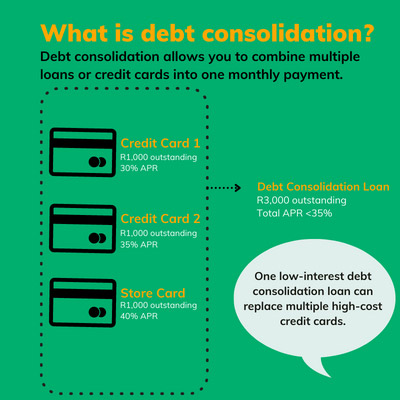
A debt consolidation loan is used to combine existing debts into one new loan. This may include credit cards, store accounts, overdrafts, and personal loans. Instead of paying multiple lenders each month, you repay one loan with a fixed repayment plan.
Debt consolidation loans are often used to make multiple repayments easier to manage and, in some cases, may reduce the monthly instalment depending on the new interest rate and repayment term. However, a lower monthly repayment does not necessarily mean a lower overall cost, and a longer repayment period may increase the total amount repaid over time. If you are comparing different repayment structures, you can also explore our instalment loan options.
instalment loan options.Does Debt Consolidation Actually Save You Money?
Debt consolidation can simplify repayments, but it does not automatically reduce what you owe or make borrowing cheaper.
Whether consolidation saves money depends on factors such as:
- The interest rate on the new loan compared with your existing debts
- Any initiation, service, or other permitted fees
- The repayment term of the new loan
- The total amount you will repay over the full term
A lower monthly instalment can make budgeting easier, but if the new repayment term is much longer, you may pay more overall. Compare the total amount repayable before accepting any consolidation offer.
What Debts Can Usually Be Consolidated?
Debt consolidation is generally used for unsecured debts. Depending on the credit provider, this may include:
- Credit card balances
- Store accounts
- Personal loans
- Overdrafts
- Other qualifying unsecured credit agreements
Not every debt can necessarily be included, and the provider will decide which balances are eligible. Secured debts, such as a home loan or vehicle finance agreement, may be treated differently.
What Income Types May Be Accepted?
Credit providers usually need to confirm that you have regular income and that the repayment is affordable. Depending on the lender, acceptable income may include:
- Full-time or part-time employment income
- Self-employed income supported by recent bank statements
- Pension income
- Regular contract or business income
- Other recurring income visible in your bank statements
Not every lender accepts every income type. Approval depends on affordability and the lender’s criteria.
What Do Credit Providers Assess?
Before granting a debt consolidation loan, a credit provider must assess whether the new repayment is affordable. Depending on the provider and application, this may include reviewing:
- Your regular and verifiable income
- Your normal monthly living expenses
- Your existing debts and financial commitments
- Your repayment history and credit information
- Your recent bank statements or proof of income
- The total amount of debt you want to consolidate
Approval is not guaranteed. The provider must still decide whether the new credit agreement is affordable based on your overall financial circumstances.
What Do Debt Consolidation Loans Cost?
The cost of a debt consolidation loan depends on the loan amount, repayment term, interest rate, and any applicable initiation or monthly service fees. While consolidation can simplify repayments, it does not automatically reduce the total cost of debt.
Before accepting any offer, the credit provider should give you a quotation showing the loan amount, interest, fees, repayment dates, instalment amount, and total amount repayable.
Illustrative example: The monthly repayment and total cost of a debt consolidation loan will depend on the amount borrowed, repayment term, interest rate, and permitted fees charged by the credit provider. Always rely on the provider's pre-agreement statement and quotation for the actual cost of your loan.
Before You Accept a Debt Consolidation Loan
Before accepting an offer, compare the new loan with the debts you are replacing. Check:
- New monthly repayment: Is it genuinely more manageable?
- Interest and fees: Is the new borrowing cost lower than the debts being consolidated?
- Repayment term: Will extending the term increase the total amount you repay?
- Total amount repayable: Compare the full cost, not only the monthly instalment.
- Debt behaviour: Avoid building new balances on accounts that have already been consolidated.
Consolidation is most useful when it improves your repayment position rather than simply replacing several debts with a new, more expensive loan.
Your Pre-Agreement Statement and Quotation
Before entering into a credit agreement, you should receive a pre-agreement statement and quotation showing important information about the proposed loan, including the amount of credit, interest rate, fees, instalments, repayment arrangements, and total cost.
The quotation is valid for five business days, giving you time to review the proposed costs and terms before deciding whether to proceed.
Do not accept a loan agreement you do not understand. If anything in the quotation is unclear, ask the credit provider to explain it before proceeding.
When Debt Consolidation May Not Be Suitable
Debt consolidation may not be the right option if:
- Your total debt is still increasing each month
- You would struggle to afford the new repayment
- The new loan has a higher overall borrowing cost
- The repayment term is much longer and significantly increases the total amount repaid
- You are likely to continue using the accounts or credit facilities that were consolidated
If you are already unable to meet your existing debt repayments, a new consolidation loan may not solve the underlying problem.
Debt Consolidation vs Debt Counselling
Debt consolidation and debt counselling are not the same thing.
Debt consolidation usually involves taking out a new credit agreement to repay or combine existing debts into one new repayment.
Debt counselling, also known as debt review, is a formal debt-relief process under the National Credit Act for consumers who are over-indebted and struggling to meet their debt obligations. It is handled by an NCR-registered debt counsellor.
Consumers who are under debt counselling cannot obtain further credit while the debt counselling process is in force. This is another important difference between debt counselling and taking out a new consolidation loan.
If you are already unable to keep up with your existing repayments, consider getting information about debt counselling before taking on additional credit. You can find registered debt counsellors through the National Credit Regulator.

Frequently Asked Questions About Debt Consolidation Loans in South Africa
What debts can I consolidate in South Africa?
You can usually consolidate unsecured debts such as credit cards, store accounts, personal loans, and overdrafts. The exact debts you can include depend on the lender’s criteria and your affordability.
What types of debt consolidation loans are available?
Debt consolidation is commonly arranged through an unsecured loan, although the type of credit available depends on the provider and your circumstances. The credit provider will consider factors such as your income, existing debts, credit information, affordability, and the amount you want to consolidate before deciding whether to make an offer.
What are the benefits of debt consolidation?
Debt consolidation can make multiple debts easier to manage by replacing several repayment dates with one new repayment. Depending on the new loan's interest rate, fees, and repayment term, it may also improve monthly cash flow. However, consolidation does not automatically reduce the total cost of your debt.
Are there disadvantages to debt consolidation?
Yes, longer repayment terms can increase the total interest paid over time. Some loans include fees, and missing payments can negatively affect your credit score.
Does debt consolidation affect your credit score?
A credit provider may access your credit information when assessing a consolidation loan application. The type of enquiry and its effect can depend on the provider and credit bureau. Your repayment behaviour on the new agreement may also affect your credit profile over time.
How do I apply for a debt consolidation loan?
You can apply online by providing information about your income, existing debts, and financial circumstances, together with any documents requested by the credit provider. If a provider can make an offer, review the interest rate, fees, repayment term, monthly instalment, and total cost before deciding whether to proceed.
Ready to Compare Debt Consolidation Options?
If you want to simplify your repayments, you can submit one secure application through FatCat Loans and compare available options from NCR-registered credit providers. Approval is not guaranteed, and repayment terms depend on the credit provider’s assessment.
FatCatLoans.co.za is a South African loan-matching service, not a lender, credit provider, or financial advisor. We connect applicants with registered credit providers in our network and may receive a commission from lenders when a loan is funded. There is no cost to use our service.
The information on this website is provided to help South Africans understand debt consolidation options and does not constitute financial advice. Always review the credit provider’s interest rate, fees, repayment terms, instalment amount, and total cost of credit before accepting any offer.
Debt consolidation may simplify repayments but does not guarantee lower costs. Credit providers must perform affordability checks and provide full cost disclosure before you enter into a credit agreement.
Your personal information is processed in line with POPIA and shared only for the purpose of matching your application with relevant credit providers, subject to your consent and our Privacy Policy.