Top 10 Things to Sell to Make Money
May 14, 2024
10 Things to Sell to Make Money
Key Highlights
→ Selling products online can be a great way to make extra money, whether as a side hustle or as a passive income stream.
→ By tapping into high-demand markets and utilizing online platforms, you can turn your unique skills and handmade goods into profitable online businesses.
→ Digital art and printables, eco-friendly products, home-baked goods, educational materials and courses, customized tech accessories, organic beauty products, second-hand books, and handmade furniture are all popular items that can generate good money when sold online.
→ Maximizing profits from your sales involves setting competitive prices, implementing effective marketing strategies, utilizing online marketplaces, and engaging with your customer base to encourage repeat business.
→ Navigating challenges in online selling, such as shipping and handling, managing inventory and supplies, and handling customer feedback and returns, is crucial for maintaining customer satisfaction and business reputation.
Introduction
With the rise of e-commerce platforms and the increasing demand for online shopping, selling products online has never been easier. You don’t need to have a full-fledged online business or a team of marketers to make money online. All it takes is a little research, some understanding of search engine optimization (SEO), and the right products to sell.
In this blog, we will explore 10 things you can sell to make money online. We will also discuss how to maximize your profits from online sales by setting competitive prices, implementing effective marketing strategies, utilizing online marketplaces, and engaging with your customer base. Additionally, we will address common challenges in online selling, such as shipping and handling, managing inventory and supplies, and handling customer feedback and returns.
By the end of this blog, you will have a better understanding of the opportunities and strategies involved in selling products online, and you will be equipped with the knowledge to start your own online business and make money from the comfort of your own home.
Top 10 Items to Sell for Profit
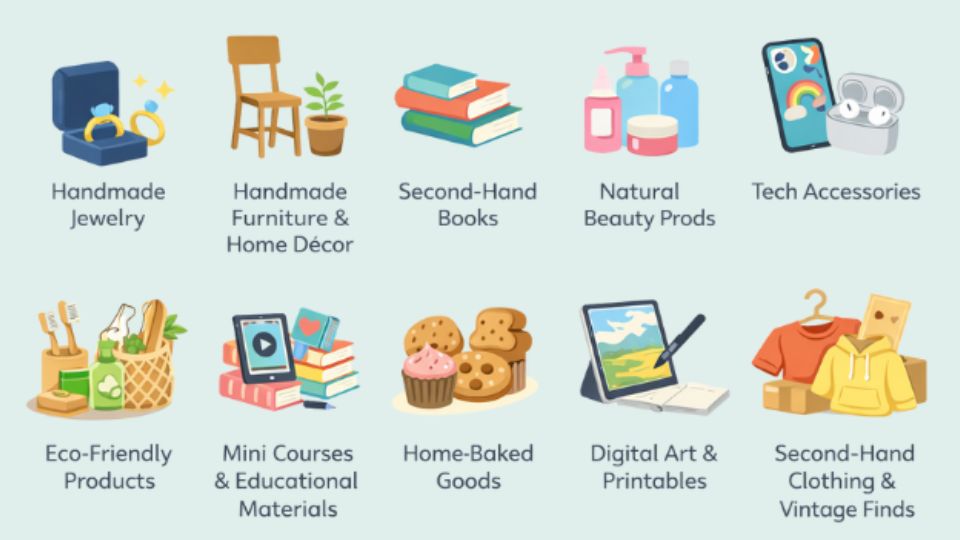
When it comes to selling products online, there are countless options to choose from. However, certain types of items are more profitable than others. In this section, we will explore the top 10 items to sell for profit, ranging from handcrafted jewelry and vintage clothing to digital art and printables, eco-friendly products, home-baked goods, educational materials and courses, customized tech accessories, organic beauty products, second-hand books, and handmade furniture. By focusing on high-demand items and utilizing online platforms, you can maximize your chances of making good money from your online sales.
1. Handcrafted Jewelry
Handcrafted jewelry is a popular item to sell online, as it combines unique skills and handmade goods. Whether you specialize in creating delicate necklaces, statement rings, or bohemian-inspired earrings, there is a market for your creations.
To sell handcrafted jewelry online, you can set up your own online store or utilize popular platforms such as Etsy or Shopify. These platforms provide a ready-made audience of customers looking for unique handmade products.
When selling handcrafted jewelry online, it is important to showcase the craftsmanship and quality of your pieces through high-quality product images and detailed descriptions. You can also leverage social media platforms like Instagram and Pinterest to promote your creations and engage with potential customers.
By tapping into the growing demand for handmade goods and utilizing online platforms, you can turn your passion for creating jewelry into a profitable online business.
2. Vintage Clothing and Accessories
Vintage clothing and accessories have gained immense popularity in recent years, as people look for unique and sustainable fashion options. If you have a keen eye for vintage fashion and enjoy scouring thrift stores and flea markets for hidden gems, selling vintage clothing and accessories online can be a profitable venture.
Niche online marketplaces such as Etsy and Bob Shop are great platforms to showcase and sell your vintage finds. These platforms attract a specific audience that appreciates and seeks out vintage fashion.
When selling vintage clothing and accessories online, it is important to provide detailed descriptions and accurate measurements to ensure customer satisfaction. High-quality product images showcasing the uniqueness and condition of each item can also help attract potential buyers.
3. Digital Art and Printables
Digital art and printables are popular items to sell online, as they offer a low-cost, high-profit opportunity. Whether you’re a skilled graphic designer or have a knack for creating beautiful illustrations, selling digital art and printables can be a lucrative business venture.
Here are some key points to consider when selling digital art and printables:
→ Digital products can be created once and sold multiple times, allowing for passive income.
→ A reliable internet connection is essential for selling and delivering digital products.
→ Online platforms such as Etsy and Creative Market provide a ready-made audience for digital art and printables.
→ Printables can include a wide range of products, such as wall art, planners, stickers, and invitations.
By leveraging your artistic skills and utilizing online platforms, you can create digital art and printables that generate a steady stream of passive income.
4. Eco-Friendly Products
With the increasing focus on sustainability and eco-consciousness, eco-friendly products have gained significant popularity. If you’re passionate about preserving the environment and have innovative ideas for eco-friendly products, selling them online can be a great way to make money while promoting sustainable living.
When selling eco-friendly products online, it is important to clearly communicate the sustainability aspects of your products and highlight their environmental benefits. Utilize platforms such as Etsy, Shopify, or your own website to showcase and sell your eco-friendly products.
By tapping into the growing demand for eco-friendly products and utilizing online sales channels, you can create a profitable business that aligns with your values and contributes to a more sustainable future.
5. Home-Baked Goods
If you have a passion for baking and enjoy creating delicious treats, selling home-baked goods online can be a fulfilling and profitable venture. Whether it’s cookies, cakes, bread, or specialty pastries, there is a market for homemade baked goods.
To sell home-baked goods online, you can start a home-based business and utilize online platforms such as Etsy or Shopify to showcase and sell your products. Alternatively, you can offer your baked goods through local delivery or pickup services.
When selling home-baked goods online, it is important to adhere to food safety regulations and clearly communicate the ingredients and preparation methods used. High-quality product images and customer testimonials can also help attract potential buyers.
By turning your baking skills into a home-based business and leveraging online platforms, you can earn extra income and make good money from selling your delicious creations.
6. Educational Materials and Courses
In the digital age, online learning has gained significant popularity, creating a demand for educational materials and courses. If you have expertise in a particular subject or a passion for teaching, selling educational materials and courses online can be a lucrative side gig.
There are various platforms, such as Teachable and Udemy, where you can create and sell online courses. These platforms provide a ready-made audience of learners looking to acquire new knowledge and skills.
When selling educational materials and courses online, it is important to clearly define your target audience and the value proposition of your offerings. High-quality content, engaging delivery methods, and positive student reviews can help attract and retain students.
By leveraging your expertise and utilizing online learning platforms, you can create educational materials and courses that not only generate income but also have a positive impact on the lives of learners.
7. Customized Tech Accessories
With the increasing reliance on technology, customized tech accessories have become popular among tech-savvy consumers. If you have a knack for design and an eye for detail, selling customized tech accessories online can be a profitable business venture.
To sell customized tech accessories online, you can set up your own online store or utilize platforms such as Etsy or Shopify. These platforms provide a ready-made audience of tech enthusiasts looking for unique and personalized accessories.
When selling customized tech accessories online, it is important to showcase the quality and uniqueness of your designs through high-quality product images and detailed descriptions. Offering customization options and utilizing affiliate links to promote related products can help increase sales and generate additional income.
8. Organic Beauty Products
With the increasing focus on natural and organic products, organic beauty products have gained significant popularity. If you’re passionate about clean beauty and have a talent for creating skincare or beauty products, selling organic beauty products online can be a profitable business venture.
To sell organic beauty products online, you can set up your own online store or utilize platforms such as Etsy or Shopify. These platforms provide a ready-made audience of consumers looking for natural and organic beauty products.
When selling organic beauty products online, it is important to clearly communicate the ingredients and benefits of your products through detailed descriptions and high-quality product images. Offering subscription boxes or sample sizes can also attract new customers and generate recurring revenue.
9. Second-Hand Books
If you’re an avid reader with a collection of books gathering dust on your shelves, selling second-hand books online can be a great way to make extra money. Whether it’s fiction, non-fiction, or rare and collectible books, there is a market for second-hand books.
To sell second-hand books online, you can utilize platforms such as Amazon, Bob Shop, or specialized book marketplaces like AbeBooks. These platforms provide a ready-made audience of book enthusiasts looking for affordable and unique reads.
When selling second-hand books online, it is important to accurately describe the condition of each book and provide detailed information about the content. Offering competitive prices and bundling similar books can help attract potential buyers.
By decluttering your bookshelves and selling second-hand books online, you can not only make extra money but also connect fellow book lovers with their next great read.
10. Handmade Furniture
If you have woodworking skills and enjoy creating unique pieces of furniture, selling handmade furniture online can be a rewarding and profitable business venture. Whether it’s rustic farmhouse tables, custom cabinets, or modern chairs, there is a market for handcrafted furniture.
To sell handmade furniture online, you can set up your own online store or utilize platforms such as Etsy or Shopify. These platforms provide a ready-made audience of homeowners and interior design enthusiasts looking for one-of-a-kind furniture pieces.
When selling handmade furniture online, it is important to showcase the craftsmanship and quality of your pieces through high-quality product images and detailed descriptions. Offering customization options and providing clear shipping and delivery information can also help attract potential buyers.
By turning your woodworking skills into a business and utilizing online platforms, you can create handcrafted furniture that not only generates income but also adds beauty and uniqueness to people’s homes.
Maximizing Profits from Your Sales
To maximize your profits from selling products online, it is important to implement strategies that set you apart from the competition and attract a larger customer base. Here are some key strategies to consider:
→ Setting competitive prices: Conduct market research to determine the optimal pricing for your products. Consider factors such as production costs, competitor prices, and customer perception.
→ Implementing effective marketing strategies: Utilize social media platforms, search engine optimization techniques, and targeted advertising to reach a wider audience and drive sales.
→ Utilizing online marketplaces: Expand your reach by listing your products on popular online marketplaces such as Amazon, Bob Shop, or specialized niche platforms.
→ Engaging with your customer base: Foster customer loyalty and encourage repeat business by engaging with your customers through social media, email newsletters, and personalized customer service.
By implementing these strategies, you can maximize your profits from your online sales and establish a strong online presence for your business.
Setting Competitive Prices
Setting competitive prices is crucial for attracting customers and maximizing your profits from online sales. Here are some key points to consider when setting prices for your products:
→ Conduct market research to understand the pricing landscape for similar products in your niche.
→ Consider factors such as production costs, competitor prices, and customer perception of value.
→ Pricing too high may deter potential customers, while pricing too low may undervalue your products.
→ Aim for a balance between profitability and competitiveness to attract customers and maintain a good reputation.
→ Consider offering discounts or promotions to generate customer interest and drive sales.
By conducting thorough market research and setting competitive prices, you can position your products effectively in the market and maximize your profits from online sales.
Effective Marketing Strategies
Implementing effective marketing strategies is key to reaching a wider audience and driving sales for your online business. Here are some effective strategies to consider:
→ Utilize social media platforms such as Instagram, Facebook, and Pinterest to showcase your products and engage with your target audience.
→ Implement search engine optimization (SEO) techniques to improve your website’s visibility in search results and attract organic traffic.
→ Leverage influencer partnerships and affiliate marketing to expand your reach and tap into new customer segments.
→ Create compelling content, such as blog posts or video tutorials, to establish your expertise and build brand authority.
→ Utilize email marketing campaigns and personalized customer communication to nurture relationships and encourage repeat business.
By implementing these marketing strategies, you can effectively promote your products, increase brand awareness, and drive sales for your online business.
Utilizing Online Marketplaces
Utilizing online marketplaces is a great way to expand your reach and tap into a larger customer base. Here are some popular online marketplaces to consider:
→ Amazon: The largest online marketplace, offering a wide range of products and a massive customer base.
→ Shopify: A comprehensive e-commerce platform that allows you to set up your own online store and sell directly to customers.
→ Etsy: A popular marketplace for handmade and unique products, attracting a niche audience of buyers looking for one-of-a-kind items.
By listing your products on these online marketplaces, you can leverage their existing customer base and infrastructure to reach a larger audience and drive sales for your online business.
Engaging With Your Customer Base
Engaging with your customer base is crucial for fostering loyalty, encouraging repeat business, and building a strong online presence. Here are some key strategies for engaging with your customers:
→ Maintain an active presence on social media platforms such as Facebook, Instagram, and Twitter. Respond to customer comments and inquiries promptly and engage with them through meaningful conversations.
→ Create a Facebook page for your business where you can showcase your products, share updates, and interact with customers in a community-like setting.
→ Implement customer loyalty programs or special offers to reward repeat customers and encourage them to make additional purchases.
→ Use personalized email marketing campaigns to keep customers informed about new products, promotions, and exclusive offers.
By engaging with your customer base, you can build strong relationships, drive customer loyalty, and increase the likelihood of repeat business for your online store.
Navigating Challenges in Online Selling
While selling products online can be a profitable venture, it also comes with its own set of challenges. In this section, we will discuss common challenges in online selling and provide strategies for navigating them. From dealing with shipping and handling to managing inventory and supplies, and handling customer feedback and returns, we will equip you with the knowledge and strategies to overcome these challenges and ensure a successful online selling experience.
Dealing With Shipping and Handling
Shipping and handling can be a logistical challenge when selling products online. Here are some key points to consider:
→ Choose reliable shipping carriers that offer competitive rates and provide tracking information for shipments.
→ Ensure that your packaging is secure and protects the product during transit to avoid damage.
→ Communicate shipping policies, estimated delivery times, and any additional fees or restrictions to your customers.
→ Monitor shipping costs and adjust your pricing strategy if necessary to maintain profitability.
→ Provide excellent customer service and address any shipping issues promptly to ensure customer satisfaction.
By effectively managing shipping and handling, you can provide a positive customer experience and maintain customer satisfaction.
Managing Inventory and Supplies
Managing inventory and supplies is crucial for ensuring a smooth online selling process. Here are some key points to consider:
→ Implement inventory management systems or software to track stock levels and streamline the fulfillment process.
→ Conduct regular inventory audits to identify slow-moving items or potential stockouts.
→ Establish relationships with reliable suppliers to ensure a steady supply of products.
→ Consider dropshipping as a cost-effective option if you have a small budget or limited storage space.
→ Continuously analyze demand trends and adjust your inventory levels and product offerings accordingly.
By effectively managing your inventory and supplies, you can avoid stockouts, reduce storage costs, and optimize your online sales.
Handling Customer Feedback and Returns
Handling customer feedback and returns is an essential part of maintaining a positive business reputation and ensuring customer satisfaction. Here are some key points to consider:
→ Establish a clear and customer-friendly return policy that outlines the process, timeframe, and any associated fees.
→ Respond to customer feedback and inquiries promptly and professionally, addressing any concerns or issues they may have.
→ Resolve customer complaints or issues with empathy and a focus on finding a mutually satisfactory solution.
→ Use negative feedback as an opportunity for improvement and consider implementing customer feedback surveys to gather insights and identify areas for enhancement.
→ Prioritize customer satisfaction and aim for a positive overall experience to build a strong business reputation.
By effectively handling customer feedback and returns, you can foster customer loyalty, generate positive reviews, and build a strong reputation for your online business.
Conclusion
In conclusion, understanding the value of mental health is crucial for overall well-being. By prioritizing self-care and seeking support when needed, you can foster a positive mindset and healthier lifestyle. Remember, mental health deserves the same attention as physical health. Embrace a culture of empathy and openness to create a supportive environment for yourself and others. Together, we can promote mental wellness and build resilient communities. Take the first step towards a healthier mind today.
Frequently Asked Questions
How Do I Start Selling Online?
Starting to sell online is relatively straightforward. Here are the key steps:
→ Choose a platform to sell on, such as Etsy, Shopify, or your own website.
→ Set up an online store, including product listings, descriptions, and images.
→ Promote your products through social media, email marketing, and other online channels.
→ Ensure you have a reliable internet connection and dedicate sufficient time to manage your online business.
→ Consider business ideas that align with your interests, skills, and market demand.
By following these steps, even beginners can start selling online and build a successful online business.
What Are the Best Platforms for Selling Handmade Items?
Etsy is one of the best platforms for selling handmade items, as it specifically caters to the niche market of handmade goods. However, other platforms such as Shopify, craft fairs, and social media can also be effective for reaching customers interested in unique and handmade products.
How Can I Price My Products Competitively?
To price your products competitively, conduct market research to understand the pricing landscape for similar products. Consider factors such as the cost of materials, desired profit margin, competition, and customer perception of value. Develop a pricing strategy that balances profitability and competitiveness.
Can I Sell Internationally?
Yes, you can sell internationally. However, it’s important to consider factors such as shipping costs, customs regulations, and currency exchange rates. Research the requirements and regulations for each country you plan to sell to and ensure you can provide a positive customer experience for international buyers.
Tips for Taking Product Photos That Sell
To take product photos that sell, pay attention to lighting, angles, and composition. Use natural light or studio lighting to showcase your products effectively. Experiment with different angles and compositions to highlight the features and create visual appeal. Ensure your product photos accurately represent the items in your online listings.
How to Write Compelling Product Descriptions
When writing product descriptions, focus on copywriting techniques and SEO optimization. Highlight key features, benefits, and unique selling points of your products. Use storytelling techniques to engage potential buyers and create an emotional connection. Ensure your product descriptions are informative, concise, and persuasive.
Strategies for Growing Your Online Store
To grow your online store, focus on scaling up your operations, acquiring new customers, increasing brand awareness, and cross-promoting your products. Utilize social media, content marketing, and online advertising to expand your online presence and attract a larger customer base. Collaborate with complementary businesses for cross-promotion opportunities.
Managing Taxes and Finances for Your Online Business
Managing taxes and finances is crucial for the success of your online business. Develop a financial plan, understand your tax obligations, and keep accurate records of your income and expenses. Consider different revenue streams and regularly assess the financial health of your business to ensure profitability and compliance.
Finding Niche Markets to Target
Finding niche markets is essential for targeting specific audiences and standing out from the competition. Conduct niche research to identify underserved or untapped markets. Understand your target audience, stay updated on market trends, and position your products to meet the unique needs and preferences of your niche market.
Ensuring Customer Satisfaction and Repeat Business
Ensuring customer satisfaction is crucial for generating repeat business and building a loyal customer base. Provide excellent customer service, offer loyalty programs or rewards, maintain quality assurance, and actively seek feedback from your customers. Utilize feedback to improve your products, services, and overall customer experience to foster customer loyalty and retention.
Leveraging Social Media for Promotion
Social media is a powerful tool for promoting your online store. Develop a social media marketing strategy, create engaging content that resonates with your target audience, encourage brand engagement, and leverage viral campaigns. Collaborate with influencers or bloggers in your niche to expand your reach and generate buzz around your products.
Keeping Up With Market Trends
Keeping up with market trends is crucial for staying ahead of the competition and maintaining a competitive edge. Conduct trend analysis, stay updated on industry news and consumer behaviour, and embrace innovation in your product offerings and marketing strategies. By staying relevant and adapting to changing market trends, you can ensure the long-term success of your online business.