
Business Loans in South Africa – Compare Options
Compare business loans in South Africa to find funding that aligns with your business goals, cash flow, and growth plans. Loan approval, terms, and costs depend on the lender’s assessment of your business and affordability.
From small startups to established companies, businesses often need access to funding for expansion, inventory, equipment, or working capital. With banks, alternative lenders, and online providers offering different terms and approval criteria, comparing options is essential before applying.
This page helps you understand business loan types, eligibility factors, and how to choose the right option before you apply.
Choosing the wrong business loan can impact your cash flow for months or even years — which is why comparing options before applying is so important.
If you’d prefer to review multiple funding options in one place, you can compare loans in South Africa before choosing a specific loan type.
Business Loan Guides in South Africa
If you want to go deeper, these guides explain key parts of business funding in more detail:
How to Compare Business Loans in South Africa
This page is designed to help you understand and compare business loan options so you can make informed decisions before applying.
For detailed guidance on application steps and lender-specific requirements, visit individual lender or loan-type pages.
If you’re ready to apply, see our step-by-step guide on how to get a business loan in South Africa.
Business Loan Key Facts
- Purpose: Funding for business growth, cash flow, or operational costs.
- Approval: Based on business turnover, trading history, and affordability.
- Repayment: May be fixed monthly, variable, or linked to revenue depending on the product.
- Costs: Include interest, fees, and total repayment amount.
- Before applying: Compare lenders, repayment structures, and impact on your cash flow.
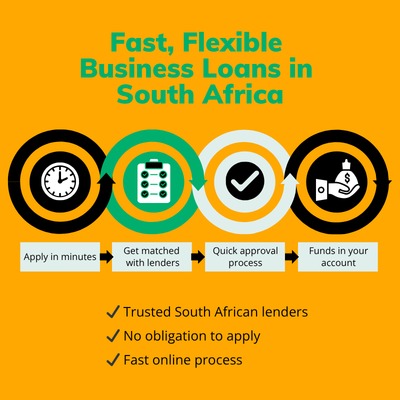
Compare Business Loans in South Africa with FatCat Loans
FatCat Loans is a comparison platform — not a lender or credit provider. We connect businesses with NCR-compliant lenders based on their funding needs and affordability.
- Cost factors: interest rates, fees, and total repayment cost
- Funding speed: approval timelines and payout expectations
- Eligibility fit: turnover, trading history, and documentation
- Transparency: clear terms, disclosures, and compliance
We aim to simplify complex financial decisions by presenting options clearly and responsibly.
What Are Business Loans in South Africa?
Business loans are financing solutions designed to help companies cover expenses, invest in growth, or manage cash flow. Unlike personal loans, they are structured around business performance, revenue, and operational needs.
Businesses may use loans for:
- Purchasing stock or inventory
- Expanding operations or opening new locations
- Buying equipment or machinery
- Managing short-term cash flow gaps
- Hiring staff or covering operational costs
Types of Business Loans in South Africa
Different types of business loans suit different needs. Understanding these options helps you choose the most appropriate funding solution.
| Loan Type | Common Use | Repayment Structure | Best For |
|---|---|---|---|
| Term Loans | Expansion, equipment, large investments | Fixed monthly repayments over time | Established businesses with stable income |
| Working Capital Loans | Day-to-day expenses and cash flow | Short- to medium-term repayments | Businesses managing cash flow gaps |
| Merchant Cash Advances | Immediate funding based on sales | Repayments linked to daily revenue | Retail or card-based businesses |
| Asset Finance | Equipment or vehicle purchases | Structured repayments tied to asset | Businesses investing in assets |
For example, a retail business may use a working capital loan to buy stock before a busy sales period, while a construction company may choose asset finance to purchase equipment without paying the full cost upfront.
Once you understand which type of funding may suit your business, the next step is comparing lenders and repayment options.
Business Loan Eligibility Requirements in South Africa
Each lender has its own criteria, but most assess similar core factors when reviewing applications.
| Requirement | Why It Matters |
|---|---|
| Business Turnover | Indicates your ability to repay the loan |
| Trading History | Shows business stability and track record |
| Bank Statements | Provides insight into cash flow |
| Credit Profile | Reflects repayment behaviour |
Some lenders may also consider industry type, business model, and seasonal income patterns.
If you’re a new business, you can learn more about funding options in our guide to start-up business loans in South Africa.
Who Can Apply for a Business Loan?
Eligibility depends on the lender, but most providers require an actively trading business with consistent income. This may include:
- Registered businesses with a trading history
- Small and medium enterprises (SMEs)
- Self-employed individuals with verifiable income
- Businesses with regular deposits reflected in bank statements
Start-ups may have fewer options and may need to demonstrate projected income or provide additional documentation.
Business Loan Interest Rates and Repayment in South Africa
The cost of a business loan depends on more than just the interest rate and can vary significantly depending on the lender and repayment structure.
- Total repayment amount over the loan term
- Monthly or daily repayment affordability
- Impact on your business cash flow
- Flexibility of repayment terms
Choosing a loan that aligns with your business’s revenue cycle is often more important than selecting the lowest rate.
For a detailed breakdown of pricing, see our guide to business loan interest rates in South Africa.
What Do Business Loans Cost?
The cost of a business loan depends on the interest rate, fees, repayment structure, and loan term. Some lenders charge fixed monthly repayments, while others link repayments to your business revenue.
Before accepting any offer, review the full quotation carefully. This should include the loan amount, fees, repayment schedule, instalment amount (or repayment structure), and total amount repayable.
Choosing a loan with lower monthly repayments but a longer term may increase the total cost over time, so it’s important to balance affordability with long-term cost.
Banks vs Alternative Business Lenders in South Africa
| Feature | Banks | Alternative Lenders |
|---|---|---|
| Approval Speed | Slower, more structured | Faster, often online |
| Eligibility | Stricter requirements | More flexible criteria |
| Documentation | Extensive paperwork | Simplified digital process |
Banks may suit established businesses, while alternative lenders can be more accessible for SMEs or newer businesses.
Each option has different risk, cost, and flexibility considerations, so comparing both can help you find a suitable fit.
Why Compare Business Loans in South Africa?
Applying to a single lender without comparing options can limit your chances of approval and may result in less suitable repayment terms or higher overall costs.
- Find funding that matches your business model
- Improve approval chances
- Identify more flexible repayment options
- Avoid applying to unsuitable lenders
Comparing options allows you to make informed financial decisions that support long-term business growth.
How FatCat Loans Helps You Compare Business Loans
FatCat Loans helps business owners compare funding options more efficiently by bringing suitable lenders into one place. Instead of researching multiple providers separately, you can review options based on your business needs and affordability.
- Compare multiple lenders in one place
- Review options matched to your business profile
- Avoid wasting time on unsuitable applications
- Make more informed borrowing decisions
This can save time, reduce friction, and make it easier to find funding that fits your business more closely.
Responsible Business Borrowing in South Africa
Taking on business finance should support growth, not create unnecessary financial strain. Before applying, consider how repayments will affect your cash flow under different scenarios.
- Assess your monthly cash flow carefully
- Borrow only what your business can realistically afford to repay
- Plan for seasonal or fluctuating income
- Review the total cost of credit, not just the monthly repayment
Responsible borrowing helps maintain financial stability and long-term sustainability for your business.
Top Questions About Business Loans in South Africa
Can startups qualify for business loans?
Yes, some lenders offer business loans to startups, but approval usually depends on trading history, revenue, cash flow, or future projections. Newer businesses may need to provide more supporting documents than established companies.
How long does business loan approval take?
Business loan approval can take from the same day to several weeks, depending on the lender and application type. Online lenders may provide faster decisions, while banks often take longer due to more detailed checks.
What documents do I need for a business loan?
You usually need recent business bank statements, proof of trading, business registration documents, and sometimes financial statements. Requirements vary depending on the lender and the loan amount.
How much can I borrow with a business loan?
The amount you can borrow depends on your business turnover, affordability, cash flow, and lender criteria. Some lenders offer smaller amounts for short-term needs, while others provide larger funding for established businesses.
What do I need to qualify for a business loan?
To qualify for a business loan, lenders usually assess your turnover, trading history, cash flow, affordability, and credit profile. Comparing lenders can help you find an option that matches your business stage and funding needs.
Can I get a business loan with bad credit?
Yes, some lenders may consider business loan applications from owners with bad credit. Approval usually depends on your business performance, affordability, and recent bank activity rather than credit score alone.
What is the difference between a business loan and a personal loan?
A business loan is used for business-related expenses and is assessed based on company performance. A personal loan is based on your individual income and credit profile. If your funding need is personal rather than business-related, you can explore personal loans.
Compare Business Loans in South Africa Today
Finding the right business funding doesn’t have to be complicated. Comparing options helps you identify solutions that align with your business needs and financial situation.
Start by using our tool to compare loans from trusted South African lenders and find the right option for your business.
FatCat Loans is a comparison platform and not a credit provider. We connect businesses with NCR-compliant lenders in South Africa. Our service is free to use. Loan approval, interest rates, fees, and repayment terms depend on the lender’s assessment of your business and affordability.
FatCatLoans.co.za is a South African loan-matching service, not a lender, credit provider, or financial advisor. We connect applicants with registered credit providers in our network and may receive a commission from lenders when funding is provided. There is no cost to use our service.
The information on this website is provided to help South Africans understand business funding options and does not constitute financial advice. Always review the lender’s interest rates, fees, repayment structure, and total cost of credit before accepting any offer.
Business funding is subject to lender approval and affordability or business performance assessments. Terms and eligibility vary by provider.
Your information is processed in accordance with POPIA and is only shared with relevant funding partners with your consent.