How Debt Consolidation Loans Work in South Africa (2026)
June 21, 2024
How Debt Consolidation Loans Work in South Africa: A Simple Guide
Last Updated: October 2026
Managing several debts at once can be stressful. Credit cards, store accounts, personal loans and other credit agreements may each have different repayment dates, interest rates and fees.
A debt consolidation loan may allow you to combine eligible debts into a new credit agreement with one repayment schedule. This can make repayments easier to manage, but it does not automatically reduce your monthly instalment or the total cost of borrowing.
This guide explains how debt consolidation loans work in South Africa, what credit providers may consider when assessing applications, the costs involved and what to check before deciding whether consolidation is appropriate.
For more information about available products, explore our debt consolidation loans in South Africa page.
What Is a Debt Consolidation Loan?
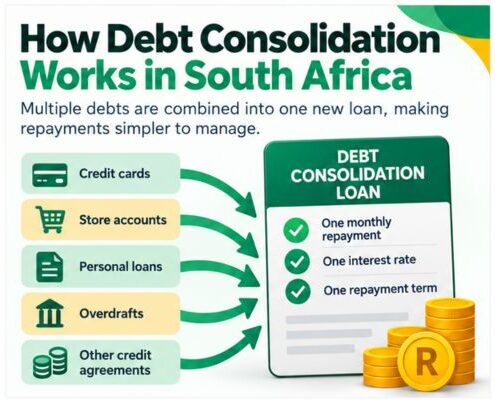
A debt consolidation loan is a new credit agreement that may be used to repay several existing debts. Depending on the provider and the terms of the agreement, eligible debts could include:
- Credit card balances
- Store accounts
- Existing personal loans
- Overdraft balances
- Other eligible credit agreements
Instead of making separate repayments on the debts that have been settled, you repay the new consolidation loan according to its agreed schedule.
Some providers may arrange settlement directly with existing creditors, while other arrangements may require you to settle eligible debts yourself. The process depends on the specific product and provider.
Important: Consolidation does not automatically close every existing credit account. Check which debts will be settled, whether any accounts remain open and what obligations you will still have.
Step-by-Step: How Debt Consolidation Loans Work in South Africa
Debt consolidation might sound complicated, but the process is very straightforward once you understand how lenders evaluate applications.
Step 1 – Assess Your Debts
Start by listing every debt you currently have. Include:
- Total balance
- Minimum monthly repayment
- Current interest rate
- Creditor name
- Due date
This gives you a clearer picture of your existing commitments and helps you compare them with the proposed consolidation agreement.
Consider the total outstanding debt, the cost of settling existing agreements and whether the new loan would make repayments more manageable without increasing your overall financial pressure.
Step 2 – Compare Lenders
Consolidation products and eligibility requirements vary between credit providers. Before accepting an offer, review the terms carefully and compare them with your existing debts.
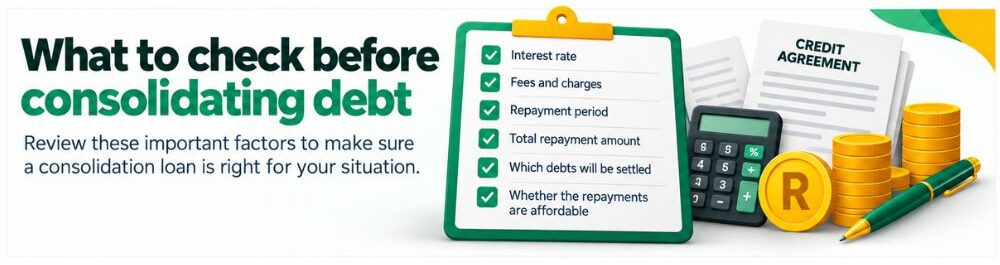
Important factors include:
- Applicable interest rate
- Repayment period
- Initiation and service fees, where applicable
- Any permitted early settlement charges on existing agreements
- Total repayment amount
- Whether the proposed repayment is affordable
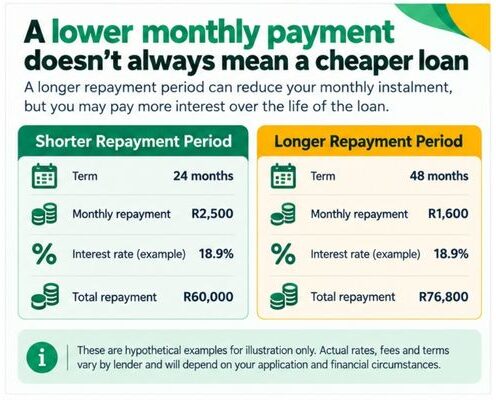
A lower monthly repayment does not necessarily mean the loan costs less overall. Extending the repayment period can increase the total interest paid.
Step 3 – Apply for the Loan
Application requirements vary between credit providers. Depending on the provider and your circumstances, you may be asked for:
- South African identification
- Income or employment information
- Bank statements or banking information
- Details of existing debts and monthly expenses
- Information about the accounts you want to consolidate
- Additional verification documents where required
The credit provider may assess your income, expenses, existing credit commitments, credit information and overall affordability before deciding whether to approve the application.
Credit providers must comply with applicable affordability assessment requirements under the National Credit Act (NCA).
Submitting an application does not guarantee approval.
Step 4 – Debt Settlement
If the application is approved and the credit agreement is accepted, the settlement process depends on the provider and product.
The provider may arrange payment to eligible creditors, or the borrower may be responsible for settling specified accounts using the loan proceeds.
Confirm that the intended debts have been settled and check whether the original credit accounts remain open or require separate closure.
Step 5 – Repay the Consolidation Loan
Once the eligible debts have been settled, you repay the new loan according to the agreed repayment schedule.
This may simplify the management of your debts, but it is important to keep track of any remaining credit accounts and other financial commitments.
Make sure the new repayment remains affordable alongside your regular living expenses.
Debt Consolidation Example: How the Repayments Could Change
Imagine you have three outstanding debts:
- Credit card: R15,000
- Store account: R10,000
- Personal loan: R25,000
Your total outstanding debt is R50,000.
If you qualify for a R50,000 consolidation loan, the new agreement could be used to settle these eligible debts. You would then repay the new loan according to its agreed repayment schedule.
For illustration, a R50,000 loan at a fixed annual interest rate of 20%, excluding fees, would have approximate repayments of:
- 24 months: R2,545 per month, approximately R61,075 in total.
- 48 months: R1,522 per month, approximately R73,041 in total.
The longer term reduces the monthly instalment but increases the total amount repaid by approximately R12,000.
These are hypothetical calculations for illustration only, not actual lender offers. They assume equal monthly repayments, a fixed interest rate and no additional fees or charges. Actual costs and eligibility vary by credit provider.
Potential Benefits and Limitations of Debt Consolidation
Debt consolidation may offer practical benefits, but the outcome depends on the new agreement, the debts being settled and your financial circumstances.
Fewer Repayments to Manage
Combining eligible debts may reduce the number of separate repayment dates and credit agreements you need to manage.
Potential Changes to Interest Costs
A new agreement may have different interest rates and fees from your existing debts. Compare the total cost rather than assuming consolidation will save money.
Monthly Cash Flow
Some arrangements may reduce the monthly repayment by extending the repayment period. However, this can increase the overall cost of borrowing.
Credit Profile Considerations
Debt consolidation does not guarantee an improvement in your credit score. Applying for new credit, settling existing accounts and your subsequent repayment behaviour may affect your credit profile in different ways.
A Structured Repayment Schedule
A consolidation loan may provide an agreed repayment schedule and repayment end date. Check the agreement carefully to understand your obligations.
Risks to Consider
Consolidation does not eliminate debt. You may still face financial pressure if the new repayment is unaffordable, the repayment period is extended significantly or you continue borrowing through existing credit accounts.
Who May Qualify for Debt Consolidation Loans in South Africa?
Eligibility depends on the credit provider, the product and your financial circumstances. Providers may consider factors such as:
- Your income and regular expenses
- Existing debts and repayment commitments
- Your credit information
- The amount you want to consolidate
- Your ability to afford the proposed repayments
Important: Consumers who are under debt review are generally restricted from taking on further credit. If you are under debt review or struggling to meet existing repayments, speak to your registered debt counsellor about the appropriate options before applying for additional credit.
Debt Consolidation vs Debt Review in South Africa
Debt consolidation and debt review are different approaches to managing debt.
Debt consolidation generally involves taking out a new credit agreement to settle eligible existing debts. You must qualify for the new loan and be able to afford its repayments.
Debt review is a formal process under the National Credit Act for consumers who are over-indebted. A registered debt counsellor assesses the consumer’s financial position and may assist with a debt restructuring process.
Consumers under debt review are generally restricted from taking on additional credit. Debt consolidation should not be treated as a way to bypass debt review restrictions.
If you are struggling to afford your existing debts, seeking guidance from a registered debt counsellor may be more appropriate than applying for another loan.
How Interest Rates Affect Debt Consolidation Loans
The interest rate on a consolidation loan affects the amount you repay, but it should not be considered in isolation.
The rate and terms offered may depend on the credit provider, the credit product, your credit information and the provider’s assessment of your financial circumstances.
When comparing consolidation with your existing debts, consider:
- The interest rates on your current debts
- The proposed new interest rate
- Any applicable fees
- The repayment period
- The total amount repayable
For information about broader interest-rate movements, you can consult the South African Reserve Bank.
Even if the new monthly repayment is lower, a longer repayment period may mean paying more interest overall.
Alternatives to Taking Out a Consolidation Loan
If another loan would increase your financial pressure, consider whether a non-borrowing option may be more appropriate.
- Review your budget and identify expenses that could be reduced.
- Contact existing credit providers to discuss available repayment arrangements.
- Consider paying additional amounts towards higher-cost debts where affordable.
- Seek guidance from a registered debt counsellor if you are struggling to meet your credit commitments.
These options may not be suitable in every situation, but they are worth considering before taking on another credit agreement.
Common Mistakes to Avoid When Consolidating Debt
Focusing Only on the Monthly Repayment
A lower monthly repayment may look attractive, but a longer loan term could increase the total cost.
Not Checking Existing Credit Accounts
Confirm which debts have been settled and whether any existing accounts remain open. Continuing to borrow through those accounts may create additional financial pressure.
Borrowing More Than Necessary
Taking on additional credit beyond the amount needed for consolidation may increase your repayment obligations.
Not Comparing the Total Cost
Review the interest, fees, repayment period and total repayment amount before accepting an agreement.
Missing Repayments
Missing repayments may lead to permitted charges, collection activity and negative information being reflected in your credit history.

FAQs About How Debt Consolidation Loans Work in South Africa
Do all lenders offer debt consolidation loans?
No. Debt consolidation products are not offered by every credit provider. Availability, eligibility and loan terms vary.
Can I include all my debts in one consolidation loan?
Not necessarily. The debts that can be included depend on the provider, the product and your circumstances. Check which accounts are eligible before accepting an agreement.
Will consolidating my debt save me money?
Not always. Savings depend on the interest, fees, repayment period and total cost of the new agreement compared with your existing debts. A lower monthly repayment does not necessarily mean a lower overall cost.
What happens if I miss a consolidation payment?
Missing repayments may result in permitted charges, collection activity and negative information being reflected in your credit history. The consequences depend on the agreement and your circumstances.
Can I get a consolidation loan with bad credit?
Some credit providers may consider applications from people with weaker credit histories, but approval is not guaranteed. Providers may assess your income, expenses, existing debts, credit information and affordability.
Conclusion: Is Debt Consolidation Right for You?
Debt consolidation may help simplify repayments by combining eligible debts into a new credit agreement. However, it does not automatically reduce the total amount you owe or make borrowing more affordable.
Before deciding, compare the new agreement with your existing debts, including the interest, fees, repayment period and total repayment amount. Consider whether the repayments are manageable alongside your other financial commitments.
To understand the products and requirements involved, explore our debt consolidation loan options page.
Disclosure: This article is for informational purposes only and does not constitute financial advice. FatCat Loans is a loan comparison platform, not a lender. Eligibility, rates and terms vary between credit providers. Always review the credit agreement carefully before accepting a loan.

The FatCat Loans Editorial Team delivers clear, accurate, and unbiased guidance on loans, credit, and personal finance in South Africa, in compliance with the National Credit Act. Our writers follow strict editorial standards to ensure every article is trustworthy, well-researched, and easy to understand, helping readers make confident financial decisions.