Soft Credit Check vs Hard Credit Check in South Africa: What’s the Difference? (2026 Guide)
July 10, 2026
Soft Credit Check vs Hard Credit Check in South Africa
Last Updated: July 2026
Many South Africans worry that applying for a loan will automatically damage their credit score. While it’s true that some credit enquiries can affect your credit profile, not every type of credit check has the same impact.
Understanding the difference between a soft credit check and a hard credit check can help you make informed borrowing decisions, compare lenders more confidently and avoid unnecessary concerns when applying for credit.
In South Africa, lenders use credit checks as part of their lending process to assess risk, verify information and meet their obligations under the National Credit Act (NCA). Knowing when these checks occur—and what they mean for your credit profile—can help you prepare before submitting a loan application.
Whether you’re applying for a personal loan, comparing lenders or simply trying to understand how credit works, this guide explains everything you need to know about soft and hard credit checks in South Africa.
This guide is intended for South African borrowers who want to understand how credit checks work before applying for a loan, credit card or other form of credit.
At a Glance
✓ Soft credit checks do not usually affect your credit profile.
✓ Hard credit checks are normally carried out when you formally apply for credit.
✓ One hard credit enquiry is unlikely to have a significant impact.
✓ Multiple applications within a short period may affect how some lenders assess you.
✓ Comparing lenders before applying may help reduce unnecessary hard credit enquiries.
Quick Answer
The biggest difference between a soft credit check and a hard credit check is that a soft check is generally used for eligibility or verification and does not usually affect your credit profile, while a hard credit check is performed during a formal credit application and may have a small temporary impact.
A soft credit check does not usually affect your credit profile and is commonly used for eligibility checks, identity verification or when you review your own credit information.
A hard credit check is typically carried out when you formally apply for credit. It may have a small temporary impact on your credit profile because it indicates that you are actively seeking new borrowing.
| Soft Credit Check | Hard Credit Check |
|---|---|
| Usually does not affect your credit profile | May have a small temporary impact |
| Used for eligibility checks | Used when applying for credit |
| Not normally visible to other lenders | Visible to future lenders |
| No lending decision | Used as part of a lending decision |
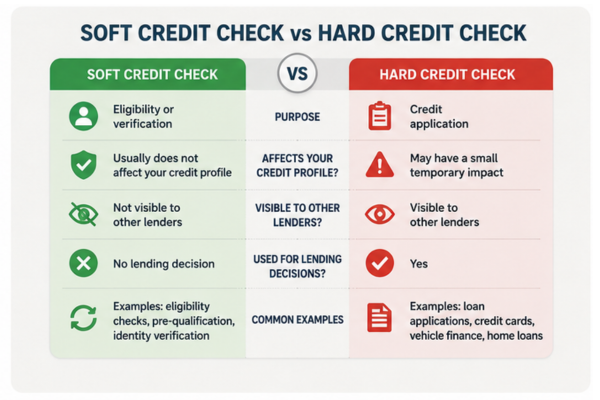
Understanding the difference can help you compare loan options more confidently while protecting your credit profile.
What Is a Soft Credit Check?
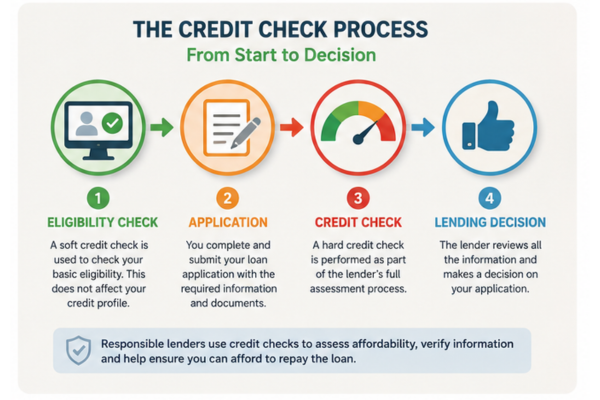
A soft credit check (sometimes called a soft credit enquiry) allows a lender or organisation to review certain information about your credit profile without carrying out a full lending assessment.
Because it isn’t associated with a formal application for credit, a soft credit check does not usually affect your credit profile.
Soft credit checks are commonly used to:
- Check your eligibility for a loan
- Verify your identity
- Carry out pre-qualification assessments
- Perform background checks
- Review existing customer accounts
- Allow you to view your own credit information
Many people worry that every credit enquiry will reduce their chances of being approved for a loan. Fortunately, soft credit checks are generally considered routine and are not viewed in the same way as formal credit applications.
When Might a Soft Credit Check Be Used?
Although every lender follows its own processes, a soft credit check may be used in situations such as:
- Initial loan eligibility checks
- Pre-approved credit offers
- Identity verification
- Existing customer account reviews
- Some affordability assessments
- Reviewing your own credit information
For example, a lender may perform a soft credit check to determine whether it’s worthwhile inviting you to complete a full application.
If you decide not to proceed with a full application, a formal lending decision will generally not have been made.
What Is a Hard Credit Check?
A hard credit check (also known as a hard credit enquiry) is carried out when you formally apply for credit.
Unlike a soft enquiry, a hard credit check forms part of the lender’s decision-making process and helps assess whether you meet their lending criteria.
A hard credit check may be performed when applying for:
- Personal loans
- Credit cards
- Vehicle finance
- Home loans
- Store accounts
- Some overdraft facilities
If you’re planning to apply for a personal loan in South Africa, understanding when a hard credit check takes place can help you prepare your application and avoid unnecessary credit enquiries.
Because you’re actively applying for credit, the enquiry may be recorded on your credit profile.
Why Do Lenders Carry Out Hard Credit Checks?
Responsible lenders don’t perform hard credit checks simply to decide whether to approve or decline an application.
Instead, they use them to build a clearer picture of your overall financial situation.
A hard credit check may help a lender assess:
- Your previous repayment history
- Existing credit commitments
- Recent credit enquiries
- Current outstanding debt
- Credit utilisation
- Signs of financial difficulty
The lender combines this information with your income, expenses and affordability assessment before making a lending decision.
This helps reduce irresponsible lending and supports responsible borrowing practices under the National Credit Act.
You can learn more about responsible lending and consumer credit rights on the National Credit Regulator (NCR) website.
What Is the Difference Between a Soft and Hard Credit Check?
Although both involve reviewing aspects of your credit profile, they serve different purposes.
The table below highlights the main differences.
| Feature | Soft Credit Check | Hard Credit Check |
|---|---|---|
| Purpose | Eligibility or verification | Credit application |
| Affects your credit profile | Usually no | May have a small temporary impact |
| Visible to other lenders | Usually no | Yes |
| Used for lending decisions | No | Yes |
| Indicates you’re applying for credit | No | Yes |
Understanding these differences can help you avoid unnecessary worry when comparing lenders or checking your eligibility before submitting a formal application.
Does a Hard Credit Check Lower Your Credit Score?
This is one of the most common questions borrowers ask.
The answer is sometimes—but usually only slightly.
A single hard credit enquiry is unlikely to have a significant impact on your overall credit profile.
However, if several hard credit checks appear within a short period, lenders may view this as a sign that you’re urgently seeking credit or experiencing financial pressure.
That doesn’t automatically mean you’ll be declined, but it may influence how some lenders assess your application.
If you have a less-than-perfect credit history, you may still have borrowing options. Our guide to bad credit loans in South Africa explains what lenders typically consider beyond your credit profile.
If you’ve recently had a loan application declined, our guide on What To Do If Your Loan Has Been Declined in South Africa explains practical steps you can take before applying again.
Does a Soft Credit Check Affect Your Credit Profile?
In most cases, no.
Because a soft credit check is not linked to a formal application for credit, it does not usually affect your credit profile or your chances of approval.
This means you can generally:
- Check your eligibility
- Review your own credit information
- Receive pre-qualified offers
- Complete certain identity checks
without worrying that the enquiry alone will reduce your creditworthiness.
That said, if you decide to proceed with a full loan application, the lender may then perform a hard credit check as part of the formal approval process.
Which Loans Usually Require a Hard Credit Check?
Most formal credit applications involve a hard credit check.
Examples include:
| Loan Type | Hard Credit Check Usually Required? |
|---|---|
| Personal Loans | Yes |
| Online Loans | Usually |
| Credit Cards | Yes |
| Vehicle Finance | Yes |
| Home Loans | Yes |
| Store Accounts | Usually |
| Debt Consolidation Loans | Usually |
Different lenders may have different application processes, but most responsible lenders will carry out some form of credit assessment before approving new borrowing.
Whether you’re applying for an online loan in South Africa or a traditional personal loan, responsible lenders will usually carry out appropriate affordability and credit assessments before making a lending decision.
If you’re unsure how much you may realistically qualify for before applying, our guide on How Much Can You Borrow in South Africa? explains how lenders assess affordability, income and existing debt when deciding how much they’re willing to lend.
Can Too Many Hard Credit Checks Affect Your Chances of Approval?
A single hard credit check is unlikely to prevent you from being approved for a loan.
However, submitting multiple loan applications within a short period may cause some lenders to look more closely at your application.
Several recent hard credit enquiries can suggest that you’re urgently seeking credit or experiencing financial difficulty. While this doesn’t automatically result in a declined application, it may increase the level of risk a lender associates with your application.
If one lender declines your application, avoid immediately applying to several others. Instead, take time to understand why your application was unsuccessful and improve your financial position before applying again.
Our guide on What To Do If Your Loan Has Been Declined in South Africa explains practical steps you can take to improve your chances of approval.
How Long Do Hard Credit Checks Stay on Your Credit Profile?
Hard credit enquiries remain on your credit profile for a period of time, but their impact generally reduces as they become older and your overall borrowing behaviour remains positive.
Although credit bureaus retain records of credit enquiries for a period of time, lenders generally place more emphasis on your overall borrowing behaviour than on a single enquiry.
Making repayments on time, managing existing debt responsibly and avoiding unnecessary credit applications are usually far more important than worrying about one hard credit check.
The best approach is to apply for credit only when you’re genuinely ready rather than submitting multiple applications in the hope that one will be approved.
Can You Still Be Approved After a Hard Credit Check?
Absolutely.
A hard credit check does not mean your application will automatically be approved or declined.
It is simply one part of the lender’s assessment.
Lenders also consider:
- Your income
- Monthly expenses
- Existing debt
- Employment stability
- Bank statements
- Affordability
- Credit history
Many borrowers are approved after a hard credit check because they meet the lender’s affordability and eligibility requirements.
How to Protect Your Credit Profile When Applying for a Loan
Although hard credit checks are a normal part of borrowing, there are sensible steps you can take to protect your credit profile.
Compare Lenders Before Applying
Rather than submitting several applications, compare lenders first to understand their eligibility requirements and loan options.
Using our Compare Loans guide can help you identify lenders that may be better suited to your financial circumstances before you submit a formal application.
Apply for a Realistic Loan Amount
Applying for more than you can comfortably afford may reduce your chances of approval.
Understanding how lenders assess affordability before applying can help you request a loan amount that better matches your income and financial commitments.
You can learn more in our guide on How Much Can You Borrow in South Africa?
Improve Your Credit Profile
Building a stronger credit profile can improve your borrowing options over time.
Simple habits include:
- Paying accounts on time
- Reducing existing debt
- Avoiding missed payments
- Managing credit responsibly
- Keeping credit utilisation low
Our guide to Improving Your Credit Score in South Africa explains practical ways to strengthen your credit profile before applying for credit.
If you’re still building your borrowing history, our guide on how to build credit in South Africa explains practical ways to establish a stronger credit profile over time.
Avoid Multiple Applications
If one lender declines your application, resist the temptation to immediately apply elsewhere.
Instead:
- Find out why your application was declined.
- Improve your affordability if necessary.
- Compare lenders carefully.
- Apply only when you’re confident you meet the lender’s requirements.
This approach may improve your chances of success while avoiding unnecessary hard credit enquiries.
Ready to compare lenders? Explore trusted South African loan options and choose a loan that matches your financial circumstances.

Common Myths About Credit Checks
Many misconceptions surround credit checks.
Let’s separate fact from fiction.
| Myth | Reality |
|---|---|
| Every credit check lowers your credit score. | Soft credit checks usually do not affect your credit profile. |
| One hard credit check will stop you getting a loan. | One enquiry is unlikely to have a significant impact. |
| Every lender uses the same approval criteria. | Each lender has its own lending policies and affordability requirements. |
| A high salary guarantees approval. | Affordability, existing debt and credit history are also important. |
| You should apply to several lenders at once to improve your chances. | Multiple applications in a short period may make some lenders more cautious. |
Understanding these differences can help you make more informed borrowing decisions.
Key Takeaways
- Soft credit checks usually do not affect your credit profile.
- Hard credit checks are normally carried out when you formally apply for credit.
- A single hard credit enquiry is unlikely to have a significant impact.
- Multiple hard enquiries within a short period may affect how some lenders assess your application.
- Comparing lenders before applying can help reduce unnecessary credit enquiries.
- Responsible borrowing and good financial habits remain the best ways to strengthen your credit profile over time.
Conclusion
Understanding the difference between a soft credit check and a hard credit check can help you make better borrowing decisions and reduce unnecessary concerns when applying for credit.
While hard credit checks form part of most formal loan applications, they are only one factor that lenders consider. Your affordability, income, employment stability and overall financial circumstances are equally important.
Rather than worrying about a single credit enquiry, focus on maintaining a healthy credit profile, borrowing responsibly and applying only for loans that match your financial situation.
If you’re ready to explore your borrowing options, visit our Compare Loans page to compare trusted South African lenders, understand their eligibility requirements and choose a loan that suits your income, affordability and financial goals.
Frequently Asked Questions
What is a soft credit check?
A soft credit check is a review of certain information on your credit profile that is not linked to a formal credit application. It is commonly used for eligibility checks, identity verification and pre-qualified offers, and it does not usually affect your credit profile.
Does a hard credit check lower my credit score?
A hard credit check may have a small temporary impact on your credit profile, but a single enquiry is unlikely to have a significant effect. Lenders generally consider your overall financial situation rather than one recent enquiry.
Can I check my own credit profile without affecting it?
Yes. Reviewing your own credit information is generally considered a soft credit check and does not usually affect your credit profile.
How many hard credit checks are too many?
There is no fixed number, but several hard credit enquiries within a short period may make some lenders view your application more cautiously. It’s usually better to compare lenders before submitting multiple applications.
Do all loan applications require a hard credit check?
Most formal loan applications involve some form of credit assessment, although the exact process varies between lenders. Responsible lenders generally carry out appropriate checks before approving credit.
Can I improve my chances of approval before applying?
Yes. Improving your credit profile, reducing existing debt, applying for a realistic loan amount and comparing lenders carefully can all help improve your chances of approval.

The FatCat Loans Editorial Team delivers clear, accurate, and unbiased guidance on loans, credit, and personal finance in South Africa, in compliance with the National Credit Act. Our writers follow strict editorial standards to ensure every article is trustworthy, well-researched, and easy to understand, helping readers make confident financial decisions.