What To Do If I Need Money Urgently South Africa: Your Guide

When faced with an urgent need for money in South Africa, it is important to know where to turn for help. In this guide, we will explore the options available to those in need of urgent financial assistance in South Africa.

What To Do If I Need Money Urgently South Africa

Last Updated: October 2026

If you need money urgently in South Africa, the best option depends on why you need the money, how much you need and whether you can afford to repay borrowed funds. An unexpected medical bill, car repair or other emergency can put pressure on your budget, but taking out credit is only one possible solution. This guide looks at borrowing and non-credit options to consider when you need money urgently.

Key Things to Know If You Need Money Urgently

  • Consider whether you can cover the expense without borrowing before taking on new debt.
  • If you do need credit, compare the interest, fees, repayment period and total cost before accepting an offer.
  • Approval and payout times vary between credit providers and are not guaranteed.
  • Non-credit options can include selling unused items, asking family for temporary help or checking whether you qualify for financial assistance.
  • Only borrow an amount you can reasonably afford to repay alongside your existing expenses and financial commitments.
  • Building an emergency fund can help reduce your reliance on credit when unexpected expenses arise.

You can also explore government social benefits and assistance if you may qualify for support.

Understanding What To Do When You Need Urgent Money

Financial emergencies can happen to anyone at any time. Medical bills, car repairs, and unexpected expenses can quickly drain your savings and leave you in a difficult financial situation. The reality of these emergencies is that they often come without warning and require immediate attention. It is important to be prepared for such situations and have a plan in place to handle them.

When an unexpected expense occurs, first consider whether it can be delayed, reduced or covered without taking on new debt. Depending on your circumstances, options might include using savings, selling unused items, asking family for temporary help or considering short-term loan options. If you consider borrowing, check that the repayments are affordable and review the total cost before accepting an offer.

Considering a Loan When You Need Money Urgently

If you decide that borrowing is appropriate, compare available credit options carefully. Approval and payout times vary between credit providers, so you should not rely on a loan being available immediately. Compare the interest rate, fees, repayment period and total cost, and make sure the repayments fit within your budget.

You can compare loan options before deciding whether to apply.

Compare loan options with FatCat Loans

How Fast Loan Applications Work

Some credit providers allow you to complete a loan application online. You may be asked to provide personal, income, banking and other financial information so the provider can assess your application and affordability.

If an application is approved, review the loan amount, interest, fees, repayment period and other terms before accepting the offer. Approval and payout times vary depending on the provider, verification requirements and banking processes.

What to Consider Before Taking an Urgent Loan

Borrowing may help cover an expense when other options are unavailable, but it also creates a repayment obligation. Before applying, consider:

  • Whether the expense genuinely needs to be paid immediately.
  • Whether you have a non-credit alternative available.
  • The interest rate and applicable fees.
  • The monthly repayment and repayment period.
  • The total cost of the credit.
  • Whether you can afford the repayments alongside your existing expenses and debts.

If you’re considering an online loan, you can learn more about how online loans work before applying.

Alternative Quick Money Solutions

Before borrowing, consider whether another option could help you cover the urgent expense without taking on new debt. Depending on your circumstances, this could include selling unused items or asking friends or family for temporary help.

Selling Assets for Quick Cash

When faced with an urgent need for money, selling assets can be a viable solution. Whether it’s selling unused items or liquidating valuable possessions, selling assets can provide extra cash when needed. This can be particularly helpful during a financial emergency when immediate funds are required.

It is important to carefully consider the value of the assets being sold and ensure that the selling process is done safely and securely. Selling assets can provide a temporary solution to urgent financial needs and help bridge the gap between your current situation and the need for immediate funds. With any financial decision, it’s important not to act too quickly or impulsively. Take the time to evaluate what you’re selling, the potential consequences, and the pros and cons overall.

Selling things like clothes or jewellery could be a helpful solution, but it’s important to ensure you won’t regret it later. Selling larger possessions like a home or car should involve a longer consideration period, and it may be a good idea to involve a second opinion from someone you trust.

Borrowing from Friends and Family: Tips and Cautions

Borrowing from friends and family can be another option to consider when in need of urgent money. However, it is important to approach this option with caution and establish clear repayment terms to avoid potential strain on relationships.

When borrowing from friends and family, it is important to treat it as a formal loan and not take advantage of the relationship. Clear communication and trust are key to ensuring that the borrowing process goes smoothly and does not create any unnecessary tension.

Borrowing from friends and family can provide a temporary solution to urgent financial needs, but it is important to handle this option responsibly.

How to Choose a Reliable Credit Provider

If you decide to apply for credit, check the provider carefully before submitting personal or banking information. Verify that the credit provider is registered with the National Credit Regulator (NCR) and confirm that the registration details match the provider you are dealing with.

Carefully review the loan amount, interest, fees, repayment period and total cost before accepting an offer. Be cautious of anyone promising guaranteed approval, requesting suspicious upfront payments or asking for sensitive information such as your banking PIN or password.

Finally, carefully review the terms and conditions of the loan, including the loan amount, repayment terms, and any fees or charges associated with the loan. By doing your due diligence, you can choose a reliable lender before submitting your online loan application and avoid falling victim to fraudulent or unfair lending practices.

Starting an Emergency Fund: Planning Ahead

One of the best ways to prepare for urgent financial needs is to plan ahead and build an emergency fund. An emergency fund is a savings account specifically set aside for unexpected expenses. By regularly contributing to an emergency fund, you can create a financial safety net that can be accessed during times of urgent need. Building an emergency fund requires discipline and commitment, but it can provide peace of mind and financial stability during unexpected expenses. Once you deal with your urgent situation, it’s a good idea to start considering how you can improve in the future. An emergency fund is one great way to avoid finding yourself in such a situation again!

Starting an emergency fund is a proactive step towards financial stability. To begin, open a separate savings account specifically designated for your emergency fund. Set a realistic savings goal and commit to regularly contributing to your emergency fund. This can be done by automatically transferring a portion of your income into the account each month. It is important to treat the emergency fund as a non-negotiable expense, just like any other bill or financial obligation. By prioritizing your emergency fund and consistently contributing to it, you can build a financial safety net to help you navigate unexpected expenses.

Conclusion

If you need money urgently, consider both borrowing and non-credit options before deciding what to do. Using savings, selling unused items, asking family for temporary help or checking whether financial assistance is available may help you avoid taking on additional debt.

If you decide to borrow, compare the costs and repayment terms carefully and only accept credit you can reasonably afford to repay. Once the immediate situation has passed, building an emergency fund can help you prepare for unexpected expenses in the future.

Frequently Asked Questions About Needing Money Urgently

What can I do if I need money urgently in South Africa?

Consider whether you can use savings, reduce or delay the expense, sell unused items, ask family for temporary help or access financial assistance before taking on new debt. If you decide to borrow, compare the costs and make sure the repayments are affordable.

Can I get a loan quickly in South Africa?

Some credit providers offer online application processes, but approval and payout times vary. Timing can depend on affordability checks, document verification, the time of application and banking processes. No legitimate provider should guarantee approval without assessing your application.

How can I find a legitimate lender?

Check that the credit provider is registered with the National Credit Regulator (NCR) and verify its registration details. Be cautious of guaranteed approval claims, suspicious upfront payments and requests for sensitive banking information.

Can I compare quick loan options online?

Yes. You can compare loan options and review factors such as interest, fees, repayment periods and eligibility requirements before deciding whether to apply.

How can I avoid relying on loans for future emergencies?

Building an emergency fund can help you prepare for unexpected expenses. Even small regular contributions can gradually create a financial buffer that may reduce the need to borrow when an unexpected cost arises.

How To Get A R10,000 Loan With Bad Credit

Find out how, where, and how fast you can get a R10,000 loan with bad credit. Apply today & get approved. Read more.

How to Improve Your Chances of Getting a R10,000 Loan with Bad Credit

Last Updated:  October 2026

If you have bad credit and need to borrow R10,000, there are steps you can take before applying that may help you present a stronger application. There is no way to guarantee approval, but checking your credit information, reviewing your budget and preparing the documents a lender may require can help you avoid preventable problems.

This guide focuses on what you can do before applying, including checking your credit information, understanding affordability, preparing your bank statements and avoiding common application mistakes.

If you’re looking for information about the loan itself rather than preparing an application, read our guide to R10,000 personal loans with bad credit.

Important: FatCat Loans is a loan comparison platform, not a lender. We cannot guarantee that an application will be approved. Credit providers use their own lending criteria and are required to assess affordability before granting credit.

Apply button for bad credit loans up to R350,000

Before You Apply: R10,000 Loan Checklist

  • Check your credit report for errors or outdated information.
  • Review your income, essential expenses and existing debt repayments.
  • Make sure the proposed repayment would fit your budget.
  • Prepare recent proof of income and bank statements if required.
  • Check whether you are currently under debt review.
  • Avoid submitting multiple applications simply to see which lender approves first.
  • Make sure all information on your application is complete and accurate.

What Do Lenders Consider When You Have Bad Credit?

Having bad credit does not automatically mean that every credit provider will decline an application. However, your credit history can form part of the lender’s assessment and approval is never guaranteed.

Depending on the credit provider and type of application, factors considered may include:

  • Net monthly income
  • Monthly living expenses
  • Existing credit repayments
  • Debt-to-income ratio
  • Recent missed payments and defaults
  • Employment stability (or consistent self-employed income)
  • Information shown in recent bank statements where these are requested

If you’re unsure what your score means, read: Credit Score Meaning in South Africa.

Affordability Assessments and the National Credit Act (NCA)

In South Africa, registered credit providers must comply with the National Credit Act (NCA) and applicable affordability assessment requirements before granting credit.

Affordability checks typically consider:

  • Verified income
  • Normal monthly expenses
  • Existing credit commitments
  • Disposable income after expenses

If someone offers “guaranteed approval” without checking affordability, treat it as a red flag.

Understanding “Bad Credit” vs “Blacklisted” vs “Debt Review”

Bad Credit

“Bad credit” is an informal term generally used to describe a weaker credit profile. This may be associated with factors such as missed payments, defaults, high credit utilisation or other information recorded in your credit history.

Can You Get a R10,000 Loan If You Are “Blacklisted”?

“Blacklisted” is not a formal lending status in South Africa. The term is commonly used to describe someone with negative information on their credit record, such as defaults or judgments. Credit providers can consider credit information alongside affordability and other lending criteria when assessing an application.

See also: Blacklisted Loans South Africa.

Under Debt Review

If you are under active debt review, access to further credit is generally restricted. If you’re in this situation, read: Under Debt Review and Need a Loan Urgently.

Minimum Requirements for a R10,000 Loan

Exact requirements vary between credit providers, but you may be asked for:

  • A valid South African ID
  • An active bank account
  • Proof of stable income (salary slips or consistent deposits)
  • Recent bank statements
  • Evidence that you meet the credit provider’s income and affordability requirements

If you’re self-employed, you may need extra proof of income. If you want to understand how bank statements affect approvals, see: How to Get a Loan with Bank Statement Only.

Check Your Credit Information Before Applying

Before applying for a R10,000 loan, consider checking your credit report so you can see the information recorded about you and identify any information you believe may be incorrect.

A credit provider may access credit bureau information when assessing a credit application. Credit enquiries and application processes can differ between providers, so check how your information will be used before submitting an application.

If you find incorrect information on your credit report, follow the relevant credit bureau’s dispute process rather than repeatedly applying for new credit.

If you’re unsure what your credit information means, read our guide to credit scores in South Africa.

How to Improve Your Chances Before Applying for R10,000

  1. Check your credit report. Look for incorrect or outdated information and follow the bureau’s dispute process if something appears wrong.
  2. Review your current budget. Work out your income, essential living expenses and existing debt repayments before deciding whether another repayment is affordable.
  3. Prepare the required documents. Having your ID, proof of income and recent bank statements ready can help avoid unnecessary delays if the lender requests them.
  4. Provide accurate information. Make sure the income, expenses and debt information on your application is complete and correct.
  5. Avoid unnecessary multiple applications. Applying repeatedly does not guarantee that one lender will approve you and may result in multiple credit enquiries.
  6. Consider whether R10,000 is affordable. Don’t choose a loan amount simply because it is available. Consider the repayment and total borrowing cost.
  7. Compare suitable options carefully. If you receive an offer, review the interest rate, fees, repayment period and total amount repayable before accepting it.

If you’re working on improving your profile, see: How to Build Credit in South Africa and How to Check and Improve Your Credit Score.

Why a R10,000 Loan Application May Be Declined

Decline Reason Why It Matters How to Improve
Too Many Recent Applications Multiple applications may result in several credit enquiries and can form part of a lender’s assessment. Avoid unnecessary repeat applications and review why your previous application was unsuccessful before applying again.
Unpaid Debit Orders Recent account activity may be considered where bank statements form part of the assessment. Review your budget and address missed financial commitments where possible before taking on additional credit.
High Debt-to-Income Ratio Existing debt repayments can reduce the amount of disposable income available for another loan. Review your existing commitments and consider whether taking on additional credit is affordable.
Irregular Income It may be more difficult for a lender to assess whether repayments are sustainable. Provide the income documentation requested by the lender and make sure the information is accurate.
Active Debt Review Access to further credit is generally restricted while you are under debt review. Speak to your debt counsellor if you are unsure about your current debt-review status.

If you’re facing repeat declines, read: What to Do If Your Loan Has Been Declined.

How to Borrow Responsibly

Before you accept a R10,000 loan, make sure the repayment fits your budget even if something unexpected happens. A simple plan helps:

  • Calculate repayments using the Loan Calculator
  • Choose a term that keeps repayments comfortable
  • Prioritise essential spending over non-essentials
  • Avoid borrowing again before your budget stabilises

If you’re managing multiple debts, learn more about Debt Consolidation and Consolidation Loans.

How to Stay Safe and Avoid Loan Scams

  • Never pay upfront “approval” fees
  • Avoid “guaranteed approval” claims
  • Check that the credit provider is registered with the National Credit Regulator (NCR)
  • Read the full contract (fees, APR, repayment schedule)

Upfront-fee warning: Be cautious if someone asks you to pay an “unlock”, “release” or similar fee before providing a promised loan. Verify the credit provider and the reason for any requested payment before sending money.

Read: Fraud Alert and How to Verify NCR Registration in South Africa.

Frequently Asked Questions About Applying for R10,000 With Bad Credit

Can I improve my chances of getting a R10,000 loan with bad credit?

You cannot guarantee approval, but you can prepare before applying. Check your credit information, review your budget, provide accurate income and expense information, prepare any documents the lender requires and avoid unnecessary repeat applications.

Should I check my credit report before applying?

It can be useful. Checking your credit report allows you to see information recorded about you and identify information you believe may be incorrect before submitting a new credit application.

Will bad credit automatically mean my application is declined?

No. Credit providers use their own lending criteria and may consider your credit information alongside income, existing debts, expenses and affordability. However, approval is never guaranteed.

Should I apply to several lenders at the same time?

Submitting multiple applications does not guarantee approval and may result in multiple credit enquiries. It can be better to understand the eligibility requirements and compare suitable options before deciding whether to submit an application.

What documents might I need for a R10,000 loan application?

Requirements vary between credit providers, but you may be asked for identification, proof of income, recent bank statements and information about your expenses and existing financial commitments.

Can I apply for a R10,000 loan while under debt review?

Access to further credit is generally restricted while you are under debt review. Speak to your debt counsellor if you are unsure about your current status.

Before You Apply for a R10,000 Loan With Bad Credit

Bad credit does not automatically mean that every R10,000 loan application will be declined, but there is no way to guarantee approval.

Before applying, check your credit information, review your income and existing financial commitments, make sure another repayment is affordable and prepare the documents a credit provider may require.

If you are ready to compare borrowing options, you can learn more about bad credit loans in South Africa or read our guide to R10,000 personal loans with bad credit.

Compare bad credit loans options button

Helpful next reads:

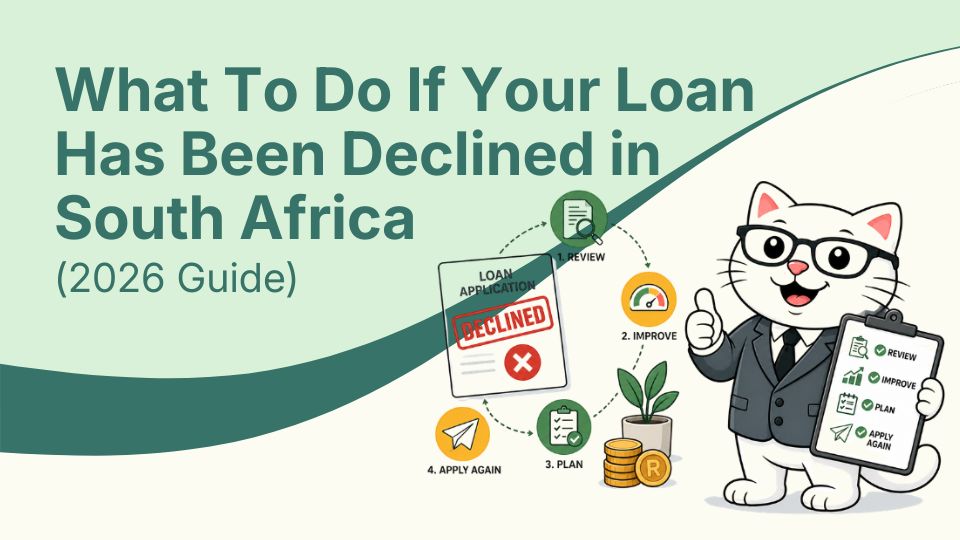
What To Do If Your Loan Has Been Declined in South Africa (2026 Guide)

Learn why loan applications are declined in South Africa and discover practical steps to improve your chances of approval before applying again.

What To Do If Your Loan Has Been Declined in South Africa (2026 Guide)

Last Updated: July 2026

Getting told your loan application has been declined can be frustrating, especially if you were relying on the money for an important expense.

The good news is that a declined application doesn’t necessarily mean you won’t qualify for credit in the future. In many cases, understanding why your loan was declined can help you improve your chances the next time you apply.

South African lenders must follow the National Credit Act (NCA), which means they are required to assess whether a loan is affordable before approving it. They will also consider factors such as your credit history, income, existing debt, employment stability and banking behaviour.

Every lender has its own approval criteria, so being declined by one lender does not necessarily mean you will be declined by another.

In this guide, we’ll explain the most common reasons loans are declined in South Africa, what you should do next and practical steps you can take to improve your chances of approval.

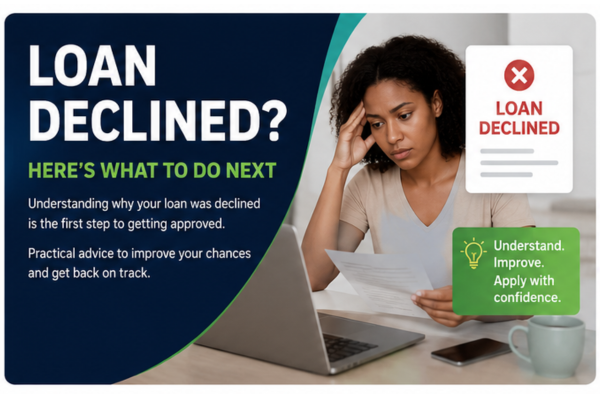
Person reviewing a declined loan application in South Africa

At a Glance

✓ Loan declines are common and don’t always mean you have bad credit.

✓ Affordability is one of the biggest reasons lenders reject applications.

✓ Applying to multiple lenders in a short period may reduce your chances of approval.

✓ Understanding your credit profile can help you identify issues before applying again.

✓ Improving your financial profile may increase your chances of approval.

12 Common Reasons Your Loan Was Declined

The most common reasons a loan application is declined in South Africa include affordability concerns, poor credit history, existing debt, missing documentation, lender-specific criteria and difficulties verifying your income. Understanding the reason for the decline is the first step towards improving your chances of approval.

Reason Can You Fix It? Should You Apply Again Immediately?
Low affordability ✅ Yes ❌ Improve finances first
Poor credit score ✅ Usually ⏳ Wait and improve your score
Too much existing debt ✅ Yes ⏳ Reduce debt first
Missing documents ✅ Yes ✅ Once corrected
Incorrect information ✅ Yes ✅ Once corrected
Debt review ⚠️ Usually no ❌ Seek professional advice
Income couldn’t be verified ✅ Yes ✅ After providing proof
Multiple recent applications ✅ Yes ⏳ Wait a few weeks

Common reasons South African loan applications are declined

So you’ve been turned down for a personal loan. Why?

One of the things that makes rejection difficult is that you aren’t always informed why the lender denied your loan.

There are several possible reasons for rejection, and while it may appear to be concerning, there is nothing to be concerned about in many cases. First, we’ll go over some of the most common reasons for personal loan rejection in this section.

Your Credit Score May Be Too Low

Your credit score is a simple “grade” based on your track record of repaying loans, credit cards, and other forms of borrowing on time.

Most lenders analyse your credit history when considering whether or not to give you money. They prefer people who can manage and return their debts without late payments, defaults, judgments or other negative listings on your credit profile.

Many lenders will reject applicants with low credit scores. However, you may still be eligible for a loan elsewhere (don’t reapply straight away – more on that later).

Alternatively, work on boosting your credit score to increase your chances of getting credit in the future. If your credit history is preventing you from qualifying for traditional finance, you may also want to explore our guide to bad credit loans in South Africa, which explains the options available to borrowers with less-than-perfect credit.

If you don’t have “good” or “excellent” credit, you may learn more about your alternatives in our guide to building your credit score.

You may not meet the lender’s requirements

A good credit score is unlikely to be the sole factor lenders consider. While many lenders will grant credit to those over 18, some will have a larger limit. In that situation, you can either wait or switch providers.

Different Lenders Have Different Lending Criteria

Every lender has its own lending policy and risk appetite. Some specialise in borrowers with strong credit histories, while others are willing to consider applicants with less-than-perfect credit. This means being declined by one lender doesn’t necessarily mean you’ll be declined by another.

As a result, even the “best” borrowers will be turned down from time to time.

Affordability

A lender needs to know that a borrower can afford to repay a loan. On the one hand, it can look at the borrower’s credit history, but even the greatest intentions won’t help if the repayments are too large.

As a result, responsible lenders will only offer you loans they believe you can readily return.

If you’re worried about affordability (for example, a low income), the most straightforward approach is to ask for a smaller loan amount. Using our Loan Calculator can help you estimate repayments before submitting another application.

You Applied for More Than You Could Afford

Sometimes borrowers simply request more money than their financial circumstances support.

Lenders assess how much disposable income you have available after paying your essential monthly expenses and existing debt. If the requested loan would place too much pressure on your budget, your application may be declined.

Before applying again, consider whether a smaller loan amount would better match your affordability. If you’re unsure what lenders may realistically approve, read our guide on how much you can borrow in South Africa, which explains how income, expenses and affordability affect the amount you may qualify for.

Your Income Could Not Be Verified

Lenders need confidence that your income is stable.

If your payslips, bank statements or proof of income don’t match the information on your application, the lender may reject the application until additional verification is provided.

This is particularly common for:

  • Self-employed applicants
  • Freelancers
  • Commission earners
  • Seasonal workers

Banking Behaviour Concerns

Your banking behaviour can play an important role in a lender’s affordability assessment. Many lenders review recent bank statements to better understand how you manage your finances and whether you can comfortably afford additional credit.

They may look for:

  • Returned debit orders
  • Gambling transactions
  • Irregular salary payments
  • Frequent overdraft use
  • Signs of financial distress

Improving your banking habits before applying again may strengthen your application and improve your chances of approval.

You’re Already Under Debt Review

Borrowers under debt review generally cannot take on additional credit until the debt review process has been completed or legally withdrawn.

If you’re currently under debt review, speak to your debt counsellor before considering further borrowing.

There Were Errors on Your Application

Small mistakes can delay or even prevent approval.

Always double-check:

  • ID number
  • Employment details
  • Income
  • Contact details
  • Banking information

before submitting your application.

Incorrect Information on Your Credit Profile

South Africa has several major credit bureaus, including:

  • TransUnion
  • Experian
  • XDS
  • Compuscan (now part of Experian)

If you believe incorrect information is affecting your ability to borrow, you can contact the relevant credit bureau to request a review or correction of inaccurate information.

You can learn more about your rights as a credit consumer on the National Credit Regulator (NCR) website.

Your Employment History Was Too Short

Some lenders prefer applicants who have been in stable employment for several months. If you’ve recently started a new job or have frequent changes in employment, a lender may decide to wait until you have a longer employment history.

Your Documents Were Missing

Missing or incomplete documentation can delay or prevent approval. Make sure you provide all requested documents, such as identification, proof of income and bank statements, when submitting your application.

Fraud Prevention Checks

Lenders carry out identity and fraud checks to protect both borrowers and themselves. If they cannot verify your identity or notice inconsistencies in your application, they may decline the loan until further information is provided.

What not to do if denied a loan

Don’t panic if you’ve been denied a loan; think before you act. Two things to avoid:

Don’t keep applying

Remember that applying for a loan or credit card creates a mark on your credit file that other lenders can view. Lenders expect you to browse around. A flurry of applications can appear eager for credit to a lender in a short period.

Don’t Apply to Multiple Lenders at Once

After a loan decline, it may be tempting to submit applications to several lenders immediately.

However, multiple applications within a short period can create several credit enquiries, which some lenders may view as a sign that you’re experiencing financial difficulty.

Instead, take time to understand why your application was declined, improve your financial profile where possible and compare lenders carefully before applying again. Our Compare Loans guide can help you review different lenders, loan features and eligibility requirements before submitting another application.

What to do if you are denied a loan

A loan denial gives you three options:

Before applying again, it’s worth reviewing the different types of personal loans in South Africa that may better suit your financial circumstances. Different lenders offer different loan amounts, repayment terms and affordability requirements.

  • Find a new lender (without firing off too many applications)
  • Rebuild credit and reapply later
  • Abstain from borrowing

Find a new lender

As previously stated, you must limit yourself to only a few more loan applications to protect your credit report. Before applying again, compare lenders carefully and only apply for products that match your income, affordability and borrowing needs.

Different lenders use different lending criteria. Some place greater emphasis on your credit profile, while others focus more heavily on affordability, income stability and your ability to comfortably repay the loan. Comparing lenders carefully can improve your chances of finding a loan that suits your financial circumstances.

Understanding how lenders assess affordability can also help you choose the right loan. Read our guide on how much you can borrow in South Africa before applying again.

Depending on your financial circumstances, another type of loan or a smaller borrowing amount may be more appropriate than reapplying for the same product immediately.

Borrowing from friends and family, credit unions, or remortgaging if you’re a homeowner are also options.

Rebuild your credit score and reapply later

Improving your credit profile takes time, but consistent financial habits can make a real difference. Paying your accounts on time, reducing existing debt, keeping your credit utilisation low and managing your finances responsibly may improve your creditworthiness over time.

You can learn practical ways to strengthen your credit profile in our guide to improving your credit score in South Africa.

What credit score is required for a personal loan?

It’s possible to get by without borrowing money at all. Maybe you have savings, or the purchase wasn’t necessary. You may also be able to buy it outright by delaying it for a few months.

Does a rejection of a loan affect your credit score?

Strangely, no. An unsuccessful credit application won’t influence your credit score because of the credit file records that you applied, not whether it was successful.

So don’t take this as a reason to keep applying for credit even if lenders have declined you.

How to Improve Your Chances Next Time

Although every lender has different approval criteria, there are practical steps you can take to strengthen future applications.

These include:

  • Improving your credit score
  • Reducing existing debt
  • Paying accounts on time
  • Applying for a realistic loan amount
  • Avoiding multiple applications
  • Keeping your bank account well managed
  • If you believe incorrect information is affecting your ability to borrow, you can contact the relevant credit bureau to request that inaccurate information be reviewed or corrected.
  • Comparing lenders rather than applying everywhere

Small improvements over time can significantly improve your chances of approval.

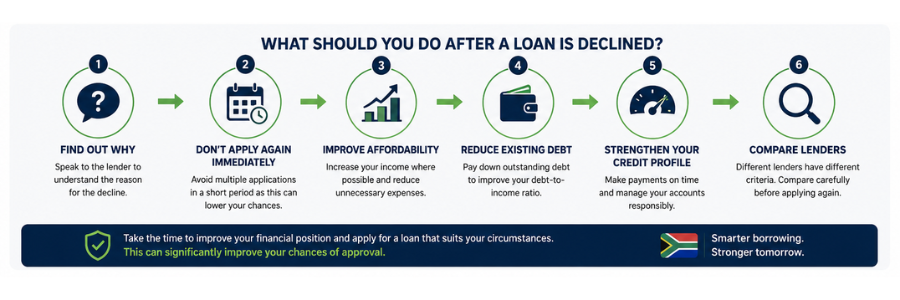
What Should You Do After a Loan Is Declined?

  1. Find out why your application was declined.
  2. Avoid submitting multiple applications immediately.
  3. Improve your affordability where possible.
  4. Reduce existing debt.
  5. Strengthen your credit profile.
  6. Compare lenders before applying again.

Steps to take after a loan application is declined in South Africa

Once you’ve identified why your application was declined and taken steps to improve your financial position, comparing lenders carefully can help you find a loan that better matches your circumstances.

Compare South African loan options after a declined application

Can You Avoid Having Your Next Loan Declined?

Although no lender can guarantee approval, there are practical steps you can take before submitting another application.

These include:

  • Checking that your application information is accurate
  • Applying for a realistic loan amount
  • Making repayments on time
  • Reducing existing debt where possible
  • Avoiding multiple loan applications within a short period
  • Keeping your bank statements well managed
  • Comparing lenders before applying

Preparing your application carefully can significantly improve your chances of approval while helping you avoid unnecessary credit enquiries.

Frequently Asked Questions

Why was my loan application declined?

A loan application can be declined for several reasons, including affordability concerns, a low credit score, high existing debt, insufficient income, missing documentation or lender-specific eligibility criteria. In South Africa, lenders must also comply with the National Credit Act (NCA), which requires them to ensure that a loan is affordable before approving it.

Does a declined loan application affect my credit score?

A declined application itself does not usually lower your credit score. However, the credit enquiry made during your application may appear on your credit report. Submitting multiple loan applications within a short period can make some lenders view you as a higher-risk borrower, so it’s generally better to understand why your application was declined before applying again.

How long should I wait before applying for another loan?

There is no legal waiting period, but it’s usually better to address the reason your application was declined before submitting another one. For example, you may need to reduce existing debt, improve your credit score, correct errors on your credit report or provide additional proof of income. Applying again immediately without making any changes may lead to another decline.

Can I get approved by another lender after being declined?

Yes. Every lender has its own lending criteria and risk policies. Being declined by one lender does not automatically mean every other lender will reject your application. Comparing lenders carefully and applying only when you meet their requirements can improve your chances of approval.

Can I get a loan if I have bad credit?

Possibly. Many South African lenders consider applications from borrowers with less-than-perfect credit histories. Approval usually depends on your overall affordability, current income, employment stability and ability to repay the loan rather than your credit score alone.

Can I find out why my loan was declined?

In some cases, yes. While lenders are not always required to provide a detailed explanation, they will usually tell you which credit bureau they used during the assessment. Speaking to the lender and contacting the relevant credit bureau, where appropriate, may help you identify the reason for the decline and what you can improve before applying again.

Key Takeaways

  • Loan applications can be declined for many reasons, including affordability, existing debt, poor credit history and missing information.
  • A declined application does not automatically mean you’ll be declined by every lender.
  • Avoid submitting multiple loan applications in a short period.
  • Improving your affordability and credit profile can increase your chances of approval.
  • Comparing lenders carefully before applying may help you find a loan better suited to your financial circumstances.

Conclusion

Having your loan application declined can be disappointing, but it doesn’t mean you’ll never qualify for credit.

In many cases, lenders decline applications because of affordability concerns, existing debt, missing information or lender-specific lending criteria rather than simply because of a poor credit score.

Before applying again, take time to understand what may have affected your application, improve your financial position where possible and compare lenders carefully.

Applying for a realistic loan amount, reducing existing debt and strengthening your overall financial profile can significantly improve your chances of approval over time.

If you’re ready to explore your options, visit our Compare Loans page to review trusted South African lenders and find loan products that suit your income, affordability and financial goals.

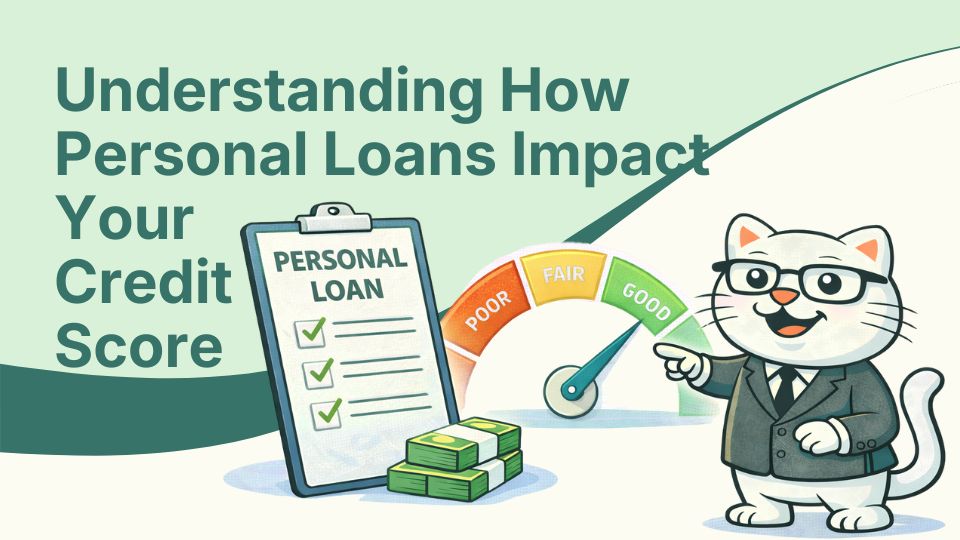
Understanding How Personal Loans Impact Your Credit Score

Understanding How Personal Loans Impact Your Credit Score

Updated January 2026

Many South Africans turn to personal loans to manage emergencies, pay off debts, or fund important life goals. But one big question always comes up: Do personal loans affect my credit score?

The answer is yes — personal loans can both help and hurt your credit score depending on how you handle them. A new loan might cause a short-term dip due to a credit check, but regular, on-time repayments can improve your credit profile over time.

Let’s explore how personal loans work in South Africa, how they influence your credit score, and how to use them responsibly to strengthen your financial future.

Want to build your credit score faster?

This guide explains how personal loans can affect your credit score. If you want to compare regulated loan options safely, your next step is:

What Are Personal Loans and Why They Matter in South Africa

A personal loan is a lump-sum amount borrowed from a registered lender — such as a bank, credit union, or micro-finance provider — that you repay in fixed monthly instalments with interest.

In South Africa, personal loans are often used for:

  • Consolidating high-interest debt

  • Covering medical expenses or car repairs

  • Funding home improvements

  • Paying for education, weddings, or unexpected emergencies

Because personal loans are typically unsecured, approval depends heavily on your credit score, income, and affordability assessment in line with National Credit Regulator (NCR) guidelines.

If your goal is to compare personal loan offers specifically, you can explore options on our personal loans comparison page.

How Credit Checks Work When You Apply for a Personal Loan

When you apply for personal loans, the lender performs a hard credit check through credit bureaus such as Experian South Africa, TransUnion, or Compuscan.

A hard check allows lenders to assess your repayment history, outstanding debts, and credit risk. Each inquiry can cause a small, temporary dip in your score — usually a few points that recover within a few months.

💡 Tip:
Avoid submitting multiple loan applications within a short period. Too many credit enquiries can reduce your score temporarily and may lower your approval odds. If you’re still exploring options, it’s smarter to compare loan types and requirements before you apply.

Can Personal Loans Improve Your Credit Score?

Yes — when managed correctly, personal loans can strengthen your credit score over time. Here’s how they help:

1. Building a Positive Payment History

Your repayment history contributes most to your credit score. By consistently paying your personal loan on time, you show lenders you can handle debt responsibly — boosting your score gradually.

2. Improving Your Credit Mix

Lenders like to see a variety of credit types. Managing both revolving credit (like credit cards) and installment credit (personal loans) shows financial balance and maturity, which helps your score over time.

3. Lowering Credit Utilisation Through Debt Consolidation

Using personal loans to consolidate high-interest debts can lower your overall credit utilisation ratio. Paying off expensive credit cards with a structured, fixed-term loan simplifies payments and reduces financial stress.

How Personal Loans Might Hurt Your Credit Score

Just as personal loans can improve your score, mismanaging them can also cause harm. Here’s how:

1. Multiple Hard Credit Enquiries

Each loan application triggers a hard check. Several inquiries in a short period can reduce your score and make lenders see you as higher risk.

2. Taking On Too Much Debt

Every personal loan increases your total debt load. Borrowing more than you can afford can raise your debt-to-income ratio and lead to difficulty keeping up with repayments.

3. Missed or Late Payments

Missing a single personal loan payment can negatively impact your credit score. Creditors report missed payments to bureaus, and repeated late payments can lead to defaults that stay on your report for years.

4. Loan Defaults and Collections

If you fail to repay a personal loan, the lender may hand your account to collections. This can significantly harm your credit rating and limit your ability to borrow in the future.

Do Personal Loans Affect My Credit Score? Apply Here.

What Credit Score Is Needed for Personal Loans in South Africa?

South African credit scores generally range between 300 and 850, though exact scales can differ slightly by bureau:

Score Range Rating Loan Access
741 – 850 Excellent Easy approval, best interest rates
713 – 740 Good Likely approval with fair rates
660 – 712 Fair Possible approval, higher interest
575 – 659 Below Average Limited access, higher costs
300 – 574 Poor May require secured or smaller loans

If your score is below average, don’t panic. Some lenders specialise in personal loans for low-credit borrowers, though rates will be higher. You can still use these responsibly to rebuild your credit by paying on time.

Check your credit status regularly through Experian SA or TransUnion SA to ensure your report is accurate before applying.

Do Debt Consolidation Personal Loans Affect Credit?

Yes — and mostly in a positive way when used properly. Using personal loans to consolidate other debts can simplify your finances and reduce your credit utilisation ratio.

By replacing multiple high-interest debts with one manageable repayment, you improve payment consistency — one of the key drivers of a healthy credit score.

However, there’s a short-term credit dip when you first apply. Keep making payments on time and avoid taking on new debt to see improvement over several months.

How to Use Personal Loans Responsibly

To ensure personal loans work for you — not against you — follow these simple habits:

  1. Borrow what you can afford – Avoid over-borrowing and stay within your monthly budget.

  2. Set up debit orders – Automating repayments helps prevent missed instalments.

  3. Monitor your credit score – Use tools from Experian or TransUnion to track progress.

  4. Avoid applying for multiple loans – Focus on one loan at a time.

  5. Read your loan agreement carefully – Understand your interest rate, fees, and penalties.

  6. Plan for early repayment – If possible, paying off your loan early can reduce total interest and build trust with lenders.

How Long Do Personal Loans Stay on Your Credit Record?

In South Africa, personal loans remain visible on your credit record for up to five years after closure. If you pay on time, that positive record helps improve your future creditworthiness.

Defaults, however, stay visible for the same period and can limit access to affordable credit. That’s why managing your personal loan carefully is crucial.

Frequently Asked Questions About Personal Loans and Credit

Can I get personal loans with bad credit?

Yes, but you may need to work with alternative lenders and accept higher interest rates. Responsible repayment can help you rebuild your score.

Does settling a personal loan early help my credit?

It can. Early settlement reduces debt load and interest payments, showing strong financial control.

Are all lenders required to report personal loans to credit bureaus?

Most NCR-registered lenders report to major bureaus like TransUnion SA and Experian SA, ensuring your loan performance affects your credit file.

Key Takeaways: How Personal Loans Affect Credit in South Africa

  • Applying for personal loans causes a short-term dip due to hard checks.

  • Paying on time builds a strong repayment history and boosts your credit score.

  • Debt consolidation with personal loans can simplify repayments and lower credit utilisation.

  • Missed or late payments can seriously harm your score.

  • Responsible borrowing under NCR guidelines improves long-term credit health.

Final Thoughts

Personal loans can be a stepping stone to better credit — or a setback if not managed wisely. The difference lies in understanding how they affect your financial profile and making informed decisions.

At FatCat Loans, we’re committed to helping South Africans borrow smarter. Whether you need to consolidate debt, cover an emergency, or plan a big expense, we connect you with trusted, NCR-registered lenders that offer fair, transparent loan options.

Compare loan options safely (without damaging your credit)

Personal loans can be helpful when used responsibly — but your credit score improves fastest when you apply only when you’re ready and can afford the repayments.

If you want to compare loan types based on your needs and repayment ability, start here:

Reviewed by the FatCat Loans Editorial Team. Read our publishing standards here: Editorial Policy.

Everything You Should Know About Online Instalment Loans

Online Instalment Loans: What You Should Know

Last Updated: October 2026

Online instalment loans allow you to borrow money and repay it through scheduled instalments over an agreed period. The amount available, repayment period, interest, fees and eligibility requirements vary between credit providers.

Before applying, consider whether you need to borrow, whether the repayments fit within your budget and how much the credit will cost overall. This guide explains how online instalment loans work in South Africa and what to check before accepting an offer.

If you’re considering this type of credit, you can learn more about instalment loans in South Africa and compare the features that may vary between providers.

Online Instalment Loan Applications: What to Expect

The application process varies between credit providers. If you apply online, you may be asked to provide information that helps the provider verify your identity, income, expenses, existing financial commitments and ability to afford the repayments.

Information You May Need

Depending on the provider and your circumstances, this may include:

  • Your personal and contact details.
  • South African identification.
  • Income or employment information.
  • Banking information or bank statements.
  • Details of your expenses and existing financial obligations.
  • Additional documents required for verification.

Requirements vary, so check what information the credit provider needs before completing an application.

What Credit Providers May Consider

Eligibility requirements vary between credit providers. When assessing an application, a provider may consider information such as:

  • Your income and employment or other income sources.
  • Your regular living expenses.
  • Your existing debts and financial obligations.
  • Information in your credit profile.
  • Your banking information or transaction history where relevant.
  • The amount you want to borrow and the proposed repayments.

Credit providers must comply with applicable requirements under the National Credit Act (NCA), including applicable affordability assessment requirements.

Meeting a provider’s eligibility requirements does not guarantee that an application will be approved.

Check the Repayment Schedule

Before accepting an instalment loan, check how much you will need to repay, when repayments are due and how long the repayment period lasts.

Repayment schedules vary between credit providers and products. Make sure the required repayments fit within your budget alongside your normal living expenses and existing financial commitments.

If you already have several debts, taking on another loan may not always be the right solution. You can also learn how debt consolidation loans work if you are considering whether combining eligible debts could be appropriate.

How Long Do Approval and Payout Take?

Approval and payout times vary between credit providers. The time required can depend on factors such as when you apply, whether additional documents are required, verification and affordability checks, and banking processes.

An online application may make it possible to submit your information without visiting a branch, but this does not mean approval or payout will be instant.

If you need money quickly, avoid relying on a guaranteed payout time until your application has been assessed and you have received and accepted an offer.

Understanding Interest and the Total Cost

The cost of an instalment loan can vary depending on the credit product, provider, amount borrowed, repayment period and your individual circumstances.

When comparing options, consider more than the advertised interest rate. Review:

  • The applicable interest rate.
  • Any permitted fees and charges.
  • The repayment amount.
  • The repayment period.
  • The total cost of the credit.

Review the pre-agreement information and quotation carefully before accepting an offer so you understand what you will be expected to repay.

You can also check that a credit provider is registered with the National Credit Regulator (NCR).

Check the Fees and Charges

Interest is not necessarily the only cost associated with credit. Depending on the agreement and applicable regulations, other permitted fees or charges may apply.

Before accepting an offer, check the documents supplied by the credit provider for:

  • Any initiation fee.
  • Applicable service fees.
  • Credit insurance costs, where applicable.
  • Charges that may apply if you miss repayments.
  • The total amount you will repay under the agreement.

If you do not understand a fee or charge, ask the credit provider to explain it before accepting the agreement.

Online Instalment Loans vs Branch-Based Applications

The main difference is often how you apply. An online application can usually be completed remotely, while some providers may also offer branch-based or other application channels.

Interest rates, fees, eligibility requirements, repayment periods and approval times vary between individual credit providers. An online loan should not automatically be assumed to be cheaper, more expensive, easier to qualify for or faster than another form of credit.

Compare the actual terms offered to you rather than choosing a loan based only on how the application is completed.

When Might an Instalment Loan Be Appropriate?

An instalment loan may be one option when you need to finance an expense and prefer to repay the amount through scheduled repayments rather than in a single payment.

Before borrowing, consider whether the expense can be covered without credit and whether you can comfortably afford the repayments. Taking on additional debt may not be appropriate if your existing financial commitments are already difficult to manage.

If you’re experiencing difficulty with existing debt, consider getting appropriate financial guidance before taking on additional credit.

Practical Tips Before Taking an Online Instalment Loan

Compare multiple offers

Compare the interest, fees, repayment period and total cost of different options before accepting an offer.

Understand the total cost

Look at the full repayment structure, not just the monthly amount.

Borrow only what you need

More debt means higher interest and long-term repayment pressure.

Evaluate affordability honestly

Review your income, living expenses and existing financial commitments before deciding whether you can afford another repayment.

Check the lender’s reputation

Read customer reviews and confirm NCR registration.

Compare loan options with FatCat Loans

Conclusion

Online instalment loans allow you to spread repayment of borrowed money over an agreed period, but the costs, eligibility requirements and repayment terms vary between credit providers.

Before accepting an offer, check the interest, applicable fees, repayment amount, repayment period and total cost. Make sure the repayments are affordable alongside your existing expenses and financial commitments.

If you’re considering this type of borrowing, you can compare instalment loan options and review the terms carefully before deciding whether to apply.

Frequently Asked Questions About Online Instalment Loans

What is an online instalment loan?

An online instalment loan is credit that you apply for online and repay through scheduled instalments over an agreed period. The amount, repayment period, interest, fees and eligibility requirements vary between providers.

How quickly can an online instalment loan be approved?

Approval times vary. The provider may need to assess affordability, verify information or request additional documents before making a decision. Payout timing can also depend on the provider and banking processes.

Can I apply for an instalment loan with bad credit?

You can potentially apply, but approval is not guaranteed. Credit providers may consider your credit information alongside factors such as income, expenses, existing debts and affordability. You can learn more about bad credit loan options if this is relevant to your circumstances.

What documents might I need?

Requirements vary between providers. You may be asked for identification, income information, banking information or bank statements and other documents needed to verify your application.

Are online instalment loans more expensive?

Not necessarily. Interest rates, fees and other costs vary between credit providers and products. Compare the total cost rather than assuming an online or branch-based loan will automatically be cheaper.

Can I settle an instalment loan early?

Early settlement rights and any applicable costs depend on the credit agreement and applicable law. Check your agreement or ask the credit provider for a settlement amount if you want to repay the loan early.

How can I check whether an online credit provider is legitimate?

Verify the credit provider’s registration with the National Credit Regulator (NCR) and make sure the registration details match the business you are dealing with. Be cautious of guaranteed approval claims, suspicious upfront payments or requests for sensitive banking information such as your PIN or password.

What can happen if I miss a repayment?

Depending on the agreement and circumstances, missed repayments may result in permitted charges, collection activity and negative information being reflected in your credit history. Contact the credit provider as early as possible if you expect difficulty making a repayment.

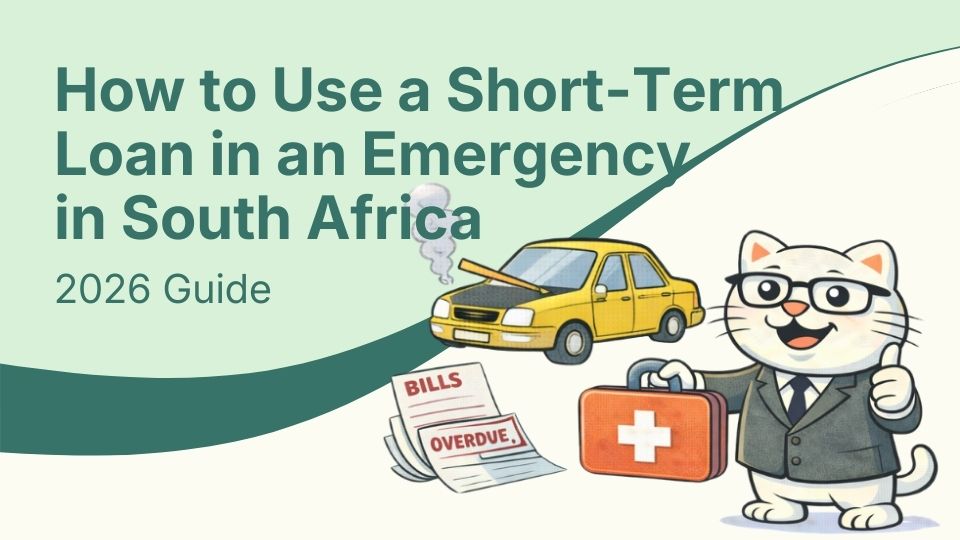
Using a Short-Term Loan in an Emergency in South Africa (Guide)

Unexpected expenses can happen at any time. Learn how short-term loans in South Africa work, when to use them in an emergency, what they cost, and how to borrow responsibly.

How Can You Use a Short-Term Loan in an Emergency in South Africa?

Last Updated: October 2026

Emergencies rarely arrive at a convenient time. A burst geyser, unexpected medical bill, urgent car repair or last-minute travel can quickly put pressure on your budget. If savings or other alternatives aren’t available, a short-term loan may be one option to consider for an essential expense.

Short-term loans are generally repaid over a shorter period than longer-term personal loans, although repayment periods vary between credit providers and products. Before borrowing, consider whether you can afford the repayments alongside your existing expenses and financial commitments.

If you’re exploring borrowing options, compare the interest, fees, repayment period and total cost before accepting an offer. You can compare loan options to understand the options available.

Quick Answer: What Is a Short-Term Emergency Loan?

A short-term loan is credit that is repaid over a relatively short period. Someone facing an unexpected expense may consider this type of borrowing if other options are unavailable, but the repayment period, eligibility requirements, interest and fees vary between credit providers.

Applying online does not guarantee immediate approval or same-day payout. The provider may need to complete affordability and verification checks before making a decision, and payout timing can also depend on banking processes.

Important: Before accepting any loan, check the repayment amount, repayment period and total cost of the credit and make sure the repayments are affordable.

Compare short-term loan options with FatCat Loans

When Does It Make Sense to Use a Short-Term Loan?

A short-term loan may be one option for an essential expense if other alternatives are unavailable and you can afford the repayments. Before borrowing, consider whether the expense is:

  • Unexpected and urgent
  • Essential (not luxury spending)
  • Likely to become worse or more expensive if delayed
  • Not possible to cover through savings
  • Affordable to repay within the loan term

To make sure you’re choosing the right borrowing product, it’s worth learning more about short-term loans in South Africa and how lenders structure repayment terms.

5 Common Ways to Use a Short-Term Loan in an Emergency

Below are the most common and realistic ways South Africans use short-term loans during emergencies. These examples align with typical financial stress events that require immediate action.

1. Medical and Health Emergencies

Health emergencies are one of the most common reasons people apply for short-term loans. Even with medical aid, there may be co-payments, emergency prescriptions, specialist fees, or unexpected hospital costs that you need to cover quickly.

A short-term loan may help cover essential medical expenses such as:

  • Emergency dental treatment
  • Urgent surgery deposits
  • Prescription medication
  • Ambulance fees
  • Specialist consultations
  • Medical tests or scans

Tip: If possible, request an itemised invoice from the medical provider so you know exactly what you are borrowing for.

2. Urgent Home Repairs (Geyser, Plumbing, Electrical)

Home emergencies can’t always wait until payday. A burst pipe, a broken geyser, storm damage, or an electrical fault can create unsafe living conditions — and leaving repairs too long can cause more expensive damage later.

Short-term loans are often used to pay for urgent repairs such as:

  • Plumbing repairs and water leaks
  • Electrical rewiring or DB board fixes
  • Roof repairs after storms
  • Broken windows or security gate repairs
  • Emergency pest control

When choosing a loan for repairs, make sure your monthly repayment is realistic and won’t interfere with rent, groceries, and transport costs.

3. Car Repairs and Transport Emergencies

For many South Africans, reliable transport is essential for earning an income. If your car breaks down and you rely on it to commute to work, a repair delay can quickly become a financial disaster.

Short-term loans can help cover urgent transport-related expenses such as:

  • Emergency mechanical repairs
  • Battery replacement
  • Tyre replacement
  • Accident excess payments
  • Temporary transport costs
  • Vehicle servicing needed to remain roadworthy

Smart move: Ask for a written quote from your mechanic before borrowing so you don’t borrow more than you need.

4. Emergency Travel and Funeral Costs

Unexpected travel needs can arise quickly, especially when there is a family emergency or funeral. Flights, fuel, accommodation, and funeral-related expenses can be extremely costly, and these situations often require immediate payment.

A short-term loan can help cover emergency travel expenses such as:

  • Last-minute flights or bus tickets
  • Fuel for long-distance travel
  • Accommodation for family members
  • Funeral arrangements and burial costs
  • Food and transport while travelling

Important: In emotional situations, it’s easy to borrow impulsively. Take a moment to calculate your repayment plan before committing.

5. Essential Appliance Replacement (Fridge, Stove, Laptop)

When essential appliances break, replacing them is often unavoidable. A fridge breakdown can lead to wasted groceries, and a broken stove or washing machine can disrupt daily life. If you work remotely, a laptop replacement may be urgent for income stability.

Short-term loans are commonly used for essential replacements such as:

  • Fridges and freezers
  • Stoves or microwaves
  • Washing machines
  • Mobile phones needed for work
  • Laptops for employment or study

If your credit profile is limited or your score isn’t ideal, you may still have options. Consider exploring bad credit loan options and compare eligibility requirements before applying.

Short-Term Loans vs Payday Loans: What’s the Difference?

The terms “short-term loan” and “payday loan” are sometimes used interchangeably, but they do not necessarily describe exactly the same type of credit.

A payday-style loan is generally associated with borrowing over a very short period, often around the borrower’s next payday. “Short-term loan” is a broader description and may include credit repaid over several instalments.

The actual repayment period, interest, fees and other terms depend on the specific credit product and provider. Check the agreement rather than relying only on the product name when comparing options.

Before applying, you can use our loan calculator to estimate repayments for different loan amounts and repayment periods.

How Much Do Short-Term Loans Cost in South Africa?

Short-term loan costs in South Africa may include interest, initiation fees, and monthly service fees. Always ask for the total repayment amount before accepting an offer.

The cost of a short-term loan depends on the lender, your credit profile, the amount borrowed, and the repayment period. In South Africa, credit providers must comply with the National Credit Act, which regulates certain fees and lending practices.

When calculating the cost of a short-term loan, consider:

  • Applicable interest rate
  • Initiation fees
  • Monthly service fees
  • Charges that may apply if you miss repayments

Pro tip: Always ask for the total cost of credit and the total repayment amount before signing. If the lender is unclear or avoids providing the full repayment figure, it’s a warning sign.

What You May Need to Apply for a Short-Term Loan

Application requirements vary between credit providers. Depending on the provider and your circumstances, you may be asked for information or documents such as:

  • South African identification.
  • Income or employment information.
  • Banking information or bank statements.
  • Details of your expenses and existing financial commitments.
  • Proof of address or other verification documents where required.

The credit provider may request additional information before making a decision on your application.

How to Borrow Responsibly

Because loans affect your financial wellbeing, it’s essential to borrow responsibly. Short-term loans can be extremely helpful during emergencies, but they can also create long-term financial stress if you borrow more than you can afford.

Before applying, ask yourself:

  • Is this expense truly urgent and necessary?
  • Can I repay the loan without skipping essential bills?
  • Do I have a stable income for the repayment period?
  • Have I compared at least 2–3 loan offers?
  • Do I understand the full repayment amount?

Warning: Missing repayments may result in permitted charges, collection activity and negative information being reflected in your credit history. If you are already struggling with debt, consider getting appropriate financial guidance before taking on additional credit.

Before You Submit an Application

Before applying, check that the information you provide is accurate and that you understand how another repayment would affect your budget.

  • Check that your personal and financial information is accurate.
  • Consider how much you actually need to borrow.
  • Review your existing debts and regular expenses.
  • Check whether the proposed repayments are affordable.
  • Have any information or documents requested by the credit provider available.

Submitting an application does not guarantee approval. Each credit provider applies its own eligibility criteria and must comply with applicable affordability assessment requirements.

Best Alternative Options to Consider Before Borrowing

Before taking out a short-term loan, it’s worth checking if there are lower-cost alternatives available. Depending on your situation, these may include:

  • Negotiating a payment plan with the service provider
  • Using a credit card (if interest is lower and repayment is manageable)
  • Borrowing from a trusted family member
  • Accessing employer salary advances (if available)
  • Using savings or emergency funds

Short-term loans should be used when they are the most realistic and responsible option — not as a first choice for non-essential purchases.

Compare Loan Options Before You Apply

Credit providers may offer different interest rates, fees, repayment periods and eligibility requirements. Comparing available options can help you understand these differences before deciding whether to apply.

To explore different loan products, repayment periods, and lender requirements, you can compare loans before you apply.

Compare loan options with FatCat Loans

Frequently Asked Questions About Short-Term Emergency Loans

What is considered a financial emergency?

A financial emergency is usually an unexpected expense that must be paid immediately, such as urgent medical bills, home repairs, car breakdowns, funeral costs, or essential travel.

How quickly can I receive the money?

Approval and payout times vary between credit providers. Timing may depend on affordability and verification checks, whether additional information is required, when you apply and banking processes. Do not assume that approval or payout will be immediate.

Can I get a short-term loan with bad credit?

Some lenders consider applications from borrowers with poor or limited credit history. Approval depends on affordability checks, income, and the lender’s requirements. Explore bad credit loan options to learn more.

Are short-term loans regulated in South Africa?

Credit providers operating in South Africa must comply with applicable requirements under the National Credit Act (NCA) and other relevant laws and regulations.

Will a short-term loan affect my credit score?

It can affect your credit profile. A credit provider may access credit information when assessing an application, and repayment information may be reported to credit bureaus. The effect on your credit score depends on factors including the scoring model and the information in your overall credit profile.

Final Thoughts: Should You Use a Short-Term Loan in an Emergency?

A short-term loan may be one option for an urgent expense when other alternatives aren’t available, but borrowing creates a repayment obligation and should be considered carefully.

Before accepting an offer, check the interest, applicable fees, repayment period and total cost. Only borrow an amount you can reasonably afford to repay alongside your existing expenses and financial commitments.

If you’re considering this type of borrowing, learn more about short-term loans in South Africa and compare the terms available before deciding whether to apply.

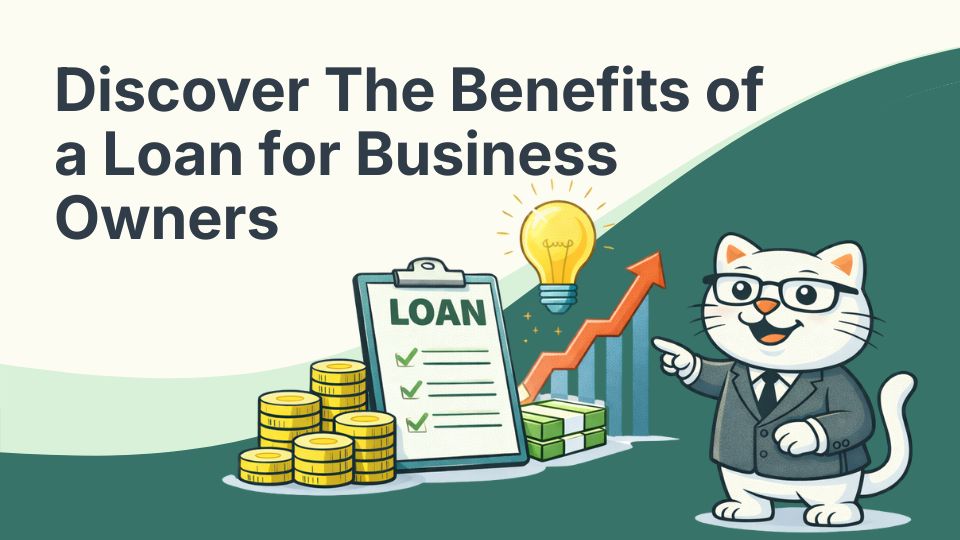
Discover The Benefits of a Loan for Business Owners

Introduction to  the Benefits of a Loan for Business Owners

Running a business in South Africa often comes with financial challenges — from managing cash flow to funding growth. That’s why it’s essential to understand the benefits of a loan for business owners. Business loans give entrepreneurs the flexibility to expand, purchase new equipment, or handle unexpected expenses without disrupting daily operations.

Whether you’re an established business owner or a start-up founder, learning about the benefits of a loan for business owners can help you make smarter financial decisions and unlock your company’s full potential.

In this guide, we’ll explore the key benefits of a loan for business owners and show how FatCat Loans can help you find the best funding solution for your goals.

Understanding The Benefits of a Loan for Business Owners

What is a Business Loan?

A business loan is a financial product that provides funds to business owners for various purposes — such as expansion, equipment purchase, working capital, or operational expenses. The loan is repaid over time with interest, based on agreed-upon terms.

Types of Business Loans in South Africa

There are several loan types available for South African entrepreneurs:

  • Term Loans: Borrow a lump sum and repay it over a fixed term.

  • Revolving Credit: Access funds repeatedly up to a set limit.

  • Equipment Financing: Buy machinery or vehicles for your business.

  • Invoice Financing: Borrow against unpaid invoices to maintain cash flow.

  • Start-up Loans: Designed for new businesses with limited trading history.

The Key Benefits of a Loan for Business Owners

1. Access to Working Capital

One of the biggest benefits of a loan for business owners is maintaining steady working capital. Seasonal sales, delayed payments, or unexpected costs can all disrupt cash flow. A loan bridges that gap, allowing you to pay suppliers, employees, and bills on time — keeping operations smooth and stress-free.

2. Business Expansion Opportunities

Growth often requires investment — whether you’re opening a new branch, hiring more staff, or increasing production. Business loans enable you to take bold steps toward expansion without draining your existing reserves.

By using a loan strategically, business owners can seize opportunities quickly, outpacing competitors who rely solely on organic growth.

3. Building Business Credit

Taking a business loan and repaying it responsibly helps build your business credit profile. A strong credit history improves your future borrowing power, enabling access to larger funding at better interest rates. This is one of the most overlooked yet vital benefits of a loan for business owners.

4. Managing Cash Flow Gaps

Even profitable businesses face uneven cash flow — for instance, when client payments are delayed or expenses rise suddenly. A short-term loan can stabilize finances during tough months, preventing operational slowdowns or missed opportunities.

5. Taking Advantage of Growth Opportunities

Sometimes, opportunities don’t wait — like bulk supplier discounts or limited-time expansion deals. With a business loan, you can act fast, using borrowed funds to secure new contracts, launch marketing campaigns, or invest in inventory before competitors do.

How The Benefits of a Loan for Business Owners Support Growth

In South Africa, small and medium-sized enterprises (SMEs) form the backbone of the economy. However, limited access to finance remains one of their biggest challenges.

By understanding the benefits of a loan for business owners, SMEs can overcome financial barriers. Loans help with:

  • Purchasing essential equipment or stock

  • Creating jobs in local communities

  • Improving productivity and efficiency

  • Expanding into new markets

According to the National Credit Regulator (NCR), responsible lending empowers entrepreneurs to build sustainable businesses that boost economic growth. (Learn more at the National Credit Regulator.)

The Role of Responsible Borrowing

While the benefits are significant, responsible borrowing is key. Business loans should be used as a growth tool, not a crutch.

Here’s how to borrow smartly:

  • Assess your business plan before applying.

  • Borrow only what you need and can repay comfortably.

  • Compare interest rates and repayment terms.

  • Monitor your ROI (Return on Investment) to ensure the loan drives measurable value.

With guidance from FatCat Loans, business owners can confidently navigate the process — ensuring the loan strengthens, not strains, the company’s finances.

How FatCat Loans Helps You Access The Benefits of a Loan for Business Owners

At FatCat Loans, we believe in helping local businesses grow. Our platform simplifies the loan process by connecting business owners with trusted lenders who offer:

  • Competitive interest rates

  • Flexible repayment options

  • Fast approval times

  • Tailored loan solutions for SMEs and start-ups

Whether you’re looking for short-term financing or a long-term growth loan, FatCat Loans helps you compare the best loan options for business owners in South Africa — all in one place.

👉 Visit FatCat Loans to explore business financing options today.

Click here to learn about the benefits of a loan for business owners with FatCat Loans.

FAQs About The Benefits of a Loan for Business Owners

What are the main benefits of a loan for business owners?

Business loans provide working capital, enable growth, and help build business credit.

Can a small business qualify for a loan in South Africa?

Yes, many lenders offer SME-focused loans, especially through platforms like FatCat Loans.

How long does loan approval take?

Most lenders process business loan applications within a few working days once documents are submitted.

Do I need collateral to get a business loan?

Some loans are secured (e.g., equipment loans), while others are unsecured and based on credit history.

Can I apply for a loan if my business is new?

Yes, startup loans are available for new businesses with a solid business plan and projected income.

How can FatCat Loans help me find the right business loan?

FatCat Loans compares offers from multiple NCR-registered lenders, helping you find affordable financing options that fit your needs.

Conclusion

Understanding the benefits of a loan for business owners empowers you to grow confidently. Whether it’s expanding operations, managing cash flow, or seizing a new opportunity, the right loan can transform your business potential.

At FatCat Loans, we make borrowing simple, transparent, and tailored to your goals.

👉 Apply online today at FatCat Loans and give your business the financial edge it deserves.

Loan Options in South Africa: A Clear Borrowing Guide

What Loan Options Are There in South Africa?

Last Updated: October 2026

If you’ve ever asked yourself “what loan options are there in South Africa?”, you’re not alone.

Borrowing money is a reality for many South Africans — not because people want to live on debt, but because life can be unpredictable. Sometimes a loan helps you cover a once-off cost, manage cash flow, or handle an emergency without falling behind on essentials.

But there’s a big difference between borrowing wisely and borrowing blindly.

Loans can be helpful tools when used responsibly — but they can also become expensive and stressful when you don’t fully understand the terms, the total cost, or what you can realistically afford each month.

That’s why this guide is designed to make everything clearer. You’ll learn what loan options exist, how they work, what to watch out for, and how to decide which loan type might suit your situation.

At FatCat Loans South Africa, we help you compare personal loan options from participating credit providers and apply online through our platform.

Start by exploring Personal Loans to see what options may be available to you.

Quick Summary: What Loan Options Are There in South Africa?

In South Africa, the most common borrowing options include:

  • Personal loans – generally repaid through scheduled instalments over an agreed period.

  • Short-term loans – credit with a relatively short repayment period.

  • Instalment loans – loans repaid through scheduled instalments over an agreed term.

  • Debt consolidation loans – credit that may be used to combine eligible debts into a new repayment arrangement.

  • Credit cards and store accounts – forms of revolving or retail credit.

  • Overdraft facilities – borrowing facilities linked to a bank account.

  • Vehicle finance – credit used to finance a vehicle, usually linked to the vehicle being financed.

  • Other specialised credit products – availability and eligibility depend on the provider and your circumstances.

Each option comes with different repayment structures, requirements, and total costs — and the right choice depends on your budget, your credit profile, and what you need the money for.

Important: FatCat Loans does not offer mortgages (home loans) or student loans. This article focuses on credit options that are most relevant to the everyday needs of our customers.

Understanding the Basics: Secured vs Unsecured Loans

Before comparing credit options, it helps to understand the difference between secured and unsecured borrowing.

Secured Loans

A secured credit agreement is linked to an asset or other security. Vehicle finance is one common example where the financed asset forms an important part of the credit agreement.

If repayments are not made, the credit provider may have rights under the agreement and applicable law relating to the secured asset. Check the agreement carefully so you understand these consequences before accepting the credit.

Unsecured Loans

Unsecured credit does not require an asset such as a vehicle or property to be provided as security. Many personal loans are unsecured.

Eligibility, interest, fees, repayment periods and loan amounts vary between credit providers and applicants. Providers may consider factors such as income, expenses, existing debts, credit information and affordability when assessing an application.

Personal Loans: One of the Most Flexible Loan Options in South Africa

When people ask “what loan options are there?” they’re often actually searching for something flexible and practical — and that’s exactly where personal loans come in.

A personal loan is a fixed amount of money you borrow and repay through monthly instalments over an agreed term. In most cases, personal loans are unsecured, meaning you don’t need to use your car or any other asset as security.

What Can You Use a Personal Loan For?

Personal loans are commonly used for:

  • urgent household expenses

  • unexpected costs

  • home improvements (repairs, not renovations you can’t afford)

  • medical needs

  • moving expenses

  • covering a temporary shortfall between income and expenses

Because personal loans aren’t restricted to a specific purchase, they’re often a more convenient option than product-based finance agreements.

To explore options, you can visit our Personal Loans page and see what’s available through FatCat Loans.

Why Personal Loans Are Popular (and What to Watch Out For)

Personal loans are popular because they often provide structure and clarity.

✅ Benefits of Personal Loans

  • Fixed monthly repayments (easier budgeting)

  • A clear repayment end date

  • Funds can be used for multiple purposes

  • Often available through online application processes

⚠️ Things to Consider Before You Apply

Even though personal loans are useful, they can still become risky if taken too lightly. Before signing anything, you should understand:

  • the interest rate you’re offered

  • the total repayment amount

  • monthly fees or once-off charges

  • what happens if you miss a payment

  • whether the loan fits your budget comfortably

If you ever feel rushed to sign, that’s a red flag. Good lenders and responsible platforms allow you time to review the details.

Other Loan Types You May Come Across

Personal loans aren’t the only form of borrowing available. Depending on what you need the money for and how you want to repay it, you may also come across the following options.

Short-Term Loans

Short-term loans are generally repaid over a shorter period than longer-term borrowing. Repayment periods, costs and eligibility requirements vary between credit providers.

Instalment Loans

Instalment loans are repaid through scheduled payments over an agreed period. Before accepting an offer, check the repayment amount, repayment period, interest, fees and total cost.

Debt Consolidation Loans

A debt consolidation loan may allow eligible debts to be combined into a new credit agreement. This does not automatically reduce the overall cost of debt, so compare the new repayment terms and total cost carefully.

Online Loans

The term online loans generally describes credit that can be applied for online rather than a separate type of loan. The actual product could still be a personal, short-term or other form of credit.

Credit Cards and Store Accounts: Loan Options People Forget About

Not every loan looks like a traditional loan.

In South Africa, millions of people access credit through credit cards and store accounts, which are also borrowing options — but they work differently from personal loans.

Credit Cards

Credit cards usually offer revolving credit. That means you can borrow up to a limit, repay, and then borrow again.

They can be helpful for short-term flexibility, but costs can grow quickly if you only pay the minimum each month.

Good to know:

  • Interest is often charged if you don’t pay the full balance

  • Fees may apply depending on your account type

  • Carrying a balance for months can become expensive

Store Accounts

Store accounts can be convenient for purchases, but the repayment terms and interest charges should always be checked carefully.

Store accounts can lead to long-term debt when they are used for non-essential spending or when repayment isn’t planned properly.

A good rule is: if you’re relying on store accounts to survive month-to-month, it might be time to reassess your budget before adding more credit.

Overdrafts: Helpful for Cash Flow, Not a Long-Term Solution

Another common borrowing option is an overdraft — an agreed borrowing limit linked to your bank account.

Overdrafts can help when money is tight during the month, but they can create problems if you begin depending on them every month.

Overdraft interest and fees may add up, and because it’s “always there”, it can feel normal to spend money you don’t actually have.

If you’ve been using an overdraft for a long time, it may be worth looking at whether a structured repayment plan (like a personal loan) could be a more predictable option — depending on affordability.

Vehicle Finance: A Bigger Loan Commitment With Extra Costs

Vehicle finance is a major loan option in South Africa, and it’s commonly used to buy a car without paying the full price upfront.

Because vehicle finance is secured, it’s tied to the vehicle itself. These agreements can run for years, and approval often depends on both affordability and credit risk.

Before You Choose Vehicle Finance, Consider the Full Monthly Cost

A common mistake people make is focusing only on the vehicle repayment.

But your real monthly vehicle cost includes:

  • car repayment

  • insurance

  • fuel and transport

  • maintenance and repairs

  • licensing and admin costs

  • unexpected expenses (tyres, brakes, services)

A vehicle can change your life positively — but only if the repayment fits comfortably within your budget.

How to Choose the Right Loan Option (Without Falling Into Debt Stress)

Choosing a loan isn’t only about getting approved. It’s about staying stable after you receive the money.

Here are the most important steps to take before you borrow.

1) Be Clear About Why You Need the Loan

Ask yourself:

  • Is this essential or optional?

  • Can I reduce the amount I need?

  • Is there a cheaper alternative?

  • Will this loan improve my situation or just delay a bigger problem?

Borrowing for essentials is different from borrowing for convenience. The more honest you are here, the safer your decision will be.

2) Borrow the Smallest Amount That Solves the Problem

It can be tempting to borrow extra “just in case” — but extra borrowing means extra interest and higher repayments.

A safer approach is to borrow only what you need, and keep repayments manageable.

3) Check Your Budget Properly (Not Just Roughly)

A healthy loan repayment should not force you to sacrifice essentials like food, rent, transport, or utilities.

If your repayment leaves you with no breathing room, your loan becomes a risk.

A simple practical test is:

✅ Can I still afford essentials if my expenses increase slightly next month?

If the answer is no, reduce the amount or avoid borrowing.

4) Compare Total Cost (Not Just Monthly Payment)

People often compare monthly repayments, but the total cost matters more.

Two loans can have the same monthly payment but very different total repayment amounts depending on:

  • interest rate
  • fees
  • term length

This is why comparison matters, and why we encourage customers to look beyond marketing headlines.

5) Consider Your Credit Profile

Credit information may be one of several factors a credit provider considers when assessing an application. Providers may also consider your income, expenses, existing debts and overall affordability.

Different credit providers use different eligibility and assessment criteria, so there is no single credit score that guarantees approval or determines the terms you will receive.

Why Using a Trusted Platform Matters 

Borrowing decisions can have a significant effect on your finances, so it is important to deal with legitimate credit providers and understand the agreement before accepting credit.

That’s why it’s essential to borrow through reputable providers and stay alert for scams or misleading advertising.

What to Check Before Borrowing

Before applying for or accepting credit:

  • Check that the credit provider is registered with the National Credit Regulator (NCR).

  • Review the interest, applicable fees and total cost.

  • Check the repayment amount and repayment period.

  • Make sure you understand the credit agreement before accepting it.

  • Be cautious of guaranteed approval claims or suspicious requests for upfront payments.

Protecting Your Personal Information Online

When applying online, always:

  • use secure websites (look for HTTPS)

  • avoid applying on public Wi-Fi

  • don’t share banking logins

  • don’t pay upfront “release fees”

  • be careful with OTPs and ID documents

Your ID, payslips, and bank statements are sensitive. Only share them through secure channels.

If you’re considering borrowing, you can compare loan options to review different products and consider which may suit your needs.

How FatCat Loans Helps You Compare Loan Options More Easily

At FatCat Loans, our aim is to make borrowing simpler, clearer, and safer.

We don’t want customers to feel overwhelmed by complex terms or confusing choices. Instead, we help you explore personal loan options in a structured way so you can make a decision that fits your budget.

What FatCat Loans Can Help You With

FatCat Loans helps you:

✅ explore personal loan options
✅ compare potential terms
✅ apply online through our platform
✅ connect with participating credit providers

Transparency: What We Don’t Offer

To keep things clear and accurate:

  • FatCat Loans does not offer home loans (mortgages)

  • FatCat Loans does not offer student loans

This guide has been updated so customers get reliable information and know what to expect.

To learn more about who we are and how our platform works, visit About FatCat Loans.

Loan Application Checklist: What You May Need

Application requirements vary between credit providers and products. Depending on the provider and your circumstances, you may be asked for information or documents such as:

  • South African identification.

  • Income or employment information.

  • Banking information or bank statements.

  • Details of your regular expenses and existing financial commitments.

  • Proof of address or other verification documents where required.

A credit provider may request additional information before making a decision, and submitting an application does not guarantee approval.

Compare personal loan options with FatCat Loans

FAQs: What Loan Options Are There in South Africa?

What loan options are there if I don’t want to use collateral?

Unsecured credit does not require an asset such as a vehicle or property to be provided as security. Many personal loans are unsecured, although eligibility and terms vary between credit providers.

What loan options are there if I need money urgently?

Many borrowers look for personal loan options that suit their timeline, but it’s important to focus on affordability and total repayment cost before choosing a lender.

What loan option is best for budgeting?

Some credit products have scheduled repayments that may make future payments easier to plan for. Check the repayment structure, interest, fees and total cost of the specific agreement before deciding which option suits your budget.

What loan options are there if my credit score isn’t perfect?

Some credit providers may consider applications from people with weaker or limited credit histories, but approval is not guaranteed. Providers may consider your credit information alongside factors such as income, expenses, existing debts and affordability.

What loan options are there through FatCat Loans?

FatCat Loans helps customers explore and compare personal loan options online from participating credit providers, with a simpler process and clearer information.

Final Thoughts: The Right Loan Option Helps You Move Forward — Not Backwards

So, what loan options are there in South Africa?

There are several options, from personal loans and revolving credit such as credit cards to secured finance such as vehicle finance. Which option may be appropriate depends on factors such as what you need the credit for, affordability, repayment structure and total cost.

If you’re thinking about borrowing, remember:

✅ compare before you commit
✅ borrow only what you need
✅ understand the full repayment cost
✅ prioritise trusted lenders and clear terms

When you’re ready, FatCat Loans can help you take the next step with more confidence.

Explore your options on our Personal Loans page.