Improve Your Credit Score in South Africa (2026 Guide)

This guide explains how credit scores work in South Africa and outlines practical, step-by-step ways to improve your score. Learn what affects your credit rating, how long improvements take, and how better credit can help you qualify for lower interest rates and more financial opportunities.

How to Improve Your Credit Score in South Africa

Last Updated:  July 2026

If you’ve ever applied for a loan or a credit card, you’ve probably heard how important your credit score is. In South Africa, your score determines whether you qualify for credit — and at what interest rate. The good news? No matter your situation, you can improve credit score South Africa with the right habits, tools, and support.

At FatCat Loans, we help South Africans access responsible lending options and understand how credit works. Whether your score has dropped due to missed payments or you’re starting from scratch, improving it is possible — and it starts today.

Why Your Credit Score Matters

Your credit score affects more than just whether you qualify for a loan. Many lenders use it alongside affordability and income to assess risk, which means a stronger credit profile can improve your access to financial products.

A better credit score may help you:

  • Qualify for more loan options.
  • Access lower interest rates where available.
  • Improve your chances of approval.
  • Borrow larger amounts, subject to affordability.
  • Demonstrate responsible financial behaviour to future lenders.

While your credit score is important, it is only one part of the lending decision. Responsible lenders also consider your income, expenses and overall affordability.

What Is a Credit Score in South Africa?

Your credit score is a three-digit number (between 0 and 999) that represents your creditworthiness — basically, how likely you are to repay money you borrow.

Credit bureaus like TransUnion, Experian, Compuscan, and XDS calculate this score based on your financial behaviour.

Score Range Credit Rating What It Means
0 – 579 Poor Lenders see high risk — hard to get approved
580 – 669 Fair You may qualify but with higher interest
670 – 739 Good Eligible for most credit products
740 – 799 Very Good Low risk, easier approvals
800 – 999 Excellent Best rates and highest approval odds

A low score doesn’t mean you’re stuck — it’s simply a starting point. With small, consistent steps, you can build your way to better financial opportunities.

To learn more about how credit reports and scores work, visit the TransUnion Credit Learning Centre or the Experian South Africa consumer information pages.

Who Calculates Your Credit Score?

Several registered credit bureaus operate in South Africa, including TransUnion, Experian, Compuscan and XDS.

Although each bureau uses its own scoring model, they generally assess similar information, including:

  • Payment history
  • Outstanding debt
  • Credit utilisation
  • Length of credit history
  • Recent credit applications
  • Public records where applicable

Because each bureau may receive different information at different times, your credit score can vary slightly between providers.

Why Your Credit Score Might Be Low

Before you can fix your score, it’s important to understand what’s holding it back. Common reasons include:

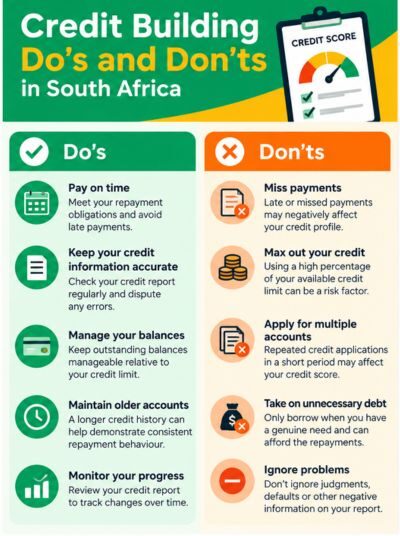
  • ❌ Missed or late payments on existing loans or credit cards
  • ❌ Using too much of your available credit (high credit utilisation)
  • ❌ Applying for too many loans in a short period
  • ❌ Having no credit history at all
  • ❌ Errors on your credit report

Checking your credit report regularly can help you identify errors, monitor your progress and take action before small issues become bigger problems.

Common Credit Score Myths

Many South Africans worry unnecessarily because of common misconceptions about credit scores.

Myth Reality
Checking your own credit score lowers it Viewing your own report is usually a soft enquiry and does not affect your score.
Paying off debt fixes your score immediately Credit improvement usually happens gradually.
You need a perfect score to get approved Many lenders also consider affordability and income.
Closing old accounts always improves your score Older accounts may contribute positively to your credit history.

How to Improve Credit Score South Africa

Here’s a step-by-step plan to start improving your score today:

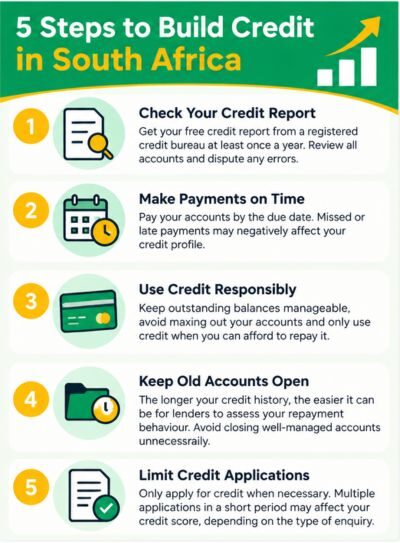
1️⃣ Check Your Credit Report Regularly

You’re entitled to one free credit report per year from each major bureau. Review it for errors — such as incorrect late payments or old accounts still marked as active — and dispute them directly with the bureau.

What Should You Look For on Your Credit Report?

When reviewing your report, check for:

  • Incorrect personal details
  • Accounts that don’t belong to you
  • Payments incorrectly marked as late
  • Accounts that should already be closed
  • Duplicate accounts
  • Signs of identity fraud

Correcting inaccurate information may improve your credit profile if errors are affecting your score.

2️⃣ Pay Your Accounts on Time

Your repayment history is one of the most important factors lenders and credit bureaus consider when assessing your credit profile. Even one late payment can hurt your rating. Set reminders, automate payments, or consolidate multiple debts into a single, manageable payment through a debt consolidation loan with FatCat Loans.

3️⃣ Keep Your Credit Usage Below 35%

If your credit card limit is R10,000, try not to spend more than R3,500. High credit usage may increase the level of risk perceived by lenders and can negatively affect your credit profile. Paying off balances in full (or most of them) every month shows financial discipline.

4️⃣ Avoid Applying for Too Many Loans at Once

Some loan applications involve a hard credit enquiry, while others may begin with a soft eligibility check. Too many within a short period can make it seem like you’re in financial trouble. Instead, use comparison platforms like FatCat Loans to view multiple loan offers without hurting your score.

Soft Checks vs Hard Credit Checks

Not every credit enquiry affects your score.

Type Does it affect your score?
Checking your own credit report No
Pre-qualification with some lenders Usually no
Formal loan application May have an impact
Credit card application May have an impact

Multiple hard credit enquiries within a short period may indicate increased borrowing risk to lenders.

If you’re worried about hard enquiries, read our guide to no credit check loans in South Africa to understand how soft checks, eligibility checks and responsible lending assessments may work.

5️⃣ Consider a Credit-Building Product

If your credit history is limited or poor, applying for a small, manageable loan or another suitable credit product can help build a positive repayment history if you make every payment on time. Making every repayment on time can help build a positive repayment history and strengthen your credit profile over time.

Tip: Choose a bad credit personal loan through FatCat Loans — designed for borrowers rebuilding their credit safely.

6️⃣ Maintain a Mix of Credit Types

A healthy balance of different credit types — such as personal loans, store accounts, and credit cards — shows lenders you can handle various financial commitments responsibly.

7️⃣ Don’t Close Old Accounts Too Soon

Old accounts contribute positively to your credit age — a factor that shows lenders how long you’ve managed credit successfully. Keeping a few older accounts open can actually help your score.

How Long Does It Take to Improve Credit Score South Africa?

Improving your credit score takes consistency and patience. Some people notice gradual improvements within several months of consistently making payments on time, reducing debt and avoiding unnecessary credit applications. However, the timeframe varies depending on your financial history and the factors affecting your credit profile.

While there’s no instant fix, every step you take today builds momentum toward better financial opportunities tomorrow.

Benefits of a Good Credit Score

Benefit Why It Matters
Lower Interest Rates You’ll qualify for better loan and credit terms.
Higher Approval Odds Easier access to personal, car, or home loans.
More Credit Options Choose from a wider range of lenders and offers.
Improved Financial Freedom Build trust with lenders and unlock bigger opportunities.

A good credit score doesn’t just help you borrow — it helps you save money and gives you financial flexibility for the future.

Before applying for any credit product, use our loan calculator to estimate monthly repayments and check whether a loan fits comfortably within your budget.

For more guidance on credit reports and scoring in South Africa, visit the National Credit Regulator (NCR) — the official authority for responsible lending and consumer rights.

Habits That Help Maintain a Good Credit Score

Once you’ve improved your score, maintaining it is just as important.

Good habits include:

  • Paying every account on time.
  • Keeping credit utilisation low.
  • Avoiding unnecessary debt.
  • Reviewing your credit report regularly.
  • Updating your contact details with lenders.
  • Building an emergency savings fund where possible.

Good credit is built through consistent financial habits rather than quick fixes.

Key Takeaways

  • Improving your credit score takes time and consistency.
  • Always review your credit report for errors.
  • Pay every account on time whenever possible.
  • Keep credit utilisation as low as possible.
  • Avoid making multiple credit applications in a short period.
  • Responsible borrowing helps strengthen your credit profile over time.

Frequently Asked Questions (FAQs)

Does checking my credit score lower it?

No. Checking your own score or credit report is a soft check and does not reduce your score. Your score is usually affected when you apply for credit and the lender performs a hard inquiry.

How often should I check my credit report?

A good habit is checking your report every 1–3 months (or at least quarterly) to spot errors early, track progress, and catch fraud or unfamiliar accounts.

What’s the quickest way to improve a low credit score?

The fastest improvements usually come from:

  • Paying overdue accounts and keeping payments on time
  • Reducing credit utilisation (paying down revolving debt like credit cards/store accounts)
  • Avoiding multiple new applications in a short period

What should I do if my credit report has incorrect information?

Gather proof (statements, paid-up letters, ID details) and dispute the entry directly with the credit bureau. If the listing is wrong, the bureau should update or remove it after investigation.

How long do late payments stay on my credit record?

Late payments can remain on your credit profile for a period of time (depending on the type of listing and bureau rules). Even if they remain visible, their impact can reduce over time if you maintain consistent positive repayment behaviour.

What is a “good” credit utilisation percentage in South Africa?

A useful rule is to keep utilisation below 35% of your available credit. Lower is often better, especially if you’re rebuilding your score.

Can I build credit if I have no credit history?

Yes. Start with a small, manageable credit product (for example, a low-limit credit facility or a small loan), then repay on time every month. Consistency matters more than the amount.

Will settling debt improve my credit score?

Paying off or settling outstanding debt can help—especially if it reduces utilisation and stops missed payments. Your score typically improves as your profile shows stable, on-time repayment behaviour going forward.

How long does it take to improve a credit score?

Some people notice gradual improvements within several months of consistently making repayments on time, reducing debt and avoiding unnecessary credit applications. The timeframe varies depending on your financial history and the factors affecting your credit profile.

Are all credit scores the same across TransUnion, Experian, Compuscan, and XDS?

Not always. Bureaus can show different scores because they may have different data sources, update times, and scoring models. What matters most is improving the underlying behaviours (payment history, utilisation, affordability, and stability).

When Should You Seek Help?

If you’re struggling to keep up with repayments or your debts are becoming unmanageable, consider seeking assistance before your financial situation worsens.

You may wish to:

  • Speak to your lender about available repayment options.
  • Review your monthly budget.
  • Avoid taking on additional debt unless it is affordable.
  • Seek guidance from a registered debt counsellor if appropriate.

Getting help early may prevent further damage to your credit profile.

Conclusion: Start Building a Stronger Financial Future

Your credit score doesn’t define your financial future—it’s simply a snapshot of your credit history today. By making repayments on time, keeping your debt under control, checking your credit information regularly, and borrowing responsibly, you can gradually strengthen your credit profile and improve your financial opportunities over time.

Whether you’re rebuilding after financial setbacks or looking to maintain a healthy credit score, small, consistent steps can make a meaningful difference. Remember that responsible lenders look at more than just your credit score—they also consider your income, affordability and overall financial circumstances.

When you’re ready to borrow, take the time to compare your options carefully. Compare loans in South Africa to find loan options from trusted, NCR-registered lenders and choose the solution that best fits your needs and budget.

Check your loan options

Disclosure:  This article is for informational purposes only and does not constitute financial advice. Loan terms, rates, and eligibility vary by lender and province. FatCat Loans is a loan comparison platform, not a lender. Always review lender agreements carefully before accepting a loan.

Home Loan Age Limit South Africa (2026 Guide): What You Need to Know

Discover the age limit for home loan in South Africa. Get insights on eligibility criteria and requirements on our blog.

Introduction: Understanding Home Loan Age Limit South Africa

Updated in January 2026

Buying a home is a major milestone — but if you’re approaching retirement or over 50, you might wonder how the home loan age limit South Africa could affect your chances of qualifying for a bond.

The truth is, most South African lenders have age-related policies to ensure a loan is repaid before retirement. But that doesn’t mean your dream of homeownership is out of reach.

This guide explains how the home loan age limit South Africa works, what banks consider when reviewing older applicants, and how to prepare financially — even if you don’t qualify for a traditional bond.

And if you need help with related expenses like deposits, legal fees, or renovations, FatCat Loans can connect you with trusted lenders offering personal loans that support your homeownership goals.

Is There a Home Loan Age Limit South Africa?

Yes — most major banks prefer borrowers to finish repaying their home loan by the age of 60 to 65, which usually aligns with the standard retirement age.

This doesn’t mean you can’t qualify for a loan after 50 or even 60. It simply means your repayment term may be shorter, and lenders will take a closer look at your income stability and retirement plans.

💡 Example:
A 55-year-old applicant may qualify for a 10- or 15-year bond instead of a 20-year term to ensure repayment before retirement.

Typical Age Limits by Lender Type

Lender Type Preferred Maximum Age at Loan Maturity Notes
Banks (Absa, FNB, Standard Bank, Nedbank) 60–65 years Standard across most banks
Private / Alternative Lenders 70–75 years More flexibility, higher interest rates
Pension-Backed Home Loans Up to retirement age Depends on employer and pension rules

Each lender sets its own policies, so home loan age limit South Africa can vary. The key factor isn’t your age — it’s your ability to afford repayments over the chosen term.

What Lenders Consider for Older Applicants

When you apply later in life, banks will look at:

  • Stable income — salary, pension, or rental earnings

  • Credit score — a good score shows consistent payment history

  • Affordability — can you comfortably repay the bond amount?

  • Existing debt — too much debt can limit approval chances

  • Deposit size — larger deposits improve approval odds and reduce risk

Even if you’re close to retirement, lenders value applicants with strong finances and reliable income streams.

Tips to Improve Your Chances of Approval

Check your credit score first — you can access your free credit report through FatCat Loans.
Save for a larger deposit — aim for 20% or more of the purchase price.
Choose a shorter loan term — 10–15 years is common for applicants over 50.
Consider joint applications — applying with a younger partner can extend your term.
Show proof of future income — pensions or investments can count as income.

💡 Tip: If you’re planning to make smaller property-related purchases or cover upfront costs, a personal loan from FatCat Loans could be a practical short-term alternative to borrowing against your property.

Check your free credit report to see if Home Loan Age Limits in South Africa apply to you.

Alternatives to Home Loans for Older Applicants

If you’re above the standard home loan age limit, there are still ways to manage your property goals responsibly:

  • Use a personal loan for home improvements, deposits, or renovations.

  • Explore pension-backed loans through your employer’s fund.

  • Buy smaller or more affordable property with partial cash financing.

  • Work with alternative lenders offering shorter, customised repayment terms.

FatCat Loans helps South Africans compare personal loan options up to R350,000 — perfect for financing property-related needs without the complexity of a full bond.

Frequently Asked Questions (FAQs)

What is the maximum age to apply for a home loan in South Africa?

Most banks prefer borrowers to finish paying by age 60 to 65, but private lenders may allow terms extending to 70 or 75, depending on your income and affordability.

Can I get a home loan if I’m retired?

Yes, but you’ll need to show stable post-retirement income, such as a pension, annuity, or rental income. Lenders focus on your ability to repay, not just your age.

Can I use a personal loan to help buy a home?

While you can’t use a personal loan as a full mortgage replacement, many South Africans use personal loans from platforms like FatCat Loans to cover home deposits, transfer costs, or renovations.

Does age affect home loan interest rates?

Age itself doesn’t determine your rate, but shorter repayment terms and retirement risk can influence your offer. Lenders prioritise affordability over age.

What’s the best way to prepare for a home loan after 50?

Start by improving your credit score, reducing debt, and saving for a strong deposit. Then explore pre-approval or affordability checks before applying.

What if I’m over 65 and still want to buy property?

You may need to explore private lenders or alternative financing such as using a pension-backed loan or applying jointly with a younger co-borrower.

For official information on consumer credit and responsible lending, visit the National Credit Regulator (NCR) — South Africa’s credit authority ensuring transparency and fair lending.

Conclusion: Explore Smarter Financing Options with FatCat Loans

While most lenders have age limits for home loans, age doesn’t have to stand between you and your financial goals. Whether you’re buying property, renovating your home, or funding life’s next chapter, there are smart, flexible financing options available.

At FatCat Loans, we help South Africans compare personal loans from trusted lenders — ideal for covering property-related costs, managing debt, or funding key life milestones.

👉 Explore personal loan options through FatCat Loans today — and take control of your finances with confidence.

Disclosure:  This article is for informational purposes only and does not constitute financial advice. Loan terms, rates, and eligibility vary by lender and province. FatCat Loans is a loan comparison platform, not a lender. Always review lender agreements carefully before accepting a loan.

Business Loans South Africa (2026): Funding Your Growth

Looking to secure a business loan in South Africa? Explore our blog for essential tips and information on how to get a business loan in South Africa.

Empowering South African Businesses with Smart Financing

Updated January 2026

Running a business takes vision, persistence — and capital. Whether you’re launching a start-up, expanding operations, or managing cash flow, access to funding can make all the difference. That’s where business loans South Africa come in.

Through FatCat Loans, business owners can compare multiple lending options in one place — helping you find the best rates, terms, and lenders to suit your goals.

From small start-ups to established enterprises, the right loan can help you grow confidently and sustainably.

If you’re unsure where to begin, you can read our step-by-step guide on how to get a business loan in South Africa for a practical breakdown of the process.

Compare Business Loan Options with FatCat Loans

What is a Business Loan?

A business loan is financing provided to entrepreneurs or companies to help cover operating expenses, equipment, payroll, or expansion projects.

Unlike personal loans, business loans are designed specifically for companies and often come with flexible repayment terms, tailored interest rates, and funding amounts that match business needs.

Whether you’re self-employed, own a small retail store, or run a logistics company, business loans give you the working capital to seize new opportunities — without interrupting your cash flow.

Types of Business Loans Available in South Africa

Different businesses require different financing solutions. Here are the most common business loans in South Africa available through trusted lenders:

Type of Loan Purpose Typical Amount
Small Business Loan Day-to-day operations, short-term expenses R10,000 – R250,000
Startup Business Loan New ventures or launching a business R20,000 – R500,000
Equipment Financing Buying tools, vehicles, or machinery R50,000 – R1,000,000+
Invoice Financing Advance payment for unpaid invoices Variable
Business Line of Credit Flexible revolving credit R25,000 – R500,000
Merchant Cash Advance Repayment via card sales Based on monthly turnover

Tip: Want to know if a short-term loan could work better for your business? Check out our blog on the benefits of a short-term loan for business owners to see when it makes sense to choose fast, flexible financing.

Why Apply for Business Loans South Africa

Many South African businesses rely on credit to grow and stay competitive. Here’s why:

  • Cash Flow Management – Smooth out cash gaps during slower months.
  • Business Expansion – Open a new branch, hire more staff, or invest in marketing.
  • Equipment Upgrades – Replace old machinery or invest in new technology.
  • Stock Purchases – Buy bulk inventory to secure discounts and boost profits.
  • Debt Consolidation – Combine multiple loans into one affordable repayment.

A well-structured business loan can help you manage your finances strategically while preparing your company for long-term success.

Average Business Loan Interest Rates in South Africa

Interest rates vary based on your business type, income, credit profile, and loan term. On average:

  • Banks: 7% – 13% per annum (secured loans)
  • Alternative lenders: 15% – 27% per annum (unsecured loans)
  • Microloans: Higher rates but faster access

Your rate depends largely on your company’s creditworthiness, turnover, and time in business.

Pro Tip: Read our full breakdown of business loan interest rates in South Africa to understand how rates are calculated and what you can do to qualify for a better deal.

Who Qualifies for Business Loans South Africa

Most lenders have similar basic requirements:

South African business registration (CIPC)
Valid business bank account
Trading for at least 6 months
Monthly turnover of R10,000 or more
Valid ID and proof of address

Some lenders also accept self-employed individuals and sole proprietors — especially through FatCat Loans’ network of alternative financing partners.

Compare Business Loan Options with FatCat Loans

Benefits of Business Loans South Africa

Benefit Description
Access to Capital Grow or stabilise your business without using personal funds.
Flexible Repayment Terms Choose repayment periods that match your cash flow.
Business Growth Opportunities Expand faster and invest strategically.
Safe & Regulated Lending FatCat Loans connects you only with NCR-registered lenders.
Support for All Business Types From small startups to established SMEs.

What to Consider Before Applying

Before committing to a business loan, consider:

  • Affordability – Can your business handle monthly repayments comfortably?
  • Loan purpose – Only borrow what you truly need.
  • Repayment term – Shorter terms = higher payments but less interest.
  • Interest rate type – Fixed vs. variable rates affect long-term cost.
  • Lender credibility – Always work with regulated lenders, like those listed on FatCat Loans.

For official business support and government-backed funding information, visit the Department of Small Business Development.

It provides valuable guidance on small business grants, financing, and development programmes in South Africa.

Frequently Asked Questions (FAQs) About Business Loans South Africa

What is the easiest business loan to get in South Africa?

The easiest business loans South Africa offer are typically short-term business loans or merchant cash advances. These loans have more flexible approval requirements, focus on turnover instead of credit history, and are often approved within 24–48 hours.

You can compare quick-approval options directly through FatCat Loans.

Can I get a business loan with bad credit?

Yes — several lenders in South Africa offer business loans for bad credit. These lenders assess your affordability, cash flow, and business potential rather than just your credit score.

Platforms like FatCat Loans make it easy to connect with NCR-registered lenders that specialise in helping small business owners with less-than-perfect credit.

What are the current business loan interest rates in South Africa?

Business loan interest rates in South Africa typically range from 7% to 27% per annum, depending on the lender, loan type, and your business’s financial health.

Banks generally offer lower rates for secured loans, while alternative lenders provide more flexible options.

You can read more in our guide on Business Loan Interest Rates in South Africa.

How long does it take to get approved for a business loan?

Approval time varies by lender. Traditional banks may take several days to process applications, while online lenders on FatCat Loans can approve and pay out business loans within 24 to 48 hours — especially for smaller or short-term amounts.

Do I need to provide collateral for a business loan?

Not always. Many business loans South Africa are unsecured, meaning you don’t need to provide assets as security. However, for larger loans or better interest rates, lenders may request collateral like equipment, vehicles, or business property.

The FatCat Loans comparison tool helps you identify which lenders require security and which don’t.

What can I use a business loan for?

Business loans can be used for nearly any business-related expense, including:

  • Expanding or upgrading your operations
  • Buying new equipment or vehicles
  • Managing cash flow during slow seasons
  • Purchasing bulk inventory
  • Paying staff or suppliers

The key is to borrow responsibly — only for investments that help your business grow or operate more efficiently.

Compare Business Loan Options with FatCat Loans

Conclusion: Build, Grow, and Thrive with FatCat Loans

Every successful business needs the right financial foundation. Whether you’re managing cash flow or expanding into new markets, business loans South Africa give you the freedom to move forward.

At FatCat Loans, we make finding the right financing simple. Compare trusted lenders, explore flexible repayment terms, and secure the best loan for your business — all online, with full transparency.

👉 Apply Here for your business loan of up to R5 Million today through FatCat Loans and give your business the boost it deserves.

Disclosure:  This article is for informational purposes only and does not constitute financial advice. Loan terms, rates, and eligibility vary by lender and province. FatCat Loans is a loan comparison platform, not a lender. Always review lender agreements carefully before accepting a loan.

Business Loan Interest Rates in South Africa (2026 Guide)

Discover the latest business loan interest rates in South Africa on our blog. Get insights to make informed financial decisions.

Understanding Business Loan Interest Rates in South Africa

Updated March 2026

If you’re running a business in South Africa, understanding business loan interest rates is key to borrowing wisely. Whether you’re growing your company, purchasing stock, or managing cash flow, knowing how lenders set their rates can help you secure the best possible deal.

Not sure what rates you qualify for? Compare business loan options to see personalised offers from trusted South African lenders.

At FatCat Loans, we make it easy for South African business owners to compare trusted lenders, explore flexible repayment options, and apply online — all in one secure platform.


As of early 2026:

  • Business loan rates in South Africa are primarily anchored to the Prime Lending Rate (10.25%)
  • Rates are typically expressed as Prime plus or Prime minus

Current Benchmark Rates (January 2026)

  • Prime Lending Rate: 10.25%
  • Repo Rate: 6.75%
  • Average Bank Business Loan: 10.25% – 14.50%

Rates by Business Loan Type

Interest rates vary significantly depending on the lender and the specific financial product:

  • Bank Term Loans: Standard commercial banks generally offer rates ranging from Prime (10.25%) up to Prime + 7% (17.25%)
  • Business Lines of Credit: Typically between 12% and 20%, depending on security
  • Alternative/Online Lenders: Often range from 15% to 30% APR or more
  • Special SME Rates: Some institutions offer subsidised rates as low as 10%

Rates can vary widely depending on your business profile and the lender you choose.

Typical Fees to Expect

  • Initiation Fees: R1,200 to R6,000+
  • Monthly Service Fees: R69 to R290

You can also compare business loan rates to find the most competitive option for your situation.

Strategic Outlook for 2026

The South African Reserve Bank (SARB) is currently in a cutting cycle.

  • Next interest rate decision: January 29, 2026
  • Expected cuts: March and July (0.25% each)
  • Projected Prime rate: ~9.75% by mid-year

Key Highlights

  • Rates vary depending on loan type, borrower creditworthiness, and lender policies
  • Secured loans generally have lower interest rates than unsecured loans
  • Small businesses often face higher rates due to perceived risk
  • Alternative lenders may offer more flexible terms
  • Always compare lenders and negotiate rates to get the best deal

What Are Business Loan Interest Rates?

Business loan interest rates in South Africa refer to the cost of borrowing money for business purposes. These rates are determined by various factors, including the South African Reserve Bank’s Monetary Policy Committee.

The current prime lending rate in South Africa is 10.25%.

Understanding business loan interest rates is crucial for business owners as it affects their loan repayment amounts and overall cost of borrowing.


The Components of Business Loan Interest Rates

Business loan interest rates in South Africa are comprised of several components.

  • The lender’s assessment of your credit score
  • Your financial statements and business account
  • Your business cash flow
  • Your annual turnover
  • Your banking history

All these components are considered to determine the interest rate for a business loan.


How Interest Rates Impact Your Loan Repayment

Interest rates play a significant role in determining the loan repayment amount for business loans.

A higher interest rate will result in a higher repayment amount, while a lower interest rate will result in a lower repayment amount.

Before committing, you can compare loan options to estimate repayments and find more affordable solutions.


Types of Business Loans Available in South Africa

In South Africa, there are various types of business loans available:

  • Secured loans: Require collateral and offer lower rates
  • Unsecured loans: Higher rates but no collateral required
  • Short-term loans: Up to one year
  • Long-term loans: More than one year

You can explore available business loans to find the right option.


How to Find the Best Business Loan Rates

Comparing lenders is essential. Evaluate banks versus non-banking financial companies for favourable rates.


Preparing Your Business for a Loan Application

Preparing your business for a loan application is essential to increase your chances of success.

Once you’re ready, you can apply online and get matched with lenders.


Repaying Your Business Loan

Repaying your business loan is an important aspect of the borrowing process.

  • Understand repayment amounts
  • Know whether rates are fixed or variable
  • Plan for additional fees

Alternatives to Traditional Business Loans

Alternative funding options include:

  • Government grants
  • Angel investors
  • Venture capital

The Future of Business Financing in South Africa

Financial technology (fintech) is transforming lending in South Africa.

  • Faster online applications
  • More accessible funding
  • Improved digital experience

Frequently Asked Questions

What is the average business loan interest rate in South Africa?

The average business loan interest rate in South Africa typically ranges from 10.25% to 14.50%, depending on your business’s risk profile. Lower-risk businesses may qualify for rates closer to the prime lending rate, while higher-risk borrowers may pay significantly more.


Can start-ups qualify for business loans?

Yes, start-ups can qualify for business loans, but approval depends on factors like your business plan, cash flow projections, and personal credit score. Start-ups without a strong financial history may face higher interest rates or stricter terms.


How do I calculate the total cost of a business loan?

To calculate the total cost of a business loan, you need to consider the interest rate, loan term, repayment amount, and any additional fees. Using a loan comparison tool can help you estimate your total repayment and compare options.


Are fixed-rate business loans available in South Africa?

Yes, many lenders offer fixed-rate business loans. These loans have a consistent interest rate and repayment amount, making it easier to budget. Variable-rate loans are also available and may fluctuate with market conditions.


What fees should I expect when applying for a business loan?

Common business loan fees in South Africa include:

  • Initiation fees (once-off setup cost)
  • Monthly service fees
  • Early settlement fees (in some cases)

Always review the full cost of the loan, not just the interest rate.


What affects your business loan interest rate the most?

Your interest rate is mainly influenced by:

  • Your credit profile
  • Cash flow and revenue
  • Loan amount and repayment term
  • Whether the loan is secured or unsecured

Stronger financials usually lead to lower rates.


What is the minimum credit score for a business loan in South Africa?

There is no fixed minimum, but most lenders prefer a good credit score (around 650 or higher). Some alternative lenders may approve lower scores, but usually at higher interest rates.


How can I get a lower business loan interest rate?

You can improve your chances of getting a lower rate by:


Is it better to choose a secured or unsecured business loan?

Secured loans usually offer lower interest rates because they are backed by collateral. Unsecured loans are easier to access but typically come with higher rates due to increased risk.


How long does it take to get approved for a business loan?

Approval times vary by lender:

  • Traditional banks: several days to weeks
  • Online lenders: often within 24–72 hours

Using an online platform can speed up the process significantly.


Conclusion: Take Control of Your Business Financing

Getting the right business loan interest rate can make a big difference to your company’s growth and financial health.

By comparing offers and understanding how rates are calculated, you can save money and borrow confidently.

Ready to Compare Business Loan Interest Rates?

Apply online to compare business loan options and see what you qualify for.

Disclosure: This article is for informational purposes only and does not constitute financial advice.

Debt Consolidation Loans South Africa (2026): Take Control

This comprehensive guide explains how debt consolidation loans work in South Africa, who qualifies, and when they make sense. Learn how combining multiple debts into one structured repayment can reduce interest costs, simplify budgeting, and help you regain financial control in 2026.

Introduction to Debt Consolidation Loans South Africa

Updated January 2026

Managing several debts at once can feel overwhelming — especially when each one has a different due date, interest rate, and minimum payment amount. For many households across the country, this financial juggling act leads to missed payments, rising interest charges, and mounting stress. If this sounds familiar, Debt Consolidation Loans South Africa may offer the relief and structure you need.

In 2026, more South Africans are turning to debt consolidation as a practical strategy to regain control over their money, reduce monthly costs, and simplify repayment. When used correctly, a consolidation loan can help you merge multiple debts into one manageable installment — giving you a clearer path toward financial stability.

In this comprehensive guide, we’ll break down exactly how Debt Consolidation Loans South Africa work, who qualifies, the benefits, what to consider, and how to apply confidently through FatCat Loans.

What Are Debt Consolidation Loans South Africa?

A debt consolidation loan is a financial product that allows you to combine several individual debts into one single loan with a single monthly repayment. Instead of tracking various due dates and escalating interest charges across multiple credit accounts, you replace all of them with one streamlined payment plan.

This makes your financial life more structured, predictable, and easier to manage — especially if you’ve been struggling to keep up with multiple obligations.

Debts commonly consolidated include:

  • Credit cards

  • Retail or store cards

  • Microloans

  • Personal loans

  • Small unsecured debts

  • Overdue service accounts

Borrowers typically consolidate their debt to:

  • Reduce interest rates

  • Lower monthly installments

  • Improve cash flow

  • Avoid missed payments

  • Simplify budgeting

For a clear explanation of the concept of consolidation, you can read our guide on Debt Consolidation Meaning South Africa | Explained

How Debt Consolidation Loans South Africa Work

When you apply for a debt consolidation loan, the process generally works in one of two ways:

1️⃣ The lender pays your debts directly

Some lenders settle your outstanding debts on your behalf. This ensures no funds are misallocated and guarantees that your old debts are fully closed.

2️⃣ You receive a lump sum to pay creditors yourself

In other cases, the lender gives you the full loan amount, and you are responsible for paying off each individual debt.

Once your previous debts are paid, you are left with only one monthly installment, usually at an improved interest rate and on a structured repayment schedule.

Example: How Debt Consolidation Loans South Africa Can Help

Let’s imagine you have:

  • 3 retail store cards

  • 2 personal loans

  • 1 microloan

Each one has:

  • Different due dates

  • Different interest rates (often very high)

  • Different minimum payments

This creates complexity, increases your risk of missing payments, and can trap you in a cycle of revolving debt.

By applying for a Debt Consolidation Loan South Africa, you replace all these individual debts with a single, predictable monthly installment, often at a lower rate — saving you money and reducing stress.

For a deeper breakdown of the full process, read our in-depth guide on How Debt Consolidation Loans Work in South Africa (2025).

Benefits of Debt Consolidation Loans South Africa

Debt consolidation offers a variety of advantages, especially for borrowers struggling to manage scattered obligations.

1️⃣ One simple monthly payment

Instead of juggling multiple due dates, you pay one consistent installment.

2️⃣ Lower interest rates

Consolidation loans often offer better interest rates than credit cards or microloans, reducing total repayment costs.

3️⃣ Improved credit health

Consistent, on-time payments can strengthen your credit profile and reduce the risk of negative listings.

4️⃣ Reduced financial pressure

Simplifying your debt structure often brings relief, clarity, and a renewed sense of financial control.

5️⃣ Faster debt repayment

You can focus on paying down one loan, potentially becoming debt-free sooner.

For information on South Africa’s lending laws, visit the National Credit Regulator (NCR).

Who Qualifies for Debt Consolidation Loans South Africa?

Qualification requirements vary across lenders, but most borrowers will need to meet some basic criteria:

  • Be 18 years or older

  • Have a valid South African ID

  • Receive a stable monthly income

  • Have an active bank account

  • Provide bank statements and payslips

  • Maintain a fair to good credit score

While a perfect credit score isn’t required, consolidation loans typically favour borrowers with responsible payment histories.

If you’re unsure whether you’ll qualify, read our guide on Debt Consolidation Loan Approval South Africa (2025 Guide).

Where to Apply for a Debt Consolidation Loan

The easiest and fastest way to apply is through FatCat Loans, where you can compare offers from multiple reputable lenders in minutes. This saves you time, improves your approval chances, and ensures you find the most affordable option.

While browsing consolidation loans, you can also explore related financial products such as:

Each product serves a different financial purpose and can help you depending on your needs and long-term goals.

What to Consider Before Applying for Debt Consolidation Loans South Africa

Before committing to a new loan, make sure you understand your financial situation and the loan terms clearly.

1️⃣ Total Repayment Cost

A longer loan term may mean lower monthly payments but higher total interest over time. Always calculate the full cost of borrowing.

2️⃣ Commitment

After consolidating, avoid taking on new debt unnecessarily — this defeats the purpose of consolidation.

3️⃣ Fees and charges

Check for:

  • Initiation fees

  • Monthly service fees

  • Early settlement penalties (if applicable)

4️⃣ Interest Rate Trends

Stay aware of repo rate changes that affect loan affordability.
You can monitor updates through the South African Reserve Bank (SARB).

By considering these factors, you’ll make a more informed decision that supports your financial well-being.

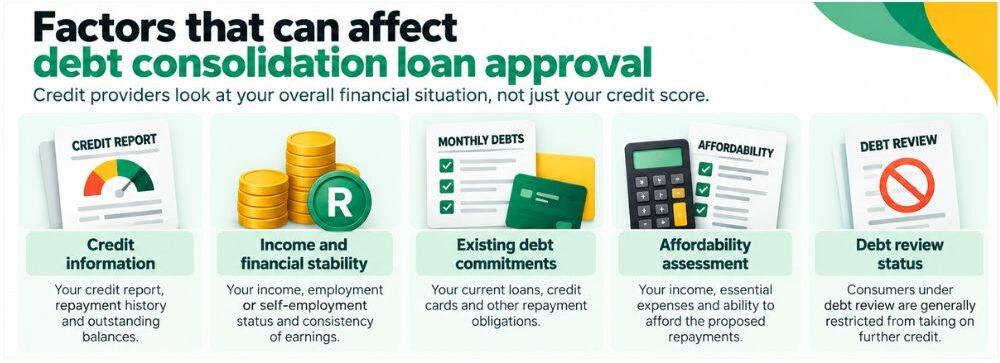
Is Debt Consolidation the Same as Debt Review?

A common misconception is that consolidation loans and debt review are the same — but they are very different.

Feature Debt Consolidation Debt Review
Purpose Combine debts into one loan Assist over-indebted consumers
Credit Access Borrowing continues (if affordable) No new credit allowed
Legal Protection Not a legal process Legal protection from creditors
Best For Managing multiple debts Severe over-indebtedness

Debt consolidation is a loan-based solution for simplifying debt.
Debt review is a formal legal process for those who cannot meet minimum payments.

When Should You Consider Debt Consolidation Loans South Africa?

Debt consolidation is best suited for people who:

  • Have multiple unsecured debts

  • Can afford a structured repayment plan

  • Are not under debt review

  • Want to reduce interest charges

  • Need help simplifying their financial life

If you’re consistently missing payments, feeling overwhelmed, or struggling to keep track of several accounts, consolidation may be a smart financial move.

Additional Tips to Make Consolidation Successful

To get the most out of your consolidation loan:

1️⃣ Avoid New Debt

Taking on additional loans while consolidating defeats the purpose.

2️⃣ Set Up Automated Payments

Debit orders ensure you never miss a payment and help rebuild your credit.

3️⃣ Track Your Spending

Using budgeting tools like 22seven can keep you on track.

4️⃣ Review Your Credit Report Regularly

Make sure old debts show as paid after consolidation.

5️⃣ Create an Emergency Fund

Even small monthly savings can prevent future borrowing.

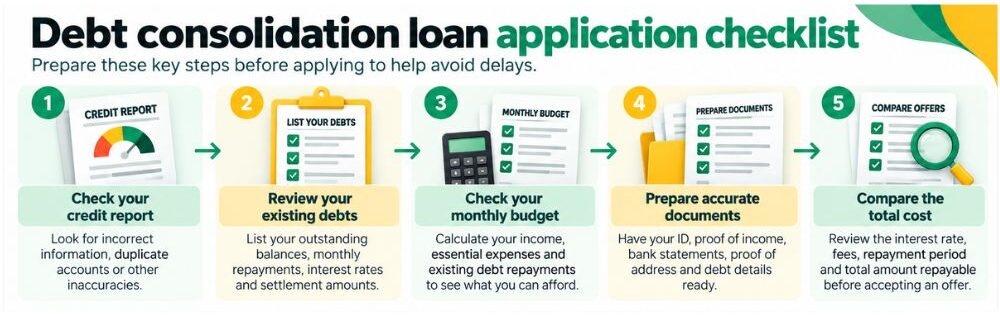
How to apply for debt consolidation loans in South Africa.

FAQs About Debt Consolidation Loans South Africa

Will Debt Consolidation Loans South Africa hurt my credit score?

Not necessarily. While applying for a new loan may cause a small temporary dip, consistent repayments improve your credit score over time.

Can I get Debt Consolidation Loans South Africa with bad credit?

Yes. Some lenders work with lower credit scores. Explore our bad credit loans page to find options tailored to affordability.

How long does approval take?

Pre-approval is often instant, with full approval taking 24–48 hours once documents are reviewed.

Is debt consolidation the same as debt review?

No. Debt review is a legal process for over-indebted consumers, while consolidation is a financial strategy for simplifying multiple debts.

Conclusion

Debt Consolidation Loans South Africa offer a powerful, practical way to regain control of your finances. By combining multiple debts into one affordable monthly repayment, you reduce stress, save on interest, and create a clearer path toward becoming debt-free.

Whether you’re overwhelmed by credit cards, store accounts, or personal loans, consolidation may be the fresh start you need.

🎯 Ready to take control?
Compare trusted lenders and apply for a Debt Consolidation Loan through FatCat Loans — fast, simple, and secure.

Disclosure:  This article is for informational purposes only and does not constitute financial advice. Loan terms, rates, and eligibility vary by lender and province. FatCat Loans is a loan comparison platform, not a lender. Always review lender agreements carefully before accepting a loan.

Finding Home Loans For Foreigners In South Africa: Your Guide

Explore home loans for foreigners in South Africa with our comprehensive guide. Get the information you need to secure your dream home.

Finding Home Loans For Foreigners In South Africa

Foreigners, including Zimbabweans, have been increasingly investing in the South African property market. In fact, 20% of foreign buyers of residential property in South Africa are from the rest of Africa, with Zimbabweans making up a significant portion of this group. Despite the economic challenges in Zimbabwe, many Zimbabweans are still opting to purchase property locally, often exploring home loans for foreigners in South Africa to make ownership more accessible. Their activity even rivals buyers from the UK, Germany, and the United States.

If you are a Zimbabwean looking to buy property in South Africa, it is important to understand the rules and regulations surrounding home loans for foreigners. This guide will provide you with all the information you need to navigate the process of finding and securing a home loan in South Africa as a foreigner.

Key Highlights of Home Loans for Foreigners in South Africa

  • Zimbabweans are among the leading purchasers of property South Africa, with 20% of foreign buyers coming from the rest of Africa.
  • Foreign buyers, including Zimbabweans, can apply for home loans from major banks in South Africa.
  • Work permits are required for Zimbabweans to stay in South Africa and qualify for a home loan.
  • Foreign buyers who are not working in South Africa can only borrow up to half of the purchase price from the bank.
  • Good credit record and necessary documentation are required for foreigners to qualify for a home loan in South Africa.
  • Zimbabweans buying property in South Africa need to pay transfer costs and transfer duty, with transfer duty only required for homes costing more than R1 million.

Understanding Home Loans in South Africa for Foreigners

When it comes to home loans for foreigners in South Africa, there are several factors to consider. Foreign buyers have the opportunity to apply for home loans from major banks in South Africa. However, there are certain eligibility criteria and requirements that need to be met in order to qualify for a home loan.

Eligibility Criteria for Foreigners

One of the key eligibility criteria for foreigners looking to apply for a home loan in South Africa is the possession of a valid work permit.

  • A valid work permit: Foreign nationals will need a work permit to stay in South Africa. The duration and reasons for their stay will determine whether they are eligible for a work permit.
  • Compliance with regulations: Foreigners will also need to comply with the regulations set by the South African Reserve Bank. The bank imposes certain restrictions on foreign buyers, including limitations on the percentage of the purchase price that can be loaned to them.

Foreign nationals who are not working in South Africa may only be granted up to half of the purchase price by the bank, and the remaining balance will need to be paid in cash.

Types of Home Loans Available

When it comes to home loans for foreigners in South Africa, there are various types of loans available. The type of loan you choose will depend on factors such as the purchase price of the property, the interest rate offered by the bank, and the value of the property.

Some common types of home loans available to foreigners include fixed-rate mortgages and variable rate mortgages. With a fixed-rate mortgage, the interest rate remains the same throughout the loan term, providing stability in monthly repayments. On the other hand, a variable rate mortgage offers flexibility as the interest rate fluctuates based on market conditions.

The Application Process for Foreigners

The application process for a home loan in South Africa is similar for both South Africans and foreigners. However, foreigners may need to provide additional documentation to prove their eligibility. It is important to have a South African bank account to facilitate the loan application process. Many banks offer online banking services, which can make the application process more convenient for foreigners.

Required Documentation

Foreigners, including Zimbabweans, will need to provide certain documentation when applying for a home loan in South Africa. The required documentation may vary depending on the lender, but generally includes:

  • A copy of your passport to verify your identity and nationality;
  • Proof of residence, which can be a utility bill or a rental agreement;
  • Proof of income, such as pay slips or bank statements, to demonstrate your ability to repay the loan;
  • A certificate from the South African Reserve Bank confirming your eligibility for a home loan.

It is important to note that some lenders may have additional requirements, such as a valid visa or proof of employment in South Africa. It is recommended to check with the lender for specific documentation requirements.

Step-by-Step Guide to Applying

Applying for a home loan as a foreigner in South Africa can seem daunting, but with the right information and preparation, the process can be smooth and efficient. Here is a step-by-step guide to help you navigate the application process:

  • Gather all necessary documents, including proof of identity, residence, income, and eligibility.
  • Research and choose a lender that offers home loans to foreigners. Consider factors such as interest rates, repayment terms, and customer service.
  • Submit your home loan application to the chosen lender, either online or in person.
  • Be prepared to provide any additional documents or information requested by the lender during the application process.
  • Wait for the lender’s response, which can take several days to a few weeks.
  • If your application is approved, review the loan terms and conditions, including the interest rate and repayment schedule.
  • Sign the loan agreement and complete any additional requirements, such as opening a South African bank account.
  • Once all requirements are fulfilled, the lender will disburse the loan funds, and you can proceed with the purchase of your property.

Before applying for a home loan as a foreigner in South Africa, it is important to consider the exchange rate between your home country’s currency and the South African Rand, as this can impact the affordability of the property.

Financial Considerations for Foreign Buyers

Foreign buyers, including Zimbabweans, will need to pay a down payment when purchasing property in South Africa. The down payment is a percentage of the purchase price and is typically paid upfront.

In addition to the down payment, foreign buyers will also need to cover transfer costs, which include fees for transferring the property into their name. The transfer costs can vary depending on the purchase price of the property.

When it comes to funding the down payment and transfer costs, foreign buyers will need to ensure that they have the necessary funds available. These funds can come from foreign sources, but they will need to be transferred into a South African bank account.

Interest Rates and Fees

Interest rates and fees are an important consideration when applying for a home loan in South Africa. The interest rate determines the cost of borrowing and affects the monthly repayments.

The interest rates offered by banks in South Africa are influenced by the repo rate, which is set by the South African Reserve Bank. The repo rate is the rate at which the Reserve Bank lends money to commercial banks.

Different banks may offer different interest rates and fees, so it is important to compare offers from major banks in South Africa to find the best deal. It is also worth considering factors such as customer service and repayment flexibility when choosing a lender.

Legal Aspects of Buying Property as a Foreigner

Buying property as a foreigner in South Africa involves legal aspects that should be considered. Understanding the legal framework and process can help ensure a smooth property transaction.

The South African property market operates under a conveyancing system, where property ownership is transferred from the seller to the buyer through a legal process. It is important to engage the services of a qualified conveyancer who specializes in property transactions.

Foreign buyers should also familiarize themselves with the relevant South African laws and regulations governing property ownership. It is advisable to seek legal advice to ensure compliance with all legal requirements.

The Role of Conveyancers in Property Transactions

Conveyancers play a crucial role in property transactions in South Africa. They are legal professionals who specialize in property law and are responsible for facilitating the transfer of property ownership from the seller to the buyer.

Conveyancers handle various aspects of the transaction, including the preparation of legal documents, verification of property ownership, and payment of transfer costs. They ensure that the property transaction is legally valid and that all parties involved are protected.

Foreign buyers should engage the services of a qualified conveyancer to guide them through the property purchase process. Conveyancers have in-depth knowledge of the South African property market and can provide expert advice and assistance throughout the transaction.

Mortgage Broker vs. Bank Financing

When it comes to financing a home loan as a foreign buyer in South Africa, there are two main options to consider: mortgage broker or bank financing.

  • Mortgage broker: A mortgage broker is an intermediary who helps borrowers find and compare home loan options from multiple lenders. They can provide expert advice and assistance in finding the best deal for your specific needs.

Bank Financing: This option involves directly approaching banks to apply for a home loan. Banks offer their own loan products and terms, and borrowers can compare offers from different banks to find the most suitable option.

Both options have their advantages and disadvantages, so it is important to carefully consider your preferences and financial goals before deciding which route to take.

Pros and Cons of Using a Mortgage Broker

Pros:

  • Mortgage brokers have access to a range of tools and resources that can help streamline the home loan application process.
  • Mortgage brokers can help foreign buyers navigate the complex requirements and paperwork involved in securing a home loan.
  • They can provide valuable guidance and advice, ensuring that foreign buyers make informed decisions.

Cons:

  • Mortgage brokers may charge a fee for their services, which can add to the overall cost of obtaining a home loan.
  • Some mortgage brokers may have limited connections with certain lenders, meaning that they may not be able to offer the full range of home loan options available in the market.

Factors to Consider When Choosing a Bank for Your Home Loan

Choosing the right bank for your home loan is crucial for foreigners looking to purchase property in South Africa. While all major banks in the country offer home loan options for foreigners, each bank may have different requirements and terms. Here are some things to consider when choosing a bank for your home loan:

  • Interest rates;
  • Repayment terms;
  • Fees;
  • Customer service & reputation.

It is important to research and compare the offerings of different banks before making a decision. First National Bank (FNB), Nedbank, Absa, and Standard Bank are some of the major banks in South Africa that provide home loan options for foreigners.

Investing in South African Property as a Foreigner

Investing in South African property as a foreigner can be a lucrative opportunity. The South African property market offers a range of investment opportunities, from residential properties to commercial buildings. Foreign buyers can take advantage of the favourable exchange rate and the potential for long-term capital appreciation. However, investing in the South African property market also comes with risks. Market trends and economic factors can impact property values, and there may be legal challenges and restrictions for foreign buyers. It is essential to conduct thorough research, seek professional advice, and carefully evaluate the risks and rewards before making any investment decisions.

Market Trends and Investment Opportunities

The South African property market offers a range of investment opportunities for foreigners. The market has shown steady growth over the years, with property values increasing in many areas. Investors can choose from various property types, including residential properties, commercial buildings, and buy-to-let properties. The property market in South Africa is influenced by factors such as economic growth, population trends, and infrastructure development. It is essential for foreign buyers to stay informed about market trends and conduct thorough research before making any investment decisions. Professional advice from real estate agents and property experts can also be valuable in identifying promising investment opportunities.

Risks and Rewards of Property Investment

Investing in the South African property market as a foreigner can bring both risks and rewards. The potential rewards include:

  • Long-term capital appreciation;
  • Rental income;
  • Diversification of investment portfolios.

The favourable exchange rate and property prices make South Africa an attractive investment destination. However, there are also risks to consider:

  • The property market can be negatively influenced by economic factors, market trends, and legal challenges;
  • Foreign buyers may face restrictions on property ownership and may need to navigate complex legal processes.

It is important to conduct thorough research, seek professional advice, and carefully evaluate the risks and rewards before making any investment decisions.

Common Challenges and Solutions

Foreign buyers in the South African property market may face common challenges, but there are practical solutions to overcome them:

Dealing with Currency Exchange Rates

Foreign buyers in the South African property market need to navigate currency exchange rates. Fluctuations in exchange rates can impact the cost of purchasing property and repatriating funds. One practical solution is to open a local bank account, which can help with managing foreign currency transactions. By having a local bank account, foreign buyers can easily transfer funds, make mortgage repayments, and handle other financial transactions in the local currency. This can help mitigate the impact of exchange rate fluctuations and simplify financial management. It is advisable to consult with financial advisors and banks with expertise in foreign currency transactions to ensure a smooth and cost-effective process.

Overcoming Legal Obstacles

Foreign buyers in the South African property market may encounter legal obstacles and challenges. South African law and regulations govern property ownership, and there may be restrictions on foreign ownership in certain areas or property types. To overcome these obstacles, it is essential to seek professional legal advice and ensure compliance with all regulations. Working with experienced real estate agents and property lawyers can help navigate the legal processes involved in property transactions. It is important to be aware of the legal requirements and restrictions before making any investment decisions and to ensure that all necessary documentation and permits are in order.

Apply for home loans for foreigners in South Africa with FatCat Loans

Preparing for the Future: What to Expect

Preparing for the future in the South African property market requires an understanding of long-term investment strategies and future trends. Property investments should be approached as long-term investments, with a focus on capital appreciation and rental income. It is important to consider factors such as economic growth, infrastructure development, and population trends when making investment decisions. Careful research and due diligence are essential in identifying properties with long-term potential. Monitoring market trends and staying informed about changes in regulations and policies can also help in making informed investment choices. The South African property market offers potential for long-term investment success, and careful planning and research can help foreign buyers maximize their returns.

Future Trends in the South African Real Estate Market

The South African real estate market is influenced by various trends and factors that can shape the future of property investment. Economic growth, infrastructure development, and population trends are some of the key drivers of the market. The demand for affordable housing, urbanization, and sustainable development are also important factors to consider. The rise of technology and digital platforms in the real estate industry is expected to continue, impacting the way properties are marketed and transactions are conducted. Foreign buyers should stay informed about these future trends and adapt their investment strategies accordingly. Seeking professional advice and staying up to date with market research can help foreign buyers identify emerging opportunities and make informed investment decisions.

Conclusion

In conclusion, navigating the complexities of home loans for foreigners in South Africa requires a thorough understanding of eligibility criteria, documentation, financial considerations, legal aspects, and investment opportunities. By carefully considering market trends, legal obstacles, and long-term expectations, foreign buyers can make informed decisions to secure their dream property in South Africa. Successful outcomes are achievable with proactive measures to address challenges such as currency exchange rates and legal hurdles. Keeping abreast of future trends and seeking expert advice will aid in a smooth and rewarding property investment journey.

Frequently Asked Questions

Can foreigners get a 100% mortgage in South Africa?

Foreigners are not eligible for 100% mortgages in South Africa. Each bank has different requirements, but generally, foreigners are required to pay a deposit of at least 50% of the property’s value in cash.

What is the minimum down payment required for foreigners?

The minimum down payment required for foreigners in South Africa is 50% of the property’s value. This means that foreigners need to have a significant amount of cash available to purchase a property.

How long does the home loan application process take for foreigners?

The home loan application process for foreigners in South Africa can take anywhere from a few weeks to several months. The timeline depends on various factors, such as the complexity of the application, the bank’s response times, and the availability of all required documents.

Are there any restrictions on the type of property foreigners can buy?

There are no specific restrictions on the type of property foreigners can buy in South Africa. However, foreigners are subject to the same property market regulations as South African citizens. It is important to research and understand the local property market and any specific restrictions that may apply.

Can foreign income be used to qualify for a home loan?

Yes, foreign income can be used to qualify for a home loan in South Africa. Banks usually consider a combination of local and foreign income to determine eligibility for a loan. It is important to provide all necessary documentation to prove the stability and reliability of the foreign income.

What happens if a foreigner leaves South Africa but still has a mortgage?

If a foreigner leaves South Africa but still has a mortgage, they are still responsible for making the monthly debt repayments. It is important to inform the bank about the change in residency status and ensure that the mortgage payments are made on time to avoid any penalties or legal issues.

Do foreign buyers pay higher interest rates on mortgages?

Foreign buyers may be subject to higher interest rates on mortgages in South Africa. Each bank has its own policies and criteria for determining interest rates, and the rates may vary depending on the borrower’s financial profile, credit history, and loan amount.

Is it necessary for foreigners to open a South African bank account to buy property?

Yes, it is necessary for foreigners to open a South African bank account to purchase property in South Africa. Deposits for home loans and other financial transactions related to the property purchase need to be made through a South African bank account.

Can foreigners apply for home loans online or do they need to be present in South Africa?

Foreigners can apply for home loans online in South Africa, but some banks may require additional documentation or in-person verification. It is recommended to check with the specific bank for their requirements and procedures for foreign applicants.

Home Loan Interest Rate South Africa: What You Should Know

Stay informed about the current interest rate in South Africa for home loans. Explore our blog for the latest updates.

Introduction: Understanding Home Loan Interest Rates in South Africa

Updated January 2026

If you’re planning to buy a property this year, understanding the home loan interest rate South Africa can make a big difference to your budget. With rates changing regularly due to inflation and repo rate adjustments, knowing what to expect helps you plan smarter and avoid surprises.

While FatCat Loans doesn’t offer home loans directly, we’re here to help you understand how home loan interest rates work — and how personal loans can be a flexible alternative for costs like deposits, renovations, or furniture.

Let’s explore how rates are calculated, what lenders look for, and how to make the most informed borrowing decision in 2026.

What Is a Home Loan Interest Rate South Africa?

A home loan interest rate South Africa is the percentage a lender charges you for borrowing money to buy a property. It determines how much interest you’ll pay on top of the loan amount (called the principal).

The rate you get affects your monthly instalment and the total cost of your bond over time — so even a small difference in percentage can mean paying thousands more or less over 20 years.

Average Home Loan Interest Rate South Africa (2026)

The South African Reserve Bank (SARB) sets the repo rate, which influences all lending rates in the country. As of early 2025, the repo rate is 8.25%, meaning most banks offer prime lending rates around 11.75%.

Here’s an estimated overview:

Lender Type Average Interest Rate Loan Type
Major Banks (ABSA, FNB, Standard Bank, Nedbank) 10.5% – 12.5% 20-year home loan
Private Lenders / Alternative Finance 12% – 15% Shorter-term or high-risk loans
First-Time Buyer Packages 11% – 13% Based on credit score and deposit

💡 Note: These rates fluctuate depending on your credit score, deposit amount, loan term, and financial profile.

For accurate updates, check current rates on major South African banks’ websites or financial platforms.

Fixed vs. Variable Home Loan Interest Rates

When applying for a bond, you’ll typically choose between fixed or variable interest rates:

Type Description Best For
Fixed Rate The rate stays the same for a set period (usually 1–5 years). Buyers who want repayment stability.
Variable Rate The rate fluctuates based on the repo rate and market trends. Buyers comfortable with changing instalments.

💡 Tip: Many South Africans choose a variable rate because it often starts lower — but fixed rates can provide peace of mind during times of high inflation.

Factors That Affect Your Home Loan Interest Rate South Africa

When applying for a home loan, lenders assess several factors before deciding on your rate:

1️⃣ Credit Score — Higher scores mean lower interest rates.
2️⃣ Deposit Size — A bigger deposit (10–20%) reduces the lender’s risk.
3️⃣ Income Stability — Lenders prefer consistent monthly income.
4️⃣ Loan Term — Shorter loans typically have lower total interest costs.
5️⃣ Debt-to-Income Ratio — Too much existing debt can raise your rate.

Improving these factors before applying can help you qualify for a better rate — or prepare you for personal loan alternatives if you’re not ready for a full bond.

How Personal Loans Can Help with Homeownership Costs

Even if you’re not applying for a home loan, you may still need financing for home-related expenses.

Through FatCat Loans, you can apply for personal loans up to R350,000 to cover:

  • 🏡 Deposit payments

  • 🔨 Home renovations or upgrades

  • 🧾 Legal and transfer costs

  • 🛋️ Furniture and moving expenses

Unlike a bond, personal loans don’t require collateral or lengthy approval times — making them ideal for quick access to funds when buying or improving your home.

How to apply for Home loan interest rate South Africa with FatCat Loans.

Frequently Asked Questions (FAQs) About Home Loan Interest Rate South Africa

What is the average home loan interest rate South Africa right now?

As of 2025, most banks offer rates between 10.5% and 12.5%, depending on your financial profile and deposit size.

What determines my home loan interest rate South Africa?

Your credit score, income stability, and deposit amount are key factors. The better your credit and affordability, the lower your interest rate.

Are fixed or variable interest rates better?

Fixed rates provide stability, while variable rates often start lower but fluctuate with the repo rate. The best choice depends on your risk tolerance and budget.

Can I negotiate my home loan interest rate?

Yes — strong applicants with good credit and solid income can often negotiate a lower rate. Shop around and compare lenders before signing.

Does FatCat Loans offer home loans?

No, FatCat Loans doesn’t offer home loans directly. However, we help South Africans compare and apply for personal loans to cover costs like home deposits, renovations, and moving expenses.

Can I use a personal loan for home-related costs?

Absolutely. Personal loans through FatCat Loans are fast, flexible, and ideal for smaller property-related expenses that don’t require a full mortgage.

For the latest repo rate and housing market trends, visit the South African Reserve Bank (SARB) — the official authority for interest rate announcements.

Conclusion: Understand the Market and Borrow Smarter with FatCat Loans

Keeping an eye on the home loan interest rate South Africa helps you plan your finances and make informed decisions before buying property.

Even if you’re not ready for a mortgage, you can still achieve your homeownership goals with personal loans from FatCat Loans — ideal for deposits, renovations, or related costs.

👉 Compare personal loan options today through FatCat Loans and take the next step toward your financial goals — smart, safe, and 100% online.

How Debt Consolidation Loans Work in South Africa (2026)

This 2026 guide explains how debt consolidation loans work in South Africa, including how multiple debts are combined into one repayment, approval requirements, interest rates, and what to consider before applying to regain financial control.

Introduction to How Debt Consolidation Loans Work in South Africa

Updated January 2026

If you’ve been juggling multiple debts and wishing there was an easier way to manage them, learning how debt consolidation loans work in South Africa can be an absolute game-changer. Many South Africans face the stress of keeping up with several repayments — from store accounts and credit cards to microloans and personal loan instalments. These scattered due dates and high interest rates can quickly create financial pressure.

In 2026, more consumers than ever are choosing debt consolidation to simplify their finances. With one structured monthly repayment, borrowers often enjoy reduced interest, improved cash flow, and far less stress. When used correctly, consolidation is not just a repayment tool — it’s a strategy that helps rebuild your financial health.

This guide covers how debt consolidation loans work in South Africa, what lenders look for, the application process, the benefits, and how platforms like FatCat Loans make the process transparent and simple.

What Does “How Debt Consolidation Loans Work in South Africa” Mean?

A debt consolidation loan is a financial product that allows you to merge several existing debts into a single new loan. These existing debts may include:

  • Credit cards

  • Store cards

  • Microloans

  • Personal loans

  • Overdraft balances

  • Revolving credit accounts

Instead of tracking multiple monthly repayments — each with its own interest rate and due date — you take out one new loan with:

  • One monthly instalment

  • One interest rate

  • One clear repayment term

When understanding how debt consolidation loans work in South Africa, it’s important to know that once approved:

  • The lender will settle your outstanding debts directly, OR

  • You will receive the approved amount so you can settle the debts yourself

Either way, all those old accounts are replaced with one manageable repayment, giving you a clean and structured starting point.

Step-by-Step: How Debt Consolidation Loans Work in South Africa

Debt consolidation might sound complicated, but the process is very straightforward once you understand how lenders evaluate applications.

Step 1 – Assess Your Debts

Start by listing every debt you currently have. Include:

  • Total balance

  • Minimum monthly repayment

  • Current interest rate

  • Creditor name

  • Due date

This lets you see whether consolidating will genuinely save you money.

If your debt has become stressful or difficult to track, consolidation could be the perfect solution.

Step 2 – Compare Lenders

Not all lenders offer consolidation loans, and not all consolidation loans are structured the same. That’s why using a comparison platform such as FatCat Loans helps you compare consolidation loan offers side by side.

Look at:

  • Interest rate

  • Repayment term

  • Service fees

  • Early settlement penalties

  • Loan flexibility

If needed, you can also explore other useful loan types through FatCat, including:

  • compare personal loan options

  • review bad credit loan options

  • explore instant loan solutions

Comparing ensures you don’t overpay or select a loan that doesn’t genuinely help your situation.

Step 3 – Apply for the Loan

To apply, you’ll need to submit:

  • A valid South African ID

  • 3 months’ payslips

  • 3–6 months’ bank statements

  • Proof of residence

Lenders then assess your:

  • Income

  • Monthly expenses

  • Credit score

  • Debt-to-income ratio

  • Employment stability

All responsible lenders follow affordability rules set by the National Credit Act (NCA).

This ensures you do not take on debt you cannot afford.

Step 4 – Debt Settlement

Once your application is approved, the lender will:

  • Pay off your existing debts directly
    OR

  • Deposit the funds so you can settle the accounts yourself

This step is crucial for understanding how debt consolidation loans work in South Africa — your old debts are closed and replaced with one new consolidated loan.

Step 5 – One Affordable Monthly Repayment

Your financial life immediately becomes simpler.

Now you have:

  • One repayment

  • One date to remember

  • One lender to deal with

  • One clear repayment schedule

This greatly reduces the risk of missed payments or interest penalties.

Benefits of Understanding How Debt Consolidation Loans Work in South Africa

Knowing how consolidation works ensures you get the best possible deal and avoid costly mistakes.

Simplicity & Convenience

Managing one loan is far easier than trying to juggle multiple accounts.

Lower Overall Interest

By replacing high-interest store and credit card debts, consolidation often lowers your total interest paid.

Improved Cash Flow

A lower monthly instalment may free up money for:

  • Savings

  • Emergencies

  • Groceries

  • Transport

  • School fees

Better Credit Health

Successful consolidation helps you:

  • Reduce credit utilisation

  • Pay on time consistently

  • Improve your score over time

This is especially helpful if you’re looking to qualify for better credit in the future.

Clear Repayment Term

Unlike revolving debt, consolidation has a fixed end date, giving you a clear timeline for becoming debt-free.

Regulated, Safe Processes

All reputable lenders must comply with the National Credit Regulator (NCR) guidelines.

This ensures that you receive fair, transparent credit that matches your affordability.

Who Qualifies for Debt Consolidation Loans in South Africa?

You may qualify for consolidation if you:

  • Have several small to medium debts

  • Can afford the new consolidated repayment

  • Have a stable monthly income

  • Are not under debt review

  • Have a fair or improving credit profile

If you’re unsure whether you qualify, you can learn more in our detailed Debt Consolidation Loan Approval South Africa (2025 Guide).

How Interest Rates Affect How Debt Consolidation Loans Work in South Africa

Interest rates are one of the most important factors to consider.

Rates are influenced by:

  • Your credit score

  • Your employment history

  • Debt-to-income ratio

  • Income level

  • Banking behaviour

To stay informed about interest movements, you can check the repo rate updates at the South African Reserve Bank.

If your consolidation rate is higher than your current average interest rate, consolidation may not benefit you — unless you prioritise simplified payments.

Alternatives to Debt Consolidation Loans

If consolidation isn’t the right fit, FatCat Loans also provides access to other helpful loan types.

Personal Loans

Useful for medium to large purchases or for refinancing existing debts. You can explore a range of personal loan options to find an offer that matches your budget and financial goals.

Bad Credit Loans

Designed for borrowers with imperfect credit who still need access to financial solutions. If your credit score is holding you back, you can compare reliable bad credit loan options tailored to affordability.

Instalment Loans

Structured loans with predictable instalments and flexible terms.

Short-Term Loans

Good for small, urgent expenses — though not ideal for long-term consolidation.

Emergency Loans

Perfect for sudden financial shocks like medical bills or car repairs.

Choosing the right product depends on your budget, goals, and financial habits.

Common Mistakes to Avoid When Learning How Debt Consolidation Loans Work in South Africa

Many borrowers weaken their approval chances without realising it. Avoid:

Applying for Too Many Loans

Multiple applications trigger multiple hard credit checks — lowering your score.

Not Closing Old Accounts

If the lender settles your debts but you leave accounts open, you risk accumulating more debt.

Overestimating Your Affordability

Borrowing more than you need increases interest and stretches your budget.

Failing to Compare Lenders

A poor lender choice may result in higher rates or fees.

Missing Your First Instalment

This harms your credit profile early in the consolidation process.

Alternatives to Debt Consolidation Loans

If consolidation isn’t the right fit, FatCat Loans also offers other loan options to meet different financial needs:

Each option comes with its own advantages — choose the one that best fits your budget and goals.

Find out How Debt Consolidation Loans Work in South Africa with FatCat Loans

FAQs About How Debt Consolidation Loans Work in South Africa

Do all lenders offer debt consolidation loans?

No. Consolidation loans are offered by select lenders. FatCat Loans helps you compare legitimate options across South Africa.

Can I include all my debts in one consolidation loan?

Most unsecured debts qualify, but secured loans and accounts under debt review are usually excluded.

Will consolidating my debt save me money?

It can — especially if your new interest rate is lower or your repayment term is shorter.

What happens if I miss a consolidation payment?

Missing a payment can negatively affect your credit score and may lead to penalty fees.

Can I get a consolidation loan with bad credit?

Yes, some lenders allow it, but you may pay higher interest. Consider reviewing review bad credit loan options for alternatives.

Conclusion

Understanding how debt consolidation loans work in South Africa empowers you to take control of your finances with clarity and confidence. By consolidating multiple debts into one structured monthly payment, you can simplify your budget, reduce interest, improve your credit profile, and work toward long-term financial freedom.

Whether you’re overwhelmed by credit card repayments, microloans, or personal loan instalments, consolidation may be the fresh start you’ve been waiting for.

🎯 Ready to simplify your debt?
Compare trusted lenders and apply online for a consolidation loan through FatCat Loans — fast, secure, and tailored to your financial needs.

Disclosure:  This article is for informational purposes only and does not constitute financial advice. Loan terms, rates, and eligibility vary by lender and province. FatCat Loans is a loan comparison platform, not a lender. Always review lender agreements carefully before accepting a loan.

Minimum Credit Score Home Loan South Africa: Your Guide

Introduction to Minimum Credit Score Home Loan South Africa

Getting approved for a home loan can be challenging if you’re unsure how your credit score impacts the process. Understanding the minimum credit score home loan South Africa lenders require is the first step toward securing your dream property. Your credit score plays a major role in determining eligibility, interest rates, and loan terms — so knowing where you stand and how to improve it can make all the difference in your homeownership journey.

Key Facts About Home Loan Credit Scores in South Africa

  • Your credit score plays a significant role in determining whether or not bank approves your home loan in South Africa.
  • The minimum credit score required to be considered for a home loan is at least 610, however lenders typically prefer a minimum score of 640 or more in order to be approved.
  • Different types of credit scores range from excellent to very poor, with higher scores being more favourable.
  • Factors such as payment history and credit utilization ratio influence your credit score.
  • Improving your credit score before applying for a home loan can increase your chances of approval and better loan terms.
  • If your credit score is low, you can still explore alternative lenders or work on improving your credit before reapplying.

Free credit report apply button

The Role of Credit Scores in Home Loan Approvals

Credit scores play a pivotal role in home loan approvals in South Africa. Lenders heavily rely on credit scores to assess the risk of granting a loan. A good credit score indicates financial reliability and responsibility, increasing the likelihood of loan approval with favourable terms. Conversely, a lower credit score may label the borrower as a higher risk, leading to potential rejection or higher interest rates. Understanding and monitoring one’s credit score is crucial for aspiring homeowners seeking loan approval.

Key Factors Influencing Your Credit Score

Understanding the factors that influence your credit score is crucial for maintaining a high score. Here are some of the key factors influencing your credit score:

  • Payment History

Your payment history is a major factor that significantly influences your credit score. Timely payments on credit accounts demonstrate financial responsibility and positively impact your creditworthiness. Late payments, on the other hand, can lower your score and indicate higher risk to lenders. Consistent on-time payments not only help maintain a good credit score but also show lenders that you are a reliable borrower. Monitoring your payment history and ensuring timely payments can enhance your chances of securing a home loan with favourable terms.

  • Credit Utilisation Ratio

Maintaining a balanced credit utilization ratio is crucial for your credit score. This ratio compares your credit card balances to your credit limits. Ideally, it’s recommended to keep this ratio below 30% to show responsible credit usage. High credit utilization can signal financial distress to lenders, impacting your creditworthiness negatively. By regularly monitoring and managing your credit card balances, you can optimize this aspect of your credit score and improve your chances of getting approved for a home loan.

The Minimum Credit Score Required for a Home Loan

When applying for a home loan in South Africa, you will need a minimum credit score of 610 to be considered. Lenders typically prefer a score around 640 to 680 in order to be approved for a home loan, however lenders may have different policies and requirements when it comes to home loan approvals.

Lenders scrutinize credit scores for home loan applications to gauge an individual’s creditworthiness. A credit score ranging between 640 to 680 is indicative of responsible credit behaviour and lower credit risk. Factors like payment history, credit utilization ratio, and credit history are critical. A higher credit score signifies a lower risk for lenders, offering borrowers better loan terms and interest rates. Lenders also assess credit applications, credit accounts, and credit limits to assess creditworthiness accurately. Understanding the critical threshold and what lenders look for can help applicants improve their chances of home loan approval.

How Credit Scores Affect Loan Terms and Interest Rates

Your credit score significantly influences the terms and interest rates you receive on a home loan. A higher credit score typically leads to more favourable terms and lower interest rates, ultimately saving you money over the life of the loan. Conversely, a lower credit score may result in less favourable terms and a higher interest rate, as lenders see you as a higher risk borrower. Understanding the impact of credit scores on loan terms and rates is crucial for maximizing your financial opportunities.

Strategies to Improve Your Credit Score Before Applying

It is advisable to work toward improving your credit score before applying for a home loan, in order to maximize your chances for approval and secure favourable loan terms. Here are some strategies you can implement to improve your credit score before applying:

  • Regularly Check Your Credit Report for Errors

Regularly monitoring your credit report can uncover errors that may impact your credit score. By promptly correcting any inaccuracies, you ensure that lenders are evaluating you based on correct information. These errors could be anything from incorrect personal details to fraudulent accounts opened in your name. Staying vigilant in reviewing your credit report can help you maintain a healthy credit score and increase your chances of securing a home loan with favourable terms

  • Reduce Outstanding Debt

To effectively manage and reduce debt, start by creating a detailed budget to track expenses and identify areas to cut back. Prioritize paying off high-interest debts first, like credit card balances. Consider debt consolidation to streamline payments and potentially lower interest rates. Negotiate with creditors for better terms or settlement options. Additionally, refrain from taking on new debt and focus on increasing your income to accelerate debt repayment and improve your overall financial health.

For those struggling to manage their finances and stay on top of debt, consider seeking credit counselling services for personalized strategies.

Navigating Home Loans with a Low Credit Score

Exploring home loans with a low credit score can be challenging but not impossible. Individuals with lower credit scores may still qualify for specific loan options tailored to their circumstances. Exploring bad credit home loan options or offering a substantial down payment can increase the likelihood of approval. Understanding the importance of credit health and seeking advice from a home loan comparison service can guide applicants towards viable solutions despite their credit challenges.

Exploring Bad Credit Home Loans Options

If you have bad credit and are looking for a home loan in South Africa, there are still options available to you. While it may be more challenging to secure a loan with a low credit score, there are alternative lenders who may be willing to assist you. However, it’s important to be cautious and ensure that you’re not being taken advantage of by unscrupulous lenders. Before committing to a loan, make sure to read up about your rights as a borrower. It’s also advisable to work on improving your credit score over time to increase your chances of qualifying for a home loan from traditional lenders. Joining a free, self-paced coaching plan can help you build your credit and improve your chances of securing a home loan.

The Importance of a Substantial Down Payment

In addition to your credit score, the size of your down payment plays a significant role in your chances of getting a home loan in South Africa. A substantial down payment not only shows the lender that you have the ability to save money, but it also reduces the amount of money you need to borrow. This can lead to a lower interest rate on your home loan, saving you money over the life of the loan. Lenders view a larger down payment as a lower risk, as it indicates your commitment to the property and reduces their exposure to potential losses. It’s recommended to save at least 20% of the property value as a down payment. However, some lenders may accept a smaller down payment depending on your financial situation and credit history.

apply for a minimum credit score home loan South Africa with FatCat Loans

Preparing Your Minimum Credit Score Home Loan South Africa Home Loan Application

Once you have a good understanding of your credit score and have saved a substantial down payment, you can start preparing your home loan application in South Africa. This involves gathering the necessary documentation to support your application. Additionally, your employment status will also be a crucial factor in the approval of your home loan application. Lenders will want to see stable employment and a consistent monthly income to ensure that you can afford the monthly repayments.

Documentation You Need to Provide

When applying for a minimum credit score home loan South Africa, you will need to provide certain documentation to support your application. While the specific requirements may vary from lender to lender, here are some common documents you will likely need to provide:

  • Proof of identity: This can be your ID card, passport, or driver’s license.
  • Proof of income: This includes your recent payslips, employment contract, and bank statements.
  • Proof of residence: This can be a utility bill, lease agreement, or a letter from your landlord.
  • Credit history: Lenders will also request your credit report, which shows your credit history, including any outstanding debts, late payments, or defaults.

It’s important to ensure that all the documentation is accurate and up to date. Any discrepancies or missing information may delay the approval process or even result in the rejection of your application. It’s also a good idea to maintain a good credit history by making all your payments on time and avoiding any defaults or late payments.

How Your Employment Status and the Minimum Credit Score Home Loan South Africa Affects Your Application

Your employment status plays a crucial role in the approval of your home loan application in South Africa. Lenders want to ensure that you have a stable source of income to make the monthly repayments. If you have a permanent job and a consistent monthly income, it will increase your chances of getting approved for a home loan. Lenders may also consider self-employed and even foreign national individuals; however, they may require additional documentation, such as financial statements or tax returns, to assess your income stability. On the other hand, if you are unemployed or have an unstable income, it may be more challenging to get a home loan approval. In such cases, it’s advisable to work on improving your employment status or increasing your monthly income before applying for a home loan.

Conclusion

In conclusion, understanding the minimum credit score home loan South Africa is crucial for a successful application. Factors such as payment history and credit utilization ratio play a significant role. It’s essential to improve your credit score by managing debts effectively and checking your credit report regularly. Exploring options like bad credit home loans and preparing a substantial down payment can also help navigate home loan approval with a lower credit score. By following these strategies and being aware of what lenders look for, you can increase your chances of securing a home loan that fits your financial needs.

Frequently Asked Questions about Minimum Credit Score Home Loans South Africa

Can I apply for a home loan with a credit score below 600?

Yes, it is possible to apply for a minimum credit score home loans South Africa with a credit score below 600. However, it may be more challenging to get approval from traditional lenders. Your financial situation and the overall risk assessment will play a significant role in the chance of home loan approval. It’s advisable to work on improving your credit score and financial situation before applying for a home loan to increase your chances of approval.

How can I quickly raise my credit score for a loan application?

To quickly raise your credit score for a home loan application, you can take the following steps:

  • Pay outstanding bills on time
  • Pay more than the minimum instalment on your debts
  • Pay off credit card debt
  • Avoid opening new credit accounts
  • Check your credit report for inaccuracies and dispute any errors

These actions, when implemented consistently and responsibly, can help improve your credit score in a relatively short period of time.

Are there government programs for first-time homebuyers with low credit scores?

Yes, in South Africa, there are government programs that provide financial support to first-time homebuyers with low credit scores. These programs aim to make homeownership more accessible for individuals who may not qualify for conventional home loans due to their credit history. These programs often have specific criteria and eligibility requirements, so it’s important to research and understand the options available to you.

How to Pay for Car Repairs in Instalments (2026 Guide)

This 2026 guide explains how to pay for car repairs in instalments, including available financing options, approval timelines, interest-free plans, and what to consider before spreading the cost of essential vehicle repairs to stay on budget.

How to Pay for Car Repairs in Instalments

Updated January 2026

Unexpected car repairs can put serious pressure on your budget, especially when costs pile up all at once. Fortunately, there are flexible ways to pay for car repairs in instalments, allowing you to get your vehicle back on the road without draining your savings. Many workshops and financial providers now offer convenient payment plans that break repair costs into manageable monthly payments — helping you stay mobile while managing your finances more comfortably.

Key Things to Know About Paying for Car Repairs in Instalments

    • Yes, you can pay for car repairs in instalments through financing options like loans or credit cards.
    • Financing allows you to spread the cost of car repairs into manageable monthly payments.
    • The application process for car repair financing is simple and approvals are swift.

Understanding Car Repair Financing Options

When it comes to financing car repairs, there are several options available. These options allow you to pay for car repairs in instalments, making it easier on your budget. One popular option is to apply for a personal loan from a bank or financial institution. This type of loan can be used to cover the cost of car repairs and is repaid over a set period of time.

Another option is to use a credit card to pay for the repairs. This allows you to spread the cost over multiple monthly payments. However, it’s important to consider the interest rate associated with the credit card and ensure that you can afford the monthly payments.

The Basics of Car Repair Financing

A personal loan is a common option for financing car repairs. To apply for a personal loan, you will typically need to have a good credit score and a bank account. The loan amount will depend on your creditworthiness and the lender’s policies. Once approved, the loan will be deposited into your bank account, and you can use the funds to pay for the car repairs.

Repayment terms for personal loans vary depending on the lender. You will typically have a set number of months to repay the loan, and you will be required to make monthly payments. The interest rate on the loan will also vary based on factors such as your credit score and the lender’s policies. It’s important to carefully review the terms of the loan and ensure that you can afford the monthly payments before applying.

How Does Financing Affect Your Credit Score?

Financing car repairs, whether through a personal loan or a credit card, can have an impact on your credit score. When you apply for a loan or open a new credit card account, it creates a new line of credit. This can lower your credit score temporarily, as it increases your overall credit utilization.

However, if you make your monthly payments on time and in full, financing car repairs can actually have a positive impact on your credit score. It shows that you are responsible with credit and can manage your debt effectively. On the other hand, if you miss payments or make late payments, it can negatively impact your credit score.

It’s important to carefully consider your financial situation and ability to make the monthly payments before financing car repairs. Make sure you choose a financing option that fits within your budget and that you can comfortably afford.

Comparing Payment Plans for Car Repairs

When you need to pay for car repairs in instalments, there are different payment plans to consider. Two common options are using a credit card or opting for interest-free payment plans.

Pros and Cons of Using Credit Cards to Pay for Car Repairs in Instalments

Paying for car repairs with a credit card has its pros and cons. Here are some key points to consider:

Pros:

  • Convenience: Using a credit card is a convenient way to pay for car repairs in instalments, especially if you already have a card.
  • Rewards: Some credit cards offer rewards or cashback on purchases, which can help offset the cost of repairs.
  • Flexibility: Credit cards often have a higher credit limit, allowing you to cover larger repair costs.

Cons:

  • Interest Charges: If you carry a balance on your credit card, you will be charged interest on the unpaid amount. This can increase the total cost of repairs.
  • High Interest Rates: Credit card interest rates can be higher than other financing options, making it more expensive in the long run.
  • Minimum Payments: Credit card companies require you to make minimum monthly payments, which can extend the repayment period and increase the overall cost.

It’s important to consider your financial situation and the terms of your credit card before using it to pay for car repairs. Make sure you can afford the monthly payments and compare the interest rates with other financing options available.

Interest-Free Payment Plans Overview

Interest-free payment plans, through providers like ZeroPay are a popular choice for financing car repairs. These plans offer an affordable way to spread the cost of repairs over time. Here’s an overview of how they work:

  • No Interest: Interest-free payment plans do not charge any interest on the amount borrowed. This means that you only pay back the principal amount.
  • Fixed Monthly Payments: Both interest-free and low-interest payment plans typically have fixed monthly payments. This allows you to budget and plan for the repayment.

When choosing interest-free payment plans, consider your budget and the total cost of borrowing. It’s important to choose a payment plan that fits within your financial means and allows you to comfortably make the monthly payments.

Step-by-Step Guide to Applying to Pay for Car Repairs in Instalments

Applying for car repair financing is a simple process. Follow these steps to apply for financing and get your car repairs covered:

  • Research Financing Options: Start by researching different financing options available to you. Look for options that offer competitive interest rates and flexible repayment terms.
  • Gather Required Documents: Before applying, gather all the necessary documents such as your identification, proof of income, and bank statements. These documents may vary depending on the financing company’s requirements.
  • Fill out the Online Application Form: Most financing companies have an online application form that you can fill out. Provide all the required information accurately and completely.
  • Submit the Application: Once you have completed the application form, submit it online. The financing company will review your application and provide a decision within a short period of time.
  • Approval and Funding: If your application is approved, you will receive the funds to cover your car repairs. The funds will be deposited into your bank account or directly paid to the repair shop.

Eligibility Criteria for Financing

The eligibility criteria for car repair financing may vary depending on the financing company. However, some common requirements include:

  • Age: You must be at least 18 years old to apply for financing.
  • Income: Most financing companies require proof of income to ensure that you have the means to repay the loan.
  • Credit History: Your credit history may be considered during the application process. A good credit score can increase your chances of approval.
  • Identification: You will need to provide a valid identification document such as a driver’s license or passport.
  • Bank Account: Having a bank account is usually a requirement for receiving the funds.

It’s important to review the eligibility criteria of the financing company before applying. This will help you determine if you meet the requirements and increase your chances of approval.

Documents Required for Application When you Need to Pay for Car Repairs in Instalments

When applying for car repair financing, you will need to provide certain documents to complete the application process. Here are some common documents that may be required:

  • Identification: You will need to provide a valid identification document such as a driver’s license or passport.
  • Proof of Income: Most financing companies require proof of income to ensure that you have the means to repay the loan. This can include pay stubs, bank statements, or tax returns.
  • Bank Statements: You may be asked to provide recent bank statements to verify your bank account and financial stability.

It’s important to gather all the required documents before starting the application process. This will help ensure a smooth and efficient application process.

Auto Repair Shops with Payment Plans

When financing your car repairs, it’s important to choose an auto repair shop that allows you to pay for car repairs in instalments. This flexible option helps you manage expenses without added financial stress. Here are some benefits of working with an auto repair shop that provides convenient payment plans.:

  • Convenience: Having payment options available at the repair shop allows you to take care of everything in one place.
  • Flexible Repayment: Payment plans offered by auto repair shops allow you to spread the cost of repairs over time, making it easier on your budget.
  • Preferred Payment Option: Some auto repair shops may have a preferred payment option, such as ZeroPay, which offers interest-free monthly payments.

Before choosing an auto repair shop, inquire about their payment options and whether they offer financing solutions. This will ensure that you have a payment plan that fits your needs and makes it easier to pay for your car repairs.

Managing Your Car Repair Financing

Once you have secured car repair financing, it’s important to manage it effectively to ensure a smooth repayment process. Here are some tips for managing your car repair financing:

  • Carefully review the terms and conditions of the financing agreement, including the monthly payment amount and repayment period.
  • Set a reminder for the due dates or set up an automatic payment system to avoid missing any payments.
  • Include your monthly payment in your budget to ensure you can afford it without causing financial strain.
  • Keep track of your other expenses to ensure you have enough funds available for your car repair payment.
  • Communicate with the financial provider if you encounter any financial difficulties or anticipate any delays in payment. They may be able to work out a solution or offer alternative payment options to help you stay on track with your car repair financing.

By managing your car repair financing effectively, you can ensure a stress-free repayment process and avoid any unnecessary financial difficulties.

What Happens if You Miss a Payment?

Missing a payment for your car repair financing can have consequences. Firstly, it’s important to understand the terms and conditions of the financing agreement regarding missed payments. Some providers may charge a late fee or penalty for late payments. Additionally, missing payments can have a negative impact on your credit score. This can make it harder to secure future financing or loans. If you anticipate difficulty in making a payment, it’s crucial to contact the financing provider as soon as possible to discuss your options. They may be able to offer a grace period or alternative payment arrangements. It’s important to be proactive in resolving any payment issues to avoid further financial strain and potential damage to your credit score.

Pay for car repairs in instalments with FatCat Loans

Alternatives to Financing for Car Repairs

While financing car repairs in instalments can be a convenient option, it’s not the only solution available. If you prefer not to go down the financing route, there are alternatives to consider. Here are some alternative options to consider:

  • Use Savings For Car Repairs

By allocating a portion of your income to a dedicated emergency fund or savings account, you can build up a reserve to cover unexpected expenses like car repairs. When faced with a repair bill, you can dip into your savings without incurring any interest charges or fees associated with financing options. However, it’s important to prioritize your savings and regularly contribute to your emergency fund to ensure you have enough funds available when needed. Additionally, practicing regular car maintenance, such as oil changes, tire rotations, and fluid checks, can help prevent major repairs and reduce the overall cost of maintaining your vehicle.

  • Seek Assistance From Family or Friends

If you’re unable or prefer not to finance car repairs or use your savings, seeking assistance from family or friends can be an alternative solution. Reach out to your loved ones and explain your situation, including the repair bill and your financial constraints. They may be willing to lend you the funds needed for the repairs. Discuss payment options and come to an agreement that works for both parties, whether it’s setting up a repayment plan or offering something in exchange for their assistance. It’s important to treat the transaction as a formal agreement and honour your commitments to maintain trust and open communication with your family or friends.

Exploring these alternatives can help you avoid taking on additional debt and interest payments.

Conclusion

In conclusion, understanding car repair financing options is crucial for managing unexpected expenses. Whether you choose credit cards or interest-free payment plans, consider how each option may impact your financial well-being. Remember to assess eligibility criteria, document requirements, and repayment strategies before committing to a financing plan. While seeking assistance from family or friends or using personal savings are alternatives, proper financial planning is key to maintaining your vehicle without compromising your budget. Stay informed about your choices to make the best decision for your car repair needs.

Frequently Asked Questions When You Pay for Car Repairs in Instalments

Can I Pay for Car Repairs in Instalments with Bad Credit?

Yes, it is possible to get car repair financing even with bad credit. Some financing providers specialize in working with individuals who have less-than-perfect credit scores. While the application process and approval may differ, having bad credit does not necessarily exclude you from accessing car repair financing options. However, it’s important to note that interest rates and repayment terms may be less favourable compared to those with good credit. It’s advisable to research and compare different financing options to find the best fit for your financial situation.

Are there any interest-free options for car repair financing?

Yes, there are interest-free options available for car repair financing. ZeroPay, for example, offers interest-free monthly payments for car repairs. By partnering with service providers like Michanic, ZeroPay allows you to spread the cost of your car repairs into manageable instalments without incurring any interest charges. This can be a convenient and budget-friendly option for individuals looking to address their car repair needs without the burden of interest payments.

How Quickly Can I Get Approved to Pay for Car Repairs in Instalments?

The approval process for car repair financing can vary depending on the provider. However, with innovative payment solutions like ZeroPay, approvals are swift and can take less than a minute. The application process when you have to pay for car repairs in instalments is typically quick and straightforward, often involving an online application form. Once approved, you can proceed with your car repairs without delay, ensuring efficient and timely service.

Can I pay for only parts or labour with financing, instead of the whole repair cost?

The payment options for car repair financing may vary depending on the provider. While some financing options may cover the entire repair cost, others may allow you to choose between financing the parts or labour separately. It’s essential to review the terms and conditions of the financing agreement to understand the payment options available.

Disclosure:  This article is for informational purposes only and does not constitute financial advice. Loan terms, rates, and eligibility vary by lender and province. FatCat Loans is a loan comparison platform, not a lender. Always review lender agreements carefully before accepting a loan.