Bad Credit Consolidation Loans South Africa (2026 Guide)

Explore how consolidation loans with bad credit in South Africa can help you. Get all the details you need on our blog.

Introduction to Bad Credit Consolidation Loans South Africa

Updated April 2026

Bad Credit Consolidation Loans South Africa, also known as consolidation loans for bad credit, can help you take control… As a result, you can combine all your debts into one loan with a single monthly instalment. Because of this, budgeting becomes easier, and you may even pay a lower interest rate, even if your credit score is low.

Many people in South Africa think bad credit stops them from getting help. However, that is not always true. In fact, several lenders specialise in helping people with low credit scores. By understanding how this option works, you can start rebuilding your credit and reduce financial stress.

In this guide, you’ll learn how consolidation loans for bad credit work, how to qualify, where to find trusted lenders, and how they can help you rebuild your credit.

What Are Bad Credit Consolidation Loans South Africa?

These solutions are designed for people with multiple debts who cannot get traditional credit. Instead of paying many accounts separately, you combine them into one simple monthly payment. This process is commonly known as debt consolidation, where multiple debts are combined into one structured repayment plan.

As a result, you reduce the risk of missing payments and make budgeting easier. In addition, consistent repayments can gradually improve your credit score.

For basic information on this solution, see our main guide:  Debt Consolidation Loans South Africa (2025 Guide)

How Bad Credit Consolidation Loans South Africa Work

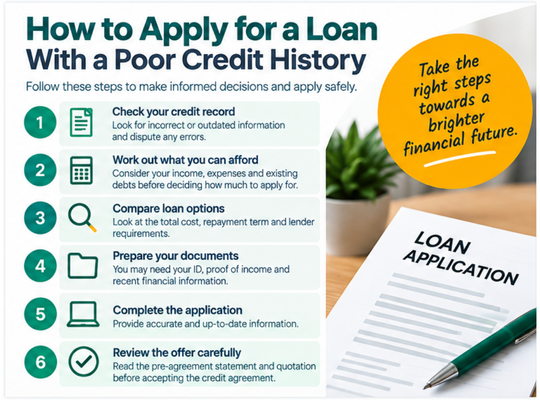
Step 1 – Assess Your Debt and Credit

Start by checking your credit report through TransUnion or Experian. This way, you know what lenders see. Consequently, you can plan your application better.

Check your free credit report here with FatCat Loans.

Step 2 – Compare Lenders

Use FatCat Loans to compare lenders that specialise in Bad Credit Consolidation Loans. Our free online tool matches you with lenders most likely to approve your application.

Step 3 – Apply Online

Submit your ID, payslips, bank statements, and proof of residence. In many cases, lenders provide same-day pre-approval. Then, you can move on to final approval quickly.

Step 4 – Combine Your Debts

Once approved, your lender pays off your existing accounts. After that, you make one simple monthly payment. Over time, this improves your credit score. In addition, it reduces stress and makes budgeting easier.

Benefits of Bad Credit Consolidation Loans South Africa

Here are the main advantages:

  • Easier repayments: Only one instalment each month.
  • Lower costs: You may get a better rate than paying many debts.
  • Better credit: On-time payments can lift your credit score.
  • Less stress: One clear plan helps with budgeting.
  • More control: Your debt is in one place instead of many.

Moreover, this option provide a clear path toward financial stability. For more guidance, visit the National Credit Regulator (NCR).

Example: how debt consolidation works in practice

Here’s a simple example of how debt consolidation can help:

  • Existing debts: R2,000 store account + R3,000 personal loan + R1,500 overdraft
  • Total monthly payments: ±R2,200

With consolidation, these could be combined into one loan with a single monthly repayment of around ±R1,400–R1,800 depending on the loan term and interest rate.

This makes budgeting easier and reduces the risk of missed payments — which is especially important if you are trying to rebuild your credit profile.

Can You Qualify for Bad Credit Consolidation Loans South Africa?

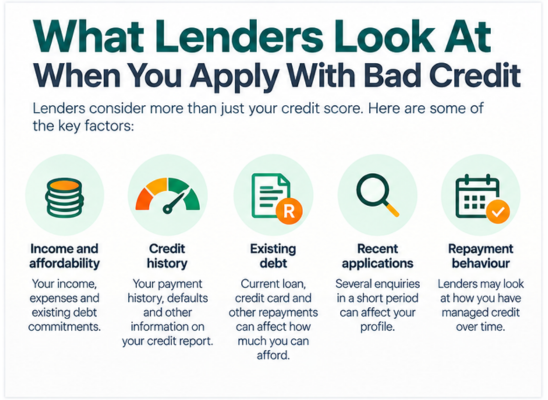
Yes, you can. However, approval depends on your full financial picture. Even with low credit, lenders look at:

  • Your income
  • Job stability
  • Your current debts
  • Your affordability

Therefore, if you demonstrate steady income and responsible spending, approval is possible. In addition, following tips from our guide can improve your chances:

To boost your eligibility, read our related guide:

Debt Consolidation Loan Approval South Africa (2025 Guide)

How to Compare Consolidation Loans for Bad Credit in South Africa

When comparing options, look at more than just the rate.

Interest Rates

Rates for these solutions are usually higher. However, they differ by lender. So, compare several offers before deciding.

Fees

Check if there are any extra costs, such as initiation or service fees. Always read your loan contract carefully.

Loan Term (Repayment Period)

Shorter terms cost less overall but have higher monthly payments. Meanwhile, longer terms offer lower monthly instalments but cost more over time.

Your loan term directly affects how much interest you pay overall, so it’s important to balance affordability with total cost.

Monthly Instalments

Use the FatCat Loans calculator to estimate what you can afford.

How to Improve Approval Chances for Bad Credit Consolidation Loans South Africa

You can increase your approval chances by doing the following:

  • Pay your current accounts on time for at least three months.
  • Do not apply for many loans at once.
  • Make sure all documents are accurate.
  • Borrow only what you need.
  • Consider using a co-signer if your score is very low.

Common mistakes to avoid with consolidation loans for bad credit

  • Taking a longer loan term just to reduce monthly payments
  • Not comparing multiple lenders before applying
  • Borrowing more than needed during consolidation
  • Continuing to use credit after consolidating debt
  • Ignoring the total repayment amount

Alternatives to Bad Credit Consolidation Loans South Africa

If consolidation doesn’t fit your needs, FatCat Loans also offers:

Each option fits different repayment needs and financial goals.

How to Avoid Scams When Applying for Bad Credit Consolidation Loans South Africa

Borrowers with bad credit are often targeted by unregistered lenders. Therefore, protect yourself by:

  • Verifying that the lender is registered with the NCR.
  • Avoiding any lender who guarantees approval or asks for up-front fees.
  • Reading reviews and checking that the website is secure (look for HTTPS).
  • Comparing legitimate offers through FatCat Loans instead of unverified sources.

Find Consolidation loans with bad credit South Africa with FatCat Loans.

FAQs About Bad Credit Consolidation Loans South Africa

Can I get a consolidation loan if I’m under debt review?

No. Most lenders require you to leave debt review first.

Can this solution help my credit score?

Yes. Paying on time can help improve your score.

How long does approval take?

Pre-approval can take minutes. Full approval may take 1–2 business days.

Do I need collateral?

Most bad credit consolidation loans in South Africa are unsecured. However, large loans may require extra guarantees.

Conclusion

Bad Credit Consolidation Loans can help you regain control of your finances. By consolidating debts, selecting trusted lenders, and making consistent repayments, you can reduce stress and rebuild your credit over time

Ready to consolidate your debt the smart way?

Compare trusted lenders and apply for Bad Credit Consolidation Loans South Africa today through FatCat Loans — quick, secure, and designed to help you get back on track.

How to Repay Debt Faster in South Africa: A Practical 2026 Guide

This practical 2026 guide explains how to repay debt faster in South Africa, sharing proven strategies to reduce interest costs, manage repayments, and regain financial control through smarter budgeting and repayment planning

Introduction on How to Repay Debt Faster in South Africa

Updated January 2026

If debt has been weighing you down, you’re not alone. Millions of South Africans are juggling credit cards, personal loans, store accounts, and unexpected bills — often without a clear path forward. The good news? Learning how to repay debt faster isn’t about earning more money; it’s about using the right strategies, improving financial habits, and choosing tools that help you make measurable progress.

Whether you’re dealing with high-interest credit cards, old loan balances, or multiple monthly instalments, this guide breaks down practical, realistic steps that help you move from “overwhelmed” to “in control.”

And if you’re struggling with multiple repayments and want to simplify things, you may find it useful to explore debt consolidation loans in South Africa, which can help streamline your finances and reduce your repayment burden.

Why Learning How to Repay Debt Faster Matters

Debt doesn’t just affect your wallet — it affects your mental health, future borrowing power, and long-term financial stability. When you repay debt faster, you:

  • Save money on interest

  • Improve your credit score

  • Increase your monthly disposable income

  • Build long-term financial security

  • Reduce financial stress

Even small improvements — like an extra R200 paid toward one account — can shave months off your repayment timeline.

If you’re working on improving your financial profile overall, you might also benefit from our guide on how to improve your credit score in South Africa, which offers actionable steps that work in 2026.

Understanding Your Debt: The First Step to Repaying Faster

Before you tackle your debt, you need clarity. That means understanding exactly:

  • How much you owe

  • What interest rates you’re paying

  • Which accounts are costing you the most

  • How your monthly payments are structured

Different debt types affect your repayment plan differently:

Credit Card Debt

High interest + revolving balance = one of the biggest drains on South African households.

Personal Loans

Fixed terms make them easier to manage — but paying them off early can save a lot in interest.

Store Accounts & Buy-Now-Pay-Later

Convenient, but often carry hidden fees and high compounding interest.

Microloans & Short-term Loans

Quick but expensive. Paying them down first often provides the biggest financial relief.

If these multiple debts are causing overwhelm, consider reading our explanation on how debt consolidation loans work in South Africa, which breaks down how to merge accounts into one manageable repayment.

How Interest Rates Affect Your Ability to Repay Debt Faster

Interest is the silent killer of financial progress.

A R10,000 credit card balance at 20–24% interest can take years to clear if you only make minimum payments. By targeting high-interest accounts first, you cut down your repayment timeline dramatically.

Ways to minimise interest:

  • Negotiate with lenders

  • Avoid rolling credit

  • Pay more than the minimum (always)

  • Use the avalanche method (explained below)

  • Consolidate high-interest debts where possible

If you’re unsure what consolidation means or how it works, our article on the meaning of debt consolidation in South Africa provides an easy explanation.

How to Prepare Yourself to Repay Debt Faster

Debt freedom begins with a plan. Here’s how to set yourself up for success:

1️⃣ Assess Your Financial Situation

Start with:

  • A complete list of debts

  • Balances + interest rates

  • Monthly instalments

  • Income + essential expenses

This alone often provides the clarity people need to take action.

2️⃣ Create a Budget that Supports Faster Repayment

A realistic budget helps you:

  • Avoid overspending

  • Allocate more toward debt

  • Track progress monthly

  • Identify unnecessary expenses

Use budgeting tools like 22seven or a simple spreadsheet.

3️⃣ Build a Small Emergency Fund

An emergency fund prevents:

  • Borrowing again

  • Relying on short-term loans

  • Interrupting your debt repayment timeline

Even R200–R300 per month adds stability.

Smart, Proven Strategies to Repay Debt Faster

Here are the top methods used by South Africans who successfully cleared their debt:

✓ Snowball Method

Focus on paying off the smallest debt first.

Why it works:

  • Quick wins keep you motivated

  • Every cleared balance frees up extra cash

  • Encourages consistent progress

✓ Avalanche Method

Focus on the debt with the highest interest rate first.

Why it works:

  • Saves the most money long term

  • Reduces interest pressure

  • Speeds up overall repayment

This works especially well when you’re dealing with store cards, credit cards, or microloans charging high interest.

✓ Make Extra Payments Whenever Possible

Any extra amount — even R100 — reduces the principal and saves interest.

Examples:

  • Tax refunds

  • Bonuses

  • Side hustle income

  • Selling unused items

Speaking of additional income, if you’d like extra earnings to support your repayment journey, explore our helpful guide on quick ways to make money in South Africa.

✓ Consider Debt Consolidation

If you’re struggling with multiple repayments and want to simplify things, you may find it useful to explore debt consolidation loans in South Africa, which can help streamline your finances and reduce your repayment burden.

For more on responsible lending and consumer rights, you can also visit the National Credit Regulator (NCR) for official guidance.

✓ Increase Your Income

More money means more debt paid faster.

Ways to earn more:

  • Freelancing

  • Selling goods

  • Tutoring

  • Part-time work

  • Local services (cleaning, washing cars, childcare)

You can also browse income-boosting ideas in our blog on quick ways to make money in South Africa.

Common Mistakes That Slow Down Debt Repayment

Avoid these traps if you want to make real progress:

❌ Only paying the minimum instalment

Interest keeps growing.

❌ Opening new credit accounts

This creates a cycle that’s hard to break.

❌ Ignoring high-interest debts

They grow the fastest.

❌ Not budgeting

You can’t fix what you can’t see.

❌ Paying late

This adds fees and harms your credit score.

Tools & Resources to Help You Repay Debt Faster

Here are useful resources that support your journey:

  • Debt repayment calculators

  • Budgeting apps (22seven, WalletDoc)

  • Financial advisors or credit counsellors

  • Consolidation loan options

  • Personal loans (for strategic refinancing)

If you’re reviewing refinancing options, you may also want to explore available personal loans in South Africa, which can offer fixed repayment terms that fit your budget.

How to repay debt faster with FatCat Loans

Conclusion: You Can Repay Debt Faster — One Step at a Time

Getting out of debt isn’t about perfection — it’s about progress. With the right strategy, a realistic budget, smart repayment methods, and consistency, anyone can regain control of their finances.

The key is starting now, even with small steps.

And if simplifying your debt or refinancing high-interest accounts feels like the next logical step, FatCat Loans can help you compare trusted lenders in minutes — safely and confidently.

👉 Take control of your financial future today. Compare loan options with FatCat Loans and start your debt-free journey.

Frequently Asked Questions About How to Repay Debt Faster

How can I stay motivated while repaying debt?

Set clear goals, celebrate milestones, and track progress monthly. Seeing results keeps you motivated.

Which is better — snowball or avalanche method?

Snowball boosts motivation; avalanche saves more money. Choose the one that fits your personality.

Can debt consolidation damage my credit?

It may cause a small temporary dip, but long-term it often improves your score by reducing missed payments and simplifying repayments.

What should I do if I can’t afford my monthly payments?

Contact lenders immediately. Many offer alternative payment arrangements. You can also consider a consolidation loan.

How fast can I become debt-free?

Depending on your income, interest rates, and repayment strategy, many South Africans become debt-free within 12–36 months with a structured plan.

Disclosure:  This article is for informational purposes only and does not constitute financial advice. Loan terms, rates, and eligibility vary by lender and province. FatCat Loans is a loan comparison platform, not a lender. Always review lender agreements carefully before accepting a loan.

Secured Loan vs Unsecured Loan: Understanding the Difference

Understand the difference between secured loan vs unsecured loan. Explore our blog for insightful comparisons and key distinctions.

Introduction to Secured Loan vs Unsecured Loan

When applying for credit, it’s important to understand the key differences between a secured loan vs unsecured loan. These two types of loans determine how much you can borrow, the interest rates you’ll pay, and the level of risk involved. Knowing the difference between a secured loan vs unsecured loan can help you make smarter financial decisions and choose the right option for your needs. In this guide, we’ll break down how each type works, their benefits, and which one may suit your financial goals best.

Key Differences Between Secured and Unsecured Loans

  • Secured loans require collateral, such as a property or car, while unsecured loans do not require any collateral.
  • Secured loans generally have lower interest rates compared to unsecured.
  • Unsecured loans are based on the borrower’s creditworthiness, while secured loans are backed by an asset.
  • Secured loans offer higher borrowing limits, while unsecured loans have lower borrowing limits.
  • Secured loans are often used for specific purposes, such as purchasing a home or car, while unsecured loans can be used for various purposes.
  • The approval process for secured loans is usually longer and involves more documentation compared to unsecured loans.

Apply for secured and unsecured loans

Exploring the Basics of a Secured Loan vs Unsecured Loan

Getting a loan can be a major decision in one’s financial journey. Whether you’re looking to buy a house, start a business, or consolidate your debts, understanding the difference between secured and unsecured loans is essential.

A secured loan vs unsecured loan comparison helps borrowers understand the two primary types of loans offered by lenders. A secured loan requires collateral — an asset such as a home, car, or other valuable property — that serves as security for the loan. In contrast, an unsecured loan does not require any collateral and is granted based on the borrower’s creditworthiness and ability to repay. Understanding the difference between a secured loan vs unsecured loan is essential when deciding which option suits your financial situation, credit history, and borrowing goals.

It’s important to understand the differences between secured and unsecured loans before making a borrowing decision. In this article, we will explore the basics of secured and unsecured loans, the role of collateral, the types of loans available, the advantages and disadvantages of each, and factors to consider when choosing between the two.

In-Depth Analysis of Secured Loans

When comparing a secured loan vs unsecured loan, one major advantage of a secured loan is the ability to access larger loan amounts by leveraging valuable assets. These loans are commonly used for specific purposes, such as purchasing real estate or financing a car. In a secured loan vs unsecured loan scenario, the secured option typically offers better interest rates because the property or asset serves as collateral. This allows borrowers to obtain higher funding amounts, usually based on the appraised value of the asset. Understanding how a secured loan vs unsecured loan differs can help you choose the best option for your financial situation and borrowing needs.

Common Types of Secured Loans

Secured loans come in various forms, each tailored to specific borrowing needs. Here are some common types of secured loans:

  • Home equity loan: This type of loan allows homeowners to borrow against the equity in their homes. The loan is secured by the property itself and can be used for various purposes, such as home renovations or debt consolidation.
  • Car loan: A car loan is a type of secured loan where the vehicle being financed serves as collateral. If the borrower defaults on the loan, the lender can repossess the car.
  • Secured personal loan: This loan is secured by an asset, such as a savings account or certificate of deposit. These loans are often used to build credit or borrow against existing savings.

It’s important to carefully consider your financial needs and the specific requirements of each type of secured loan before making a decision.

Comprehensive Guide to Unsecured Loans

When comparing a secured loan vs unsecured loan, the main advantage of an unsecured loan is flexibility — borrowers can access funds without needing any collateral. These loans are typically based on the borrower’s creditworthiness, income, and ability to repay. In a secured loan vs unsecured loan comparison, unsecured loans rely more heavily on credit history since no assets are tied to the borrowing. This makes them a popular choice for individuals who don’t own valuable property or prefer not to risk losing assets in case of default. Understanding how a secured loan vs unsecured loan differs helps borrowers decide whether flexibility or security is more important for their financial goals.

Varieties of Unsecured Loans Available

Unsecured loans come in various forms, each catering to specific borrowing needs. Here are some common types of unsecured loans:

  • Personal loan: A personal loan is a versatile form of unsecured loan that can be used for various purposes, such as debt consolidation, home improvements, or funding a wedding.
  • Student loans: These loans are specifically designed to help students finance their education. They are typically unsecured and require the borrower to make repayments after completing their education.
  • Unsecured personal loan: An unsecured personal loan is a general-purpose loan that does not require any collateral. Borrowers can use the funds for any purpose, from home renovations to medical expenses.

When considering an unsecured loan, it’s important to compare interest rates, repayment terms, and eligibility criteria to find the best option for your specific needs.

Advantages and Disadvantages in a Secured Loan vs Unsecured Loan Comparison

Unsecured loans offer several advantages and disadvantages that borrowers should consider:

Pros

  • No collateral required: Unsecured loans do not require any collateral, allowing borrowers to access funds without risking valuable assets.
  • Greater flexibility: Unsecured loans can be used for various purposes, giving borrowers the freedom to allocate the funds as needed.
  • Quicker approval process: Compared to secured loans, unsecured loans often have a faster approval process as there is no need to assess collateral.
  • Opportunity to build credit: Making timely payments on an unsecured loan can help build or improve your credit score.

Cons

  • Higher interest rates: Unsecured loans generally come with higher interest rates compared to secured loans, reflecting the increased risk for lenders.
  • Stricter eligibility criteria: Lenders may have stricter eligibility requirements for unsecured loans, including higher credit score thresholds and income verification.
  • Unsecured debt: Since unsecured loans do not require collateral, the lender relies solely on the borrower’s creditworthiness. Defaulting on an unsecured loan can result in collection efforts and damage to the borrower’s credit score.

Before choosing an unsecured loan, carefully consider the pros and cons to ensure it aligns with your financial goals and circumstances.

Important Factors When Deciding on a Secured Loan vs Unsecured Loan

When deciding between secured and unsecured loans, several factors should be taken into consideration:

  • Interest rate

Compare the interest rates offered for both secured and unsecured loans. Secured loans generally have lower interest rates, but it’s essential to consider the overall cost of borrowing.

  • Credit score

Your credit score plays a significant role in loan approval and interest rates. If you have a good credit score, you may have access to more favourable terms and lower interest rates.

  • Financial situation

Evaluate your financial situation, including your income, expenses, and existing debt. This will help determine your ability to repay the loan and manage the associated risks.

By considering these factors, you can make an informed decision about which type of loan is best suited to your needs.

Impact on Credit Scores

Both secured and unsecured loans can have an impact on your credit score and credit history. When you apply for a loan, the lender will assess your creditworthiness, which includes reviewing your credit score and credit report.

Taking out a loan and making timely payments can have a positive impact on your credit score, as it shows responsible borrowing and repayment behaviour. However, missing payments or defaulting on a loan can have a negative impact on your credit score and make it more challenging to obtain future loans.

Additionally, having a mix of secured and unsecured loans can also positively impact your credit score, as it demonstrates your ability to manage different types of credit. It’s important to monitor your credit report regularly and ensure that all loan repayments are made on time to maintain a good credit score.

Secured Loans: Eligibility and Application Process

Secured loans have specific eligibility requirements and an application process that differs from unsecured loans. To apply for a secured loan, the borrower must provide relevant documentation and meet the following criteria:

  • Collateral: The borrower must have an asset to offer as collateral that meets the lender’s requirements. The lender will assess the value of the collateral and determine the loan amount based on its appraised value.
  • Creditworthiness: While secured loans are backed by collateral, lenders may still review the borrower’s credit history and credit score to assess their ability to repay the loan.
  • Financial stability: Lenders may also consider the borrower’s income, employment stability, and overall financial situation when evaluating a secured loan application.

Documents Required for a Secured Loan

To apply for a secured loan, you will need to go through an application process with a financial institution. The specific documents required may vary depending on the lender and the type of collateral you are offering. Generally, you will need to provide:

  • Proof of ownership of the valuable asset you are using as collateral, such as property documents or car ownership papers.
  • Financial documents to assess your ability to repay the loan, such as income statements, bank statements, and tax returns.
  • Appraisal or valuation of the collateral to determine its worth.

It is important to carefully review the application requirements and provide all requested documents to ensure a smooth loan approval process.

Understanding the Valuation of Collateral

When applying for a secured loan, the lender will need to assess the value of the collateral you are offering. This valuation is important because it determines the loan amount that can be granted. The lender will typically require an appraisal or valuation of the collateral, which may be carried out by a qualified professional. The valuation takes into account factors such as the condition, age, and market value of the asset. The lender wants to ensure that the collateral has sufficient value to cover the loan amount in case of default.

It is important to note that the valuation process may involve additional costs, which will be borne by the borrower. Understanding the valuation of collateral is crucial when applying for a secured loan, as it directly impacts the loan amount that can be obtained.

Navigating the World of Unsecured Loans

When it comes to unsecured loans, things work differently. These loans do not require any collateral and are typically based on the borrower’s credit score and credit history. The approval process for an unsecured loan is usually quicker, as there is no need for the lender to assess the value of collateral.

To qualify for an unsecured loan, lenders typically consider the following:

  • Credit score

A higher credit score indicates a lower risk for the lender, making it more likely for you to be approved for the loan.

  • Credit history

A strong credit history, including a record of timely payments and low credit utilization, also increases your chances of getting approved.

  • Income

Lenders may also assess your income to ensure that you have the financial means to repay the loan.

  • Other factors

Additionally, lenders may consider other factors such as employment history, debt-to-income ratio, and existing financial obligations.

It is important to maintain a good credit score and credit history to improve your chances of qualifying for an unsecured loan with favourable terms.

Tips for a Successful Unsecured Loan Application

When applying for an unsecured loan, there are several tips that can help increase your chances of a successful application. First and foremost, it is important to have a good credit score. Pay your bills on time, keep your credit utilization ratio low, and avoid applying for too much credit at once. This will demonstrate your creditworthiness to lenders. Additionally, it is important to have a stable source of income to show that you have the means to repay the loan. Finally, consider shopping around and comparing offers from different lenders to find the best terms and interest rates for your unsecured loan. Doing your research and being prepared will greatly increase your chances of a successful unsecured loan application.

Apply for a secured or unsecured loan up to R350,000

How Lenders Assess Risk in a Secured Loan vs Unsecured Loan

Lenders assess the risk associated with loans before granting them. When it comes to secured loans, lenders have collateral to fall back on in case of default. This reduces their risk and allows them to offer lower interest rates. On the other hand, unsecured loans carry more risk for lenders as there is no collateral. To mitigate this risk, lenders typically charge higher interest rates and have stricter approval criteria for unsecured loans. Understanding the lender’s perspective on secured and unsecured loans can help borrowers make informed decisions when choosing the right loan for their needs.

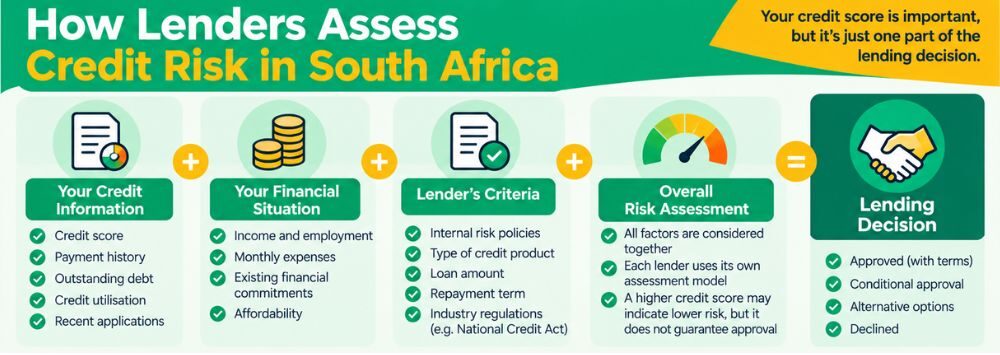
How Lenders Evaluate Loan Applications

When evaluating loan applications, lenders consider various factors to assess the borrower’s creditworthiness. The key factors that lenders consider include:

  • Credit score, which is a numerical representation of their creditworthiness based on their credit history.
  • Financial situation, including their income, employment stability, and debt-to-income ratio.
  • Loan amount is another important consideration, as lenders want to ensure that the borrower can comfortably repay the loan.
  • Purpose of the loan, the borrower’s repayment history, and their existing financial obligations.

By evaluating these factors, lenders can determine the risk associated with the loan and make informed decisions about loan approvals and interest rates.

The Importance of Credit History in Loan Approval

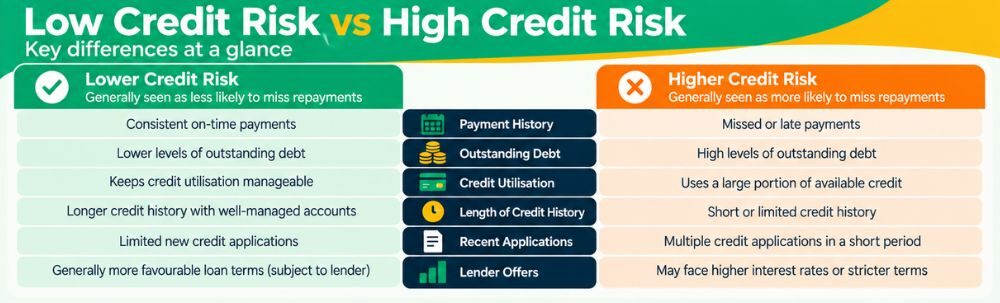
Credit history plays a crucial role in loan approval. Lenders review a borrower’s credit history to assess their creditworthiness and determine the risk involved in granting a loan. A good credit history, with a record of timely payments and responsible credit use, demonstrates that the borrower is likely to repay the loan on time. This increases the borrower’s chances of loan approval and may result in more favourable terms, such as lower interest rates. On the other hand, a poor credit history, with missed payments or a high level of debt, indicates a higher risk for lenders, leading to potential loan rejections or higher interest rates. It is important to maintain a good credit history by paying bills on time, keeping credit utilization low, and addressing any credit issues promptly.

Conclusion

Understanding the difference between a secured loan vs unsecured loan is crucial for making informed financial decisions. In a secured loan vs unsecured loan comparison, secured loans typically offer lower interest rates because they are backed by collateral, while unsecured loans rely on the borrower’s creditworthiness. When choosing between the two, consider key factors such as interest rates, collateral requirements, and credit impact. Knowing the eligibility criteria and application process for each type of loan will help you make the best choice. By evaluating a secured loan vs unsecured loan carefully, you can prioritize financial stability and select the option that aligns with your long-term goals for a secure financial future.
Frequently Asked Questions About a Secure Loan vs Unsecure Loan

Secured Loan vs Unsecured Loan: Can I Convert an Unsecured Loan into a Secured Loan?

No, you cannot convert an unsecured loan into a secured loan. A secured loan requires collateral from the borrower, while an unsecured loan does not. If you need a secured loan, you will need to apply for a new loan with collateral.

What happens if I default on a secured loan?

If you default on a secured loan, the lender has the right to seize the collateral used to secure the loan. They can sell the collateral to recover the outstanding balance. Defaulting on a secured loan can also have a negative impact on your credit score.

Are there unsecured loans with no credit check?

Some lenders may offer unsecured loans without a credit check, but these loans often come with higher interest rates and stricter terms. It is important to carefully review the terms and conditions before agreeing to an unsecured loan without a credit check.

How a Secured Loan vs Unsecured Loan Affects Your Credit Score

Both secured and unsecured loans can impact your credit score. Timely payments on both types of loans can help improve your credit score. However, defaulting on a secured loan can have a more significant negative impact on your credit score compared to an unsecured loan.

Ultimate Guide to Online Loans Cape Town

Find the ultimate guide to online loans Cape Town. Get the information you need for quick and easy access to online loans in Cape Town.

Introduction to Online Loans in Cape Town

Finding fast and reliable financial help has never been easier. Residents can apply for online loans in Cape Town, from the comfort of their homes. Whether you need funds for emergencies, personal expenses, or business growth, online lenders offer flexible repayment options and quick approvals. This guide will walk you through everything you need to know — from choosing a trusted lender to submitting your application safely and efficiently.

Key Facts About Online Loans in Cape Town

  • Online loans Cape Town offer a convenient way to apply for a loan without the hassle of paperwork or visiting a physical bank branch.
  • With online applications, you can easily apply for a loan from the comfort of your own home using your computer or smartphone.
  • Using a loan calculator, you can estimate the interest rate and repayment terms that best suit your financial situation.
  • Online loans in Cape Town offer flexible repayment terms, allowing you to choose a repayment schedule that fits your budget.
  • Whether you need cash for emergencies, unexpected expenses, or personal needs, online loans in Cape Town provide a quick and convenient solution.

Understanding Online Loans Cape Town

Online loans Cape Town offer a convenient way to access funds swiftly in times of need. With easy online applications and flexible repayment terms, these loans cater to various financial requirements. Understanding the basics of online lending and the benefits it provides can help individuals make informed decisions. By exploring the types of online loans available in Cape Town, borrowers can choose the most suitable option.

This guide delves into eligibility criteria, application processes, and tips for selecting the right lender to ensure a smooth borrowing experience.

The Basics of Online Lending

Online lending allows individuals to borrow money via online platforms. These loans are typically unsecured and don’t require collateral. The application process usually involves filling out an online form with personal and financial details. Lenders assess the information provided to determine loan eligibility and offer terms such as loan amount, interest rate, and repayment term. Online loans in Cape Town often provide quick access to funds for various purposes, making them a popular choice for many.

Benefits of Opting for Online Loans Cape Town

Convenience is a prime benefit of online loans, allowing easy access to funds from anywhere in Cape Town. The streamlined application process, with minimal paperwork and quick approval, makes online loans efficient during emergencies. Moreover, borrowers can compare multiple lenders online to secure competitive interest rates and flexible repayment terms. Online loans cater to diverse needs, whether for unexpected expenses or planned purchases, providing a convenient financial solution at times of need.

Common Requirements for Online Loans Cape Town Approval

To be eligible for online loans in Cape Town, borrowers must meet certain criteria set by the National Credit Regulator and credit providers. These criteria ensure responsible lending and protect both borrowers and lenders:

  • Accurate personal information: This includes their name, contact details, and identification documents. This information is necessary for lenders to verify the borrower’s identity and assess their creditworthiness.
  • Valid bank account in South Africa: This allows lenders to deposit the loan amount directly into the borrower’s account and set up automatic repayments.
  • Credit history: A good credit history increases the chances of loan approval, while a poor credit history may result in higher interest rates or loan rejections.
  • Affordability: Affordability is determined by the borrower’s income and expenses, ensuring they can comfortably repay the loan without financial strain.

Meeting these criteria increases the likelihood of loan approval and ensures a smooth application process. Borrowers should provide accurate information and be prepared to provide supporting documents if required.

How Your Credit Score Affects Loan Eligibility

Your credit score plays a significant role in determining your eligibility for online loans Cape Town. A credit score is a numerical representation of your creditworthiness, based on your credit history and financial behaviour. Lenders use this score to assess the risk associated with lending you money.

Good credit score:

  • Increases your chances of loan approval;
  • May also result in better loan offers, such as lower interest rates or higher loan amounts.

Lenders view borrowers with higher credit scores as more financially responsible and less likely to default on their loan repayments.

Poor credit score:

  • May make it difficult to qualify for loans;
  • Result in higher interest rates.

Lenders may consider borrowers with lower credit scores as higher-risk borrowers and may impose stricter eligibility criteria or offer less favourable loan terms.

It’s important to note that a credit score is just one factor that lenders consider when assessing loan eligibility. They also consider factors such as income, expenses, and overall affordability. Even if you have a less-than-perfect credit score, demonstrating affordability and a stable financial situation may still make you eligible for online loans in Cape Town.

How to Apply for Online Loans Cape Town

Applying for an online loan in Cape Town is a simple and convenient process. Online lenders offer an easy-to-use online application platform, making it quick and hassle-free to apply for a loan.

To start the application process with online loans Cape Town, borrowers need to visit the lender’s website and navigate to the loan application page. Here, they will be prompted to provide personal and financial information, such as their name, contact details, employment information, and income details. It is important to provide accurate and complete information to ensure a smooth application process.

Once the loan application is submitted, the lender will review the information provided and assess the borrower’s eligibility and creditworthiness. This process usually takes a short period of time, and borrowers can expect to receive a loan decision within a few hours or days.

If the loan application is approved, the borrower will receive the loan agreement outlining the loan terms, including the loan amount, interest rate, repayment term, and any additional fees or charges. It is important to review the loan agreement carefully and ensure that all terms are understood before accepting the loan.

After accepting the loan agreement, the loan amount will be deposited directly into the borrower’s bank account. Repayments will be automatically deducted from the borrower’s account according to the agreed-upon schedule.

Documents Needed for Loan Application

When applying for an online loan in Cape Town, borrowers will need to provide certain documents as part of the application process. These documents help lenders verify the borrower’s identity, income, and financial standing. Here are some documents that may be needed for an online loan application:

  • Bank statements: Lenders may require the borrower to provide their latest bank statements as proof of income and to verify their financial stability. These provide a snapshot of the borrower’s financial transactions and help lenders assess the borrower’s ability to repay the loan./
  • Accurate personal information: This can include their name, contact details, and identification documents. This information is necessary for lenders to verify the borrower’s identity and ensure that the loan is being provided to the correct person.
  • Phone number: Borrowers may be asked to provide a phone number that can be used for communication purposes throughout the loan application process. This allows lenders to reach out to the borrower if any additional information is needed or to provide updates on the loan application status.

By preparing these documents in advance, borrowers can streamline the loan application process and increase their chances of loan approval.

Choosing the Right Lender in Cape Town

Choosing the right lender is crucial when applying for online loans Cape Town. Here are some key factors to consider when choosing an online lender:

  • Work with a registered credit provider that adheres to responsible lending practices and is regulated by the National Credit Regulator. Registered credit providers are required to follow industry standards and guidelines, ensuring that borrowers are protected from predatory lending practices. They are also subject to scrutiny and oversight by the National Credit Regulator, providing an added layer of security for borrowers.
  • Consider the security measures implemented by the lender. Online lenders should have secure encryption protocols in place to protect borrowers’ personal and financial information. This includes secure transmission of data and storage of information on secure servers. Look for secure payment gateways and SSL certificates.
  • Read reviews and testimonials from other borrowers to gauge the lender’s reputation and customer service. A lender with positive reviews and satisfied customers is more likely to provide a reliable and trustworthy lending experience.
  • Review the loan terms and conditions carefully. This includes interest rates, repayment terms, and any additional fees or charges. Understanding the loan terms ensures that borrowers are fully aware of their financial obligations and can make an informed decision.

By being cautious and doing your due diligence, borrowers can have peace of mind knowing that their personal and financial information is secure, and they are working with a reputable and responsible credit provider.

Online loans Cape Town with FatCat Loans

Interest Rates and Fees

Understanding the interest rates and fees associated with online loans in Cape Town is crucial when making borrowing decisions. Here’s what you need to know:

Interest Rates

Interest rates on online loans can vary depending on the lender and your credit profile. That’s why it’s worth comparing offers from different lenders before you apply.

To get a better idea of what you may repay each month, try our loan  repayment calculator. It can help you estimate repayments based on your loan amount, interest rate, and repayment term.

Additional Fees

  • In addition to interest rates, some online loans may include extra costs such as application fees, initiation fees, or late payment penalties.
  • Always review the loan agreement carefully so you understand the full cost of borrowing before accepting a loan offer.
  • By considering both the interest rate and any additional fees, you can make a more informed decision and choose an online loan in Cape Town that fits your budget and financial needs.

Effective Tips for Managing Your Loan Repayment

Managing your loan repayment is crucial to avoid any financial strain. Here are some tips to effectively manage your online loan in Cape Town:

  • Create a budget that includes your loan repayments. This will help you allocate funds and ensure timely repayments without compromising other financial commitments.
  • Take advantage of the flexible repayment terms offered by online loans. Adjust your repayment schedule to align with your income and expenses.
  • Set up automatic payments or reminders to avoid missing any repayments. This will help you stay on track and avoid late payment fees.
  • If you encounter financial difficulties, contact your lender early. They may be able to offer temporary relief options or work out a revised repayment plan.

By following these tips, you can effectively manage your online loan repayment and maintain a healthy financial standing.

What Happens if You Miss a Payment?

Missing a loan repayment can have serious consequences. Here’s what could happen if you miss a payment on your online loan Cape Town:

  • Late Payment Fees: Lenders may charge late payment fees if you miss a repayment or make a late payment. These fees can increase the total cost of your loan.
  • Additional Interest: Missing a payment may result in additional interest being charged on the outstanding loan amount.
  • Negative Impact on Credit Score: Non-payment or late payment can negatively impact your credit score, making it harder to obtain credit in the future.
  • Legal Action: In extreme cases, lenders may take legal action to recover the outstanding loan amount.

It’s important to communicate with your lender if you anticipate difficulty in making a repayment. They may be able to offer options to help you avoid additional fees or penalties.

Conclusion

In conclusion, understanding the landscape of online loans in Cape Town is crucial for making informed financial decisions. From grasping the basics of online lending to choosing the right lender and managing repayment effectively, this ultimate guide equips you with the necessary knowledge. Be mindful of interest rates, eligibility criteria, and repayment strategies to navigate the online loan market successfully. By staying informed and proactive, you can make the most of online loans while safeguarding your financial well-being. Make wise choices, and secure your financial future with confidence.

How To Get A Loan with Bank Statement Only

Searching for a quick personal loan with bank statement only? Get the funds you need without hassle. Learn more on our blog!

Understanding Personal Loans with Bank Statement Only

In South Africa, credit providers have certain requirements when it comes to loan applications. These requirements typically involve reviewing the borrower’s monthly salary and bank statements to determine their ability to repay the loan. However, there are situations where borrowers may not have payslips or traditional income documentation. This can make it challenging for them to secure a loan. Fortunately, there are lenders who offer personal loans with bank statement only, making it easier for individuals without payslips to access the funds they need.

These loans can be a lifeline for individuals who are self-employed, receive cash payments, or have varying sources of income. By using their bank statements as proof of income, borrowers can demonstrate their ability to repay the loan and increase their chances of approval. In addition to bank statements, lenders may also consider the borrower’s credit history and other personal information when assessing the loan application.

Lenders will typically review the borrower’s bank statements to determine their income, expenses, and overall financial stability before deciding on the loan approval. These loans have a simplified application process, as borrowers do not need to provide extensive financial documentation, making them a good option for individuals who do not have traditional income documentation.

Key Things to Know About Bank Statement Only Loans

  • Personal loans with bank statement only are a convenient option for those who do not have payslips or traditional income documentation.
  • The application process for personal loans with bank statement only is quick and easy, with minimal documentation required.
  • These loans offer quick processing and approval, allowing borrowers to access funds in a short period of time.
  • Personal loans with bank statement only have less stringent eligibility criteria, making them accessible to a wider range of borrowers.
  • While these loans offer advantages such as quick processing and flexible terms, borrowers should also be aware of potential drawbacks such as higher interest rates and limitations on loan amounts.

Eligibility Criteria for Applying

To apply for a personal loan with bank statement only, borrowers must meet certain eligibility criteria. These criteria may include:

  • Having a minimum credit score;
  • Providing personal information such as identification documents;
  • Demonstrating responsible lending behaviour.

Lenders want to ensure that borrowers have a reliable source of income and are capable of repaying the loan. Meeting these eligibility criteria increases the chances of loan approval and helps lenders mitigate the risk associated with lending to individuals without traditional income documentation.

Applying for a Personal Loan Using Your Bank Statement: Step-by-Step Guide

Applying for a personal loan with bank statement only is a simple and straightforward process. The application typically involves the following steps:

  • Research and compare lenders: Research different lenders that offer personal loans with bank statement only. Compare interest rates, loan terms, and eligibility criteria to find the best option for your needs.
  • Gather documentation: Collect your bank statements that show your income and expenses over a specific period, usually three to six months.
  • Fill out the application form: Complete the lender’s application form, providing accurate information, such as your personal details, contact information, and bank account details.
  • Submit documents: Upload or submit your bank statements, to provide proof of income, along with the application form.
  • Wait for approval: The lender will review your application and assess your eligibility for the loan. This process may take a few days.
  • Loan offer: If approved, the lender will provide a loan offer specifying the loan amount, interest rate, and repayment terms.
  • Accept the offer: If satisfied with the loan offer, accept it and proceed with the loan agreement.
  • Loan disbursement: Once the loan agreement is signed, the lender will disburse the loan amount into your bank account.

Documents Required Besides Bank Statements

In addition to bank statements, lenders may require borrowers to provide other documents as part of the loan application process. These documents help lenders assess the borrower’s financial situation and determine their eligibility for the loan. Some additional documents that may be required include:

  • Salary slip: If the borrower has a payslip, it may be requested as supplementary proof of income.
  • Personal information: Identification documents such as an ID card or passport may be required to verify the borrower’s identity.
  • Credit history: Lenders may request access to the borrower’s credit history to assess their creditworthiness and repayment behaviour.

Advantages of Personal Loans with Bank Statement Only

Personal loans with bank statement only offer several advantages for borrowers. These advantages include quick processing and approval, flexible loan terms, and unsecured loans.

Quick Processing and Approval

One of the significant advantages of personal loans with bank statement only is the quick processing and approval. As borrowers provide their bank statements as proof of income, lenders can assess their financial situation and determine their eligibility for the loan more efficiently. This eliminates the need for extensive paperwork and speeds up the loan approval process. Borrowers can receive the funds in a short period, allowing them to address their financial needs promptly.

Less Stringent Eligibility Requirements

Personal loans with bank statement only often have less stringent eligibility requirements compared to traditional loans. While borrowers still need to meet certain criteria, such as having a minimum credit score, these loans are designed to be accessible to a wider range of individuals. Lenders focus on the borrower’s ability to repay the loan based on their bank statements and overall financial stability. This makes personal loans with bank statement only a viable option for those who may not meet the strict requirements of traditional loans.

Potential Drawbacks to Consider

While personal loans with bank statement only offer several advantages, borrowers should also be aware of potential drawbacks before applying for these loans.

Higher Interest Rates Compared to Traditional Loans

One potential drawback of personal loans with bank statement only is that they may come with higher interest rates compared to traditional loans. Lenders may charge higher rates to compensate for the increased risk associated with these loans. It is important for borrowers to carefully consider the interest rates and compare them to other loan options. Seeking advice from a financial advisor can help borrowers make an informed decision and choose the loan option that best suits their financial situation. It is also worth exploring other sources of credit, such as credit cards, to compare interest rates and terms.

Limitations on Loan Amounts

Another potential drawback of personal loans with bank statement only is that there may be limitations on the loan amounts available. Lenders will consider the borrower’s income and financial situation when determining the loan amount. It is important for borrowers to assess their borrowing needs and use a loan calculator to estimate the loan amount they can afford. This will help borrowers determine if the available loan amounts meet their financial requirements. If the loan amount is insufficient, borrowers may need to explore alternative loan options or consider adjusting their financial plans.

Compare loan offers online with FatCat Loans South Africa.

Comparing Lenders for the Best Deal

When considering personal loans with bank statement only, it is essential to compare different lenders to find the best deal. Each lender may offer different loan terms, interest rates, and conditions. By comparing loan offers from multiple lenders, borrowers can ensure they are getting the most favourable terms and conditions. Here are a few key things to consider when comparing lenders:

  • Check if the lender charges any service fees or hidden fees. These fees can add up and increase the overall cost of the loan.
  • Review the loan terms, including the interest rate and repayment period. Make sure the terms are favourable and fit within your budget.
  • Research the lender’s reputation and make sure they are regulated by the National Credit Regulator (NCR). This ensures that they follow responsible lending practices and adhere to industry standards.
  • Consider consulting a financial advisor who can provide guidance and help you make informed decisions about your loan options. They can also assist in budgeting and managing your loan repayments effectively.

When seeking a personal loan with bank statement only, it is important to be aware of predatory lenders. These are lenders who may take advantage of borrowers in vulnerable financial situations. They may charge exorbitant interest rates, have unfair loan terms, or use aggressive collection practices.

Taking the time to choose a reputable lender can provide peace of mind and increase your chances of a positive loan experience.

Navigating Through Your Loan Approval

After submitting your loan application with bank statement only, it is important to understand the loan process and navigate through the approval stage. The lender will review your application, including your bank statements, to assess your ability to repay the loan. They may also consider factors such as your credit history and income sources.

Once your loan is approved, you will receive the loan terms, including the repayment schedule and interest rate, and the loan amount will be deposited into your bank account. It is important to carefully review the terms and make sure they align with your financial situation and budget. If you have any questions or concerns, don’t hesitate to reach out to the lender for clarification.

Managing Your Loan Repayments Effectively

During the loan term, you will be required to make regular repayments as per the agreed schedule. Missing or late payments can have negative consequences, such as late fees or a negative impact on your credit score. Managing your loan repayments effectively is crucial to ensure you meet your financial obligations and maintain a good credit score. Here are some tips to help you manage your loan repayments:

  • Create a budget: Evaluate your income and expenses to create a budget that allows you to meet your loan repayments. Prioritise your loan payments to ensure they are paid on time.
  • Set up automatic payments: Consider setting up automatic payments from your bank account to ensure your loan repayments are made on time. This can help you avoid late fees and maintain a positive credit history.
  • Communicate with your lender: If you are facing financial difficulties and are unable to make your loan repayments, reach out to your lender. They may be able to offer temporary solutions or alternative repayment plans.
  • Seek financial advice: If you are struggling to manage your loan repayments, consider seeking advice from a financial advisor. They can help you develop a repayment plan and provide guidance on managing your finances effectively.

Alternatives to Personal Loans with Bank Statement Only

If you are unable to qualify for a personal loan with bank statement only, there are alternative options available. Here are some alternative options to consider:

Secured Personal Loans:

Secured personal loans require collateral, such as a vehicle or property, to secure the loan. This collateral reduces the lender’s risk and may result in lower interest rates. However, it is important to carefully consider the risks associated with secured loans and ensure you are able to repay the loan to avoid losing your collateral.

Co-signer Personal Loans:

Co-signer personal loans involve having a co-signer with good credit and income co-sign the loan application. The co-signer acts as a guarantor for the loan and is responsible for repayment if the borrower defaults. This can increase your chances of loan approval and potentially result in lower interest rates. However, it is important to choose a co-signer who is willing and able to take on this responsibility.

Conclusion

In conclusion, personal loans with bank statements offer a convenient and accessible financial solution. While they provide quick approval processes and flexible eligibility criteria, it’s essential to consider potential drawbacks like higher interest rates. Comparing lenders is crucial to securing the best deal. After approval, ensure to manage repayments efficiently to build a positive credit history. Explore alternatives like secured or co-signer loans if needed. Understanding the nuances of these loans empowers you to make informed financial decisions. Remember, financial responsibility is key to successful loan management.

Frequently Asked Questions

Can I get a personal loan solely with my bank statement?

Yes, it is possible to get a personal loan with just your bank statement as proof of income. Lenders may consider other factors, such as credit history and income sources, in addition to the bank statement.

What are the typical interest rates for bank statement only loans?

The interest rates for bank statement only loans can vary depending on the lender and your financial situation. It is important to compare rates from different lenders to ensure you get the best possible deal.

How quickly can I get approved for a bank statement only loan?

The loan approval process for bank statement only loans can vary depending on the lender. Some lenders offer quick approval times, while others may take longer to review your application and documents.

Are there any specific banks that offer personal loans with bank statement only?

There may be specific banks or financial institutions that offer personal loans with bank statement only. It is recommended to research different lenders and compare their loan offers to find the best option for your needs.

Can I apply for a loan if I have a joint bank account?

Yes, you can still apply for a loan if you have a joint bank account. The lender will consider the joint account holder’s information, such as their credit score and income, in addition to your own information when reviewing your loan application.

Borrowing Money from Family: FAQs & Tips

Get answers to your FAQs on borrowing money from family to buy a house. Find out everything you need to know on our blog.

Borrowing Money from Family in South Africa: What You Need to Know

Updated March 2026

Borrowing money from family can feel like the easiest solution when you’re under financial pressure. Whether you’re covering unexpected expenses, consolidating debt, or funding a big purchase, family loans often come with fewer barriers than traditional lenders.

But here’s the reality: borrowing from family is still a financial agreement — not just a favour.

Without proper structure, it can damage relationships and create long-term tension.

In this guide, we’ll break down:

  • When borrowing from family makes sense
  • How to structure a proper agreement
  • Legal considerations in South Africa
  • Safer alternatives if things go wrong

This article is for general information only and should not be taken as legal, tax, or financial advice.

Compare your loan options with FatCat Loans.


Key Takeaways

  • Family loans can offer lower interest rates and flexible repayment terms
  • You should always use a written loan agreement
  • Even informal loans should follow basic legal and financial principles
  • Clear communication is essential to avoid damaging relationships
  • Always consider whether you can realistically repay the loan

Is It a Good Idea to Borrow Money from Family?

It can be—but only in the right situation.

When it makes sense:

  • You have a clear repayment plan
  • You want to avoid high-interest debt
  • Your credit score limits traditional borrowing options

If your credit is low, you may also want to explore bad credit loan options before involving family.

When it’s risky:

  • You’re already struggling with repayments
  • There’s no formal agreement
  • Expectations aren’t clearly discussed

Bottom line: If it’s not structured properly, it can cost more than money—it can cost relationships.


How Family Loans Work

A family loan is simply a loan between relatives, but it should still be treated like a formal financial agreement.

In practice, that usually means having:

  • Written contract
  • Defined repayment terms
  • Agreed interest rate (if applicable)

Even between family, this protects both sides.


Legal Considerations in South Africa

Depending on how the loan is structured, whether interest is charged, and whether lending is done regularly, some family loan arrangements may raise legal or regulatory considerations in South Africa.

Key things to consider:

  • A written agreement helps enforce repayment
  • Charging excessive interest could raise compliance issues
  • Large loans may have tax implications (SARS)

If you’re unsure, it’s worth getting basic legal advice—especially for large amounts.


How to Set Up a Family Loan Agreement

A proper agreement removes confusion and protects your relationship.

Include these key terms:

  • Loan amount:  Total borrowed
  • Repayment plan:  Monthly amount + duration
  • Interest rate:  If applicable
  • Missed payment terms:  What happens if you fall behind
  • Signatures:  Both parties should sign

See what a loan agreement should include


What Is a Fair Interest Rate?

Even with family loans, setting a fair interest rate can avoid future conflict.

You can base it on:

  • Current market rates
  • Your credit profile
  • The risk to the lender

See how different personal loan rates compare.

Some families choose 0% interest, but even then, repayment expectations should be clear.


How to Talk to Family About Borrowing Money

This is where most people go wrong.

Do:

  • Be honest about your financial situation
  • Explain how you’ll repay the loan
  • Put everything in writing

Don’t:

  • Assume they’ll say yes
  • Avoid difficult conversations
  • Treat it casually

Clear communication prevents resentment later.


Managing Repayments Without Damaging Relationships

Once the loan is in place, discipline matters.

Best practices:

  • Set up automatic payments
  • Track your progress
  • Communicate early if issues arise

If you’re struggling to keep up with repayments, it’s important to act early. Missing payments can lead to financial stress and strain your relationship with your family member.

Reviewing your finances and following a structured repayment strategy can help you avoid falling further behind.

Learn practical ways to repay debt faster.


What If You Can’t Repay?

Don’t ignore it.

Instead:

  • Speak to your family member immediately
  • Renegotiate terms if needed
  • Show accountability

Silence is what damages trust—not the problem itself.


Pros and Cons of Borrowing from Family

Pros:

  • Lower or no interest
  • Flexible terms
  • Faster access to money

Cons:

  • Emotional pressure
  • Risk to relationships
  • Lack of legal protection if informal

Alternatives to Borrowing from Family

Before committing, consider:

These options may protect your relationships while still meeting your financial needs.

Compare your loan options with FatCat Loans.


FAQs: Borrowing Money from Family in South Africa

1. Is it legal to borrow money from family in South Africa?

Yes, borrowing money from family is legal in South Africa. However, if interest is charged or lending becomes frequent, the agreement may fall under the National Credit Act (NCA). It’s always recommended to have a written agreement to protect both parties.


2. Do I need a contract when borrowing money from family?

Yes. Even if it feels informal, a written loan agreement helps prevent misunderstandings. It should clearly outline the loan amount, repayment terms, and any interest charged.


3. Can a family loan affect my credit score?

No, most family loans are not reported to credit bureaus, so they won’t directly impact your credit score. However, failing to repay could harm your financial reputation and relationships.


4. Should you charge interest on a family loan?

It depends. Some families choose not to charge interest, while others set a fair rate based on market conditions. Charging interest can make the agreement feel more formal and balanced.


5. What is a fair interest rate for a family loan in South Africa?

A fair interest rate is usually lower than what banks charge, but still reasonable enough to compensate the lender. Comparing rates across available loan options can help guide your decision.


6. What happens if I can’t repay a family loan?

If you can’t make a payment, communicate immediately. You may be able to renegotiate the repayment plan. Ignoring the issue can damage trust and strain your relationship.


7. Can SARS tax a family loan?

In some cases, yes. If a loan is interest-free or below market rates, SARS may view part of it as a donation, which could have tax implications. It’s best to get professional advice for large amounts.


8. What are the risks of borrowing money from family?

The biggest risks are:

  • Damaging relationships
  • Misaligned expectations
  • Lack of formal legal protection

That’s why clear agreements and communication are essential.


9. Is borrowing from family better than a personal loan?

It can be, especially if you get better terms. However, personal loans can offer more structure, clearer terms, and formal application processes.

Explore personal loan options.


10. How do I ask a family member for a loan?

Be honest and respectful. Clearly explain:

  • Why you need the money
  • How much you need
  • How you plan to repay it

Treat it like a formal financial request—not just a favour.


11. What should be included in a family loan agreement?

A proper agreement should include:

  • Loan amount
  • Repayment schedule
  • Interest rate (if any)
  • Consequences for missed payments
  • Signatures from both parties

12. Are there alternatives to borrowing from family?

Yes, alternatives include:

  • Personal loans
  • Credit unions
  • Peer-to-peer lending

These options can reduce the risk of damaging personal relationships.


Final Thoughts

Borrowing money from family isn’t just a financial decision—it’s a personal one.

Handled correctly, it can strengthen trust.
Handled poorly, it can create lasting tension.

Treat it like a real loan:

  • Put it in writing
  • Communicate clearly
  • Stick to your commitments

That’s how you protect both your finances—and your relationships.

Not sure borrowing from family is the right move? A personal loan may offer more structure, clearer terms, and less pressure on your personal relationships.

Apply online to see what loan options may be available to you.

Average Credit Score South Africa: What It Means

The average credit score in South Africa is best understood as a benchmark rather than a fixed number, because scores can differ between credit bureaus and scoring models. This guide explains what “average” typically means, how it compares to fair and good ranges, and how it may affect loan approval and interest rates.

What Is the Average Credit Score in South Africa?

Updated April 2026

Many South Africans search for the “average credit score” to understand where they stand.

Unlike some countries, South Africa doesn’t have one official average score. This is because different credit bureaus use slightly different scoring models.

The best way to understand your position is to compare your score against standard ranges and lender expectations.

In this guide, we explain what “average” usually means in South Africa, how it compares to a good or excellent score, and what an average score could mean for loan approval and interest rates.

If you’re unsure where you fall, start by checking your credit report and score before comparing to the average.


Key Facts About the Average Credit Score in South Africa

  • There isn’t one universally published “average credit score” in South Africa because scores can vary by bureau and scoring model.
  • Most lenders interpret an “average” score as falling in the fair range, often around 610–660.
  • Your credit score affects both approval odds and the interest rate margin you may be offered (prime + / prime -).
  • Credit scores can differ between credit bureaus because lenders don’t always report to every bureau and updates can happen at different times.
  • Before comparing yourself to the average, check your credit report for errors or outdated listings that could lower your score.

Credit Score Ranges in South Africa (Quick Guide)

Credit score ranges vary slightly by bureau, but most South African scoring models use a scale up to 999. Here’s how most lenders interpret those ranges in practice:

Score range General meaning
800+ Excellent (lower risk)
661–780 Good
610–660 Fair / average range
500–609 Poor
Below 500 Very poor

If you want a detailed breakdown of what lenders consider “good” and “excellent,” read our guide to what counts as a good credit score in South Africa.


How Credit Bureaus Calculate Your Credit Score

Your credit score is calculated by registered credit bureaus based on the information contained in your credit record. These credit bureaus track your credit history and how you manage accounts such as credit cards, personal loans, retail accounts, and other credit agreements.

Each of the major credit bureaus builds a picture of your credit profile using factors like payment history, outstanding balances, and how often you apply for credit. If you miss repayments or carry very high balances, it may result in a poor credit score.

Because lenders may report to different credit bureaus, your score can vary slightly between them. This is why checking your full credit record can help you understand how lenders assess your financial behaviour.

In South Africa, credit bureaus operate under regulations from the National Credit Regulator (NCR), which oversees responsible lending and credit reporting practices.

Get free credit report


Why “Average” Matters More Than Most People Think

An average credit score doesn’t automatically mean your loan will be approved. Lenders usually consider your score alongside affordability, income stability, and your current debt commitments. A fair or average score can still qualify for credit — but you may receive higher pricing (prime +) compared to someone with an excellent score (prime -).

In simple terms: your score affects both your approval chances and the interest rate you’re offered.


How Lenders Interpret an Average Credit Score

An average credit score doesn’t automatically mean rejection. Many lenders will still consider your application, but they may apply stricter affordability checks or offer higher interest rates.

Lenders typically look beyond your score and review your full credit report, including your repayment behaviour, existing debt, and income stability. This means two people with the same score can receive very different loan offers.

Understanding how lenders interpret your score can help you prepare before applying and improve your chances of approval.


What an Average Credit Score Means for Different Types of Credit

An average credit score doesn’t affect all types of credit in the same way. Different lenders assess risk differently depending on the product you’re applying for.

Personal loans

With an average credit score, you may still qualify for personal loans, but lenders may apply stricter affordability checks. Interest rates may also be higher compared to borrowers with stronger credit profiles.

Credit cards and retail accounts

For revolving credit like credit cards, lenders often look closely at your credit history and how you manage your credit limit. An average score may still be approved, but with lower limits or higher rates.

Home loans and vehicle finance

For larger credit products like home loans or car finance, an average credit score may reduce your approval chances or require stronger supporting factors such as stable income and lower debt levels.

Because each lender uses its own criteria, your full credit report — not just your score — plays a key role in the final decision.


Check Your Credit Report Before You Compare Yourself to the Average

Before you interpret your score against the South African average, make sure your credit report is accurate. Incorrect listings, outdated balances, or accounts that aren’t yours can affect your score and your approval chances. Your credit report gives a full breakdown of the accounts and activity used to calculate your score.

To check your report properly, follow our step-by-step guide on how to check your credit score in South Africa.


How to Improve an Average Credit Score

If your score is below the fair or average range, focus on improving your credit behaviour and keeping your repayments manageable before applying for major credit products.

Start with these practical steps:

  • Pay at least the minimum instalment on every account by the due date to protect your payment history.
  • Reduce revolving credit utilisation and avoid using most of your available credit limit.
  • Keep your monthly debt repayments manageable relative to your income.
  • Avoid applying for multiple loans or credit cards within a short period.
  • Check your credit record for errors and dispute incorrect listings with credit bureaus.

Small improvements over time can help strengthen your credit profile and improve your chances of approval.

For a full step-by-step plan, read Improve Credit Score South Africa: Practical Steps That Work


Quick Mistakes That Keep Scores Below Average

  • Missing even one repayment date
  • Using most of your credit limit consistently
  • Applying for several new credit lines within a short period

For deeper fixes, follow our full guide to improving your credit score.


The Impact of Your Credit Score on Financial Opportunities

Your credit score plays a crucial role in determining your financial opportunities.

When you apply for a loan, lenders assess your credit profile to evaluate your creditworthiness.

A higher score can increase your chances of approval and may qualify you for lower interest rates. On the other hand, a lower credit score can make it more difficult to secure a loan and may result in higher interest rates. It’s important to be proactive in managing your credit score to ensure you have the best chance of accessing favourable financial opportunities.

Find out about the average Credit Score in South Africa with FatCat Loans.


Does the “Average” Credit Score Change Over Time?

Yes. Credit behaviour across South Africa can shift over time due to economic conditions, lending trends, and changes in how credit bureaus calculate scores. This means what is considered “average” today may not be the same in a few years.


Conclusion: Use the Average Score as a Benchmark — Not a Label

The average credit score serves as a benchmark that helps you understand how lenders may view your overall risk profile. If your score falls within the fair/average range, you may still qualify for credit — but your interest rate could be higher than someone with a good or excellent profile.

The best next step is to confirm your credit report is accurate, understand what your score range means, and improve affordability before applying for major credit products.


Frequently Asked Questions: Average Credit Score South Africa

What is the average credit score in South Africa?

There isn’t one universally published national “average” because credit scores differ by bureau and scoring model. Most lenders interpret an average score as falling in the fair range (around 610–660).

Is 610 a good credit score in South Africa?

A score of 610 is often treated as the lower end of “fair” and may qualify for credit, but better terms are typically offered to higher scores.

Can I get a loan with an average credit score?

Yes, but approval depends on affordability, income stability, current debt levels, and the lender’s risk rules.

Why does my credit score differ between bureaus?

Not all lenders report to every bureau, and bureaus may update at different times or use different scoring models.

What should I do if my score is below average?

Check your report for errors, reduce credit utilisation, pay on time, and avoid repeated applications. Use a structured improvement plan before applying again.

Disclosure:  This article is for informational purposes only and does not constitute financial advice. Loan terms, rates, and eligibility vary by lender and province. FatCat Loans is a loan comparison platform, not a lender. Always review lender agreements carefully before accepting a loan.

What Is a Good Credit Score in South Africa?

Learn about what’s a good credit score in South Africa and how to improve yours for better financial opportunities. Visit our blog for insights.

What’s a Good Credit Score in South Africa?

Updated April 2026

Quick Answer: Credit Score Ranges in South Africa

In South Africa, a good credit score generally starts at 681+ (on the common 0–999 scale). If your score is in the excellent credit scores range (typically 767–999), you’ll usually qualify more easily and may receive better interest rates.

  • Poor credit score: 0–527 (higher risk)
  • Below average: 528–600
  • Fair: 601–680
  • Good: 681–766
  • Excellent: 767–999

Many South Africans often ask, “What’s a good credit score in South Africa?” — and what counts as a strong score when applying for credit. Your credit score plays a crucial role in determining whether you qualify for loans, credit cards, and even rental agreements.

A good credit score opens the door to financial opportunities.

It can help you:

  • Secure lower interest rates
  • Get approved faster
  • Access better loan terms

On the other hand, a poor score can limit your options or lead to higher borrowing costs.

In this comprehensive guide, we’ll explore what defines a good credit score in South Africa, how it’s calculated, what influences it, and what you can do to improve it.

Free credit report apply button


What Is a Credit Score and How Does It Work in South Africa?

Your credit score is a three-digit number that reflects your creditworthiness and financial behaviour. In South Africa, it typically ranges from 0 to 999. The higher the score, the lower the risk you present to lenders.

Credit bureaus like Experian South Africa, TransUnion, Compuscan, and XDS compile your financial data and calculate your score based on factors such as:

  • Payment history
  • Length of credit history
  • Types of credit used
  • Frequency of credit applications

Financial institutions use this score to assess your ability to repay debt before approving personal loans, credit cards, or other financial products.


What Is Considered a Good Credit Score in South Africa?

In South Africa, a good credit score usually starts from 681 and above. Here’s a general breakdown:

Score Range Rating What It Means
0 – 527 Poor High risk – low loan approval odds
528 – 600 Below Average Some lenders may approve with high interest
601 – 680 Fair Acceptable, but limited access to top offers
681 – 766 Good Strong credit profile – favourable rates
767 – 999 Excellent Low risk, easy approvals, best interest rates

Credit bureaus may calculate scores slightly differently, but most South African lenders consider scores above 681 to be a good credit score.

A score of 681 or higher signals to lenders that you’re a responsible borrower — which means quicker approvals and lower interest rates on personal loans and other credit products.

Not sure where you stand? Checking your credit score is the fastest way to see your current position and understand what lenders may offer you.


Credit Scores vs Credit Reports: What’s the Difference?

Although often used interchangeably, a credit score and a credit report are two different things.

A credit score is the numerical summary of your creditworthiness, while a credit report is the full record of your credit history.

Your credit report includes:

  • Details of all open and closed credit accounts
  • Payment history and missed payments
  • Total outstanding balances
  • Judgments, defaults, or bankruptcies

The credit score is derived from this information — it’s the quick snapshot lenders use to make decisions.


Key Factors That Influence Your Credit Score

Understanding what affects your credit score is the first step to improving it. If you’re working to raise your score, read our guide on how to check and improve your credit score in South Africa.

The main factors include:

1. Payment History

Your payment history is one of the most important components of your score. Missing payments or defaulting on loans can cause significant damage. Always pay your accounts on or before the due date.

2. Debt-to-Credit Ratio

This ratio measures how much credit you’ve used compared to what’s available. A high ratio (using most of your credit limit) suggests risk, while keeping it below 30% shows responsible usage.

3. Length of Credit History

The longer you’ve managed credit responsibly, the better. Lenders value consistent, positive behaviour over time.

4. Types of Credit Used

Having a mix of credit — such as personal loans, credit cards, and store accounts — helps demonstrate your ability to manage different types of credit.

5. Frequency of Credit Applications

Each new loan or credit card application triggers a hard enquiry, which can temporarily lower your score. Too many applications in a short period raise red flags.


Credit Bureau Checks and Free Credit Checks

Your score is calculated by a credit bureau based on the information lenders report. If you want a free credit check, you can request your free credit report once per year from each registered bureau. Checking your report regularly also helps you spot mistakes that could hurt your credit scores, such as incorrect balances, missed payments recorded in error, or accounts you don’t recognise.

Many people run a free credit check before applying for personal loans to understand their approval chances.


How to Access and Read Your Credit Score in South Africa

You can easily check your credit score in South Africa through registered bureaus such as:

By law, every South African is entitled to one free credit report per year from each bureau. Reviewing your credit report regularly helps you spot errors, track improvements, and stay on top of your financial profile.

What to check on your credit report

  • Any missed/late payments you don’t recognise
  • Incorrect personal details
  • Unknown accounts (possible fraud)
  • Your credit utilisation and total balances

If you spot an error, dispute it immediately — credit bureaus are required by law to investigate and correct inaccuracies within 20 business days.


How to Get a Free Credit Score Check in South Africa

South Africans are legally entitled to a free credit check once per year from every registered credit bureau. This allows you to see your credit score, review your credit report, and check for errors that could hurt your credit scores.

You can request a free credit report from major credit bureaus such as:

  • Experian South Africa
  • TransUnion SA
  • Compuscan
  • XDS

A free credit check helps you understand whether you have a poor credit score, a good credit score, or one of the excellent credit scores ranges. Monitoring your report regularly also helps detect fraud, identify reporting errors, and track improvements in your financial profile.

Many South Africans check their score before applying for personal loans to understand their approval chances and potential interest rates.


Improving Your Credit Score in South Africa

Improving your credit score takes time, consistency, and responsible financial habits. If you want a step-by-step plan, see our guide on improving your credit score in South Africa. Here are proven strategies to raise your score and maintain a good standing.

1. Pay All Accounts on Time

Late or missed payments can severely damage your score. Set reminders or automatic debit orders to ensure you pay on time every month.

2. Reduce Outstanding Debt

Pay down your balances, starting with high-interest debts first. Lowering your overall debt load shows lenders you’re financially disciplined.

3. Keep Your Credit Utilisation Low

Use less than 30% of your available credit. If your credit card limit is R10,000, try not to use more than R3,000 regularly.

4. Limit New Credit Applications

Each new credit application triggers a hard check. Apply only when necessary to avoid short-term score drops.

5. Review Your Credit Report Annually

Mistakes happen — make sure your report accurately reflects your credit history. Correcting errors can boost your score instantly.


Dealing With Credit Score Challenges

If your score is low, don’t panic — improving it is absolutely possible. Here’s how to handle challenges effectively:

1. Identify the Problem Areas

Check for overdue accounts, defaults, or judgments. These are the biggest score-killers.

2. Negotiate with Creditors

If you’re struggling, contact your lenders early to arrange a payment plan before they report missed payments.

3. Consider Professional Help

If you’re overwhelmed, seek guidance from an NCR-registered debt counsellor or financial advisor. They can help you restructure debt and rebuild your score responsibly.

4. Be Patient

Credit repair takes time. Consistent positive behaviour — even over six months — can lead to noticeable improvement.


The Role of Credit Scores in Loan Approvals

Your credit score doesn’t just determine whether you’ll be approved for credit — it also impacts how much you can borrow and what you’ll pay for it.

Borrowers with higher scores typically enjoy:

  • Lower interest rates
  • Larger loan amounts
  • Easier approval for personal loans and credit cards

Those with poor scores may still get approved but face higher rates and stricter terms. That’s why having a good credit score and improving it over time is so important for financial flexibility.


How Often Should You Check Your Credit Score?

It’s recommended to check your credit score and full report at least once per year, though quarterly reviews are ideal.

Regular monitoring helps you:

  • Catch identity theft or fraudulent activity
  • Spot errors early
  • Track improvements
  • Stay credit-ready for upcoming loan or mortgage applications

Many credit bureaus, banks, and financial platforms now offer free or low-cost tools to monitor your score in real time.


Final Thoughts: Understanding What a Good Credit Score Means

Your credit score is more than a number — it’s a reflection of your financial habits and trustworthiness. Knowing what counts as a good credit score empowers you to make smarter borrowing decisions, negotiate better interest rates, and achieve long-term financial stability.

Building and maintaining a good score isn’t difficult — it just takes consistency: pay on time, keep your debt low, and monitor your credit regularly.

At FatCat Loans, we believe financial confidence starts with knowledge. Whether you’re working to improve your credit or looking for affordable personal loans, we’re here to help you borrow responsibly and achieve your goals.

Check your credit score, build it strong, and explore flexible loan options today with FatCat Loans

Compare your loan options with FatCat Loans.


FAQ: Good Credit Scores in South Africa

What is a good credit score in South Africa?

A good credit score in South Africa generally starts at 681 or higher on the 0–999 scale used by most credit bureaus. Borrowers with scores in this range are considered lower risk and are more likely to qualify for loans, credit cards, and better interest rates.

What is the average credit score in South Africa?

Average credit scores in South Africa typically fall within the fair to good range (around 600–700). However, scores vary depending on payment history, debt levels, and credit usage.

Is 650 a good credit score in South Africa?

A credit score of 650 is considered fair. While some lenders may approve credit applications, you may not qualify for the best interest rates. Improving your score above 681 can significantly improve your chances of approval and access to better loan terms.

What credit score is needed to get a loan in South Africa?

Most lenders prefer borrowers with credit scores of at least 600–650. However, approval criteria vary depending on the lender, your income, existing debt, and overall credit history. Borrowers with scores above 681 generally receive better loan offers.

How can I check my credit score for free in South Africa?

South African consumers are legally entitled to one free credit report per year from each credit bureau, including Experian, TransUnion, Compuscan, and XDS. Checking your credit report helps you monitor your score, identify errors, and detect possible fraud.

What factors affect your credit score in South Africa?

Several factors influence your credit score, including:

  • Payment history
  • Credit utilisation (how much credit you use)
  • Length of credit history
  • Types of credit accounts
  • Frequency of credit applications

Maintaining on-time payments and keeping debt levels low are two of the most effective ways to improve your score.

How long does it take to improve a credit score in South Africa?

Improving your credit score can take several months to a year, depending on your financial behaviour. Paying bills on time, reducing outstanding balances, and limiting new credit applications can gradually increase your score over time.

Credit Bureaus in South Africa: What They Do for Your Credit

Credit bureaus in South Africa collect and manage your credit information, which lenders use to assess your affordability and risk when you apply for loans. This guide explains how credit bureaus work, which bureaus operate locally, why your score can differ between bureaus, and how your credit report can affect approval decisions and interest rate

Credit Bureaus in South Africa

Your credit profile can influence almost every major financial decision — from whether you qualify for a personal loan to the interest rate you pay on a home loan. But many people don’t realise that your credit score and credit report don’t “belong” to your bank. They are generated and maintained by credit bureaus in South Africa.

Credit bureaus collect information from lenders, retailers, and credit providers, and use it to build your credit report and score. Lenders then use that information to assess risk when you apply for credit.

In this guide, you’ll learn what credit bureaus do, which bureaus operate in South Africa, how lenders use bureau data, why your score can differ between bureaus, how long negative listings stay on your record, and what your rights are under the National Credit Act.

Key Facts About Credit Bureaus in South Africa

    • Credit bureaus in South Africa collect credit data from lenders and generate your credit report and score.
    • Most lenders check one or more bureaus before approving a loan or credit application.
    • Your credit score can differ between bureaus because lenders don’t always report to every bureau and scoring models differ.
    • You’re legally entitled to a free credit report from each registered bureau once every 12 months under the National Credit Act.
    • Credit bureaus must remove paid-up judgments and defaults within set timeframes once updated by the credit provider.

What Are Credit Bureaus in South Africa?

Credit bureaus are regulated organisations that collect and store consumer credit information. They receive data from credit providers such as banks, loan companies, retailers, and cellular providers, and use it to create:

      • Your credit report (a record of your credit accounts and payment behaviour)
      • Your credit score (a number that summarises your risk profile)

Credit bureaus do not approve loans, set interest rates, or decide whether you qualify for finance. They provide the information lenders use to make those decisions.

Why Credit Bureaus Matter When You Apply for Loans

When you apply for credit, lenders use your bureau profile to answer key questions:

      • Have you repaid credit reliably in the past?
      • Are you currently over-indebted?
      • Have you missed payments recently?
      • Do you have defaults, judgments, or debt review on your profile?
      • Are you applying for credit frequently?

A good profile can improve approval odds and reduce your interest rate margin (prime –). A weaker profile may lead to higher pricing (prime +), smaller loan limits, or rejection.

If you’re unsure what lenders consider “good,” read our guide to what’s considered a good credit score in South Africa to understand the score bands and common approval thresholds.

The Main Credit Bureaus in South Africa

Most consumers will encounter these three major bureaus:

1) Experian

A global bureau operating in South Africa with credit reports, credit scoring tools, and dispute services.

2) TransUnion

One of the most widely used bureaus by banks and lenders for consumer and business credit checks.

3) XDS (Xpert Decision Systems)

A locally focused bureau used by many lenders and financial institutions, known for strong affordability and risk assessment reporting.

What About Compuscan?

Compuscan remains active locally, but it was acquired and is now part of Experian’s group. Many consumers still see “Compuscan” referenced because it historically operated independently.

Which Credit Bureau Do Banks and Lenders Use?

There’s no single bureau that every lender uses. Banks and credit providers may:

      • check one bureau only,
      • check multiple bureaus, or
      • use different bureaus depending on the product (home loan vs credit card vs personal loan).

This is why your credit report and score can look different depending on where you check it.

Important takeaway: If you’re preparing for a major application (like a home loan), it’s worth checking your profile across more than one bureau to make sure the information is consistent.

Why Your Credit Score Can Differ Between Bureaus

Many South Africans get confused when they see different scores at different bureaus. This is normal, and usually happens for three reasons:

1) Not all lenders report to every bureau

Some providers report to Experian but not TransUnion (or vice versa).

2) Update timing differs

Data can appear faster on one bureau than another depending on reporting cycles.

3) Scoring models differ

Even with similar data, bureaus can score the information using different weighting or scoring systems.

This is why your score isn’t a single universal number — it’s a reflection of bureau data and scoring methodology.

What Information Do Credit Bureaus Collect?

Credit bureaus typically track:

      • Your personal identity details (ID, name, addresses linked to credit)
      • Credit accounts (loans, credit cards, retail accounts, cellphone accounts)
      • Payment behaviour (on-time vs late payments)
      • Defaults and arrears
      • Judgments and collection actions
      • Debt review status
      • Recent credit applications (enquiries)

This data is provided by credit providers — not created by the bureau.

How Often Is Credit Bureau Information Updated?

Credit providers update bureau records on their own reporting cycle. Some update monthly, while others update more frequently depending on account type.

If you’ve recently paid off a debt or settled an account, it may take time for the credit provider to submit updates — and for those updates to reflect across all bureaus.

Tip: If you’ve settled a listing, ask the credit provider for proof of settlement and confirmation that they have updated your bureau status.

How Long Does Negative Information Stay on Your Credit Report?

Credit bureaus must follow retention rules under the National Credit Act. That means negative information does not stay forever.

Here are common retention examples (can vary by listing type):

      • Defaults: usually up to 1 year
      • Judgments: up to 5 years, unless paid earlier
      • Paid-up judgments: must be removed shortly after the credit provider confirms settlement
      • Enquiries: typically remain visible for a limited period

If you suspect outdated or incorrect negative listings, dispute them directly with the bureau and provide supporting documents.

Your Rights Under the National Credit Act (South Africa)

Under the National Credit Act, you have important consumer rights, including:

      • The right to access a free credit report once every 12 months from each registered bureau
      • The right to dispute inaccurate information
      • The right to have paid-up judgments and defaults removed once updated by the credit provider
      • The right to fair, lawful credit reporting practices

Knowing these rights helps you take control of your credit profile instead of relying only on lender decisions.

How to Check Your Credit Report

If you want the exact step-by-step process, follow our guide on how to check your credit score in South Africa — it explains where to access reports, what to look for, and how to avoid common errors before applying for credit.

Your bureau report matters most when you apply for a loan, so checking it before any big application can help you prevent avoidable rejection.

How to Dispute Errors on Your Credit Report (Quick Overview)

If your report contains incorrect information (wrong account, duplicate listing, outdated balance), you can dispute it.

The bureau must investigate the dispute within a regulated timeframe, and either update the report or confirm why the listing is valid.

For a full checklist and example dispute steps, read our guide to how to check your credit score in South Africa, which includes what documents to provide.

How Credit Bureaus Affect Interest Rates (Not Just Approval)

Many borrowers assume credit bureaus only matter for approval. In reality, they also influence:

      • your interest rate margin (prime + vs prime –)
      • your maximum loan limit
      • your repayment term options
      • whether you qualify for lower-risk credit products

Even a moderate improvement can shift your offer from expensive credit to more affordable options.

If you’re working on improving your profile, follow Improve Credit Score South Africa: Practical Steps That Work for a structured plan.

Credit Bureau Scams: How to Protect Yourself

Unfortunately, scammers often exploit people searching for “credit clearance” or “blacklist removal.”

Avoid providers that:

      • promise “instant removal” of negative listings
      • ask for upfront fees before checking your report
      • claim they can remove valid legal data without proof of settlement
      • request your bank login details or OTP codes

Legitimate credit bureaus will never ask for your banking password or OTP.

Compare the 4 Credit Bureaus in South Africa with FatCat Loans.

Conclusion: Credit Bureaus Are Not the Enemy — They’re the Record

Credit bureaus in South Africa play a central role in the lending system. They don’t decide whether you get a loan — but they provide the information lenders use to assess you.

The most powerful step you can take is to check your report regularly, understand what lenders see, dispute incorrect listings, and build consistent repayment habits over time.

If you want to check your profile and understand your score properly, follow our guide on how to check your credit score in South Africa before applying for credit.

Frequently Asked Questions: Credit Bureaus in South Africa

What are the main credit bureaus in South Africa?

The main bureaus consumers encounter are Experian, TransUnion, and XDS. Compuscan operates as part of Experian after its acquisition.

Do all lenders use the same credit bureau?

No. Lenders may check one or more bureaus depending on their risk policies and reporting relationships.

Why is my credit score different on Experian and TransUnion?

Scores can differ because lenders don’t report to all bureaus, bureaus update at different times, and scoring models differ.

How often can I get a free credit report in South Africa?

You are entitled to a free credit report once every 12 months from each registered bureau under the National Credit Act.

How long do defaults and judgments stay on your credit report?

Defaults and judgments are retained for regulated periods. Judgments can remain up to 5 years unless paid earlier, and paid-up listings must be removed after credit provider confirmation.

What should I do if my credit report has errors?

Dispute the information with the credit bureau and provide supporting documents. The bureau must investigate and update your report if the listing is incorrect.

Disclosure:  This article is for informational purposes only and does not constitute financial, legal, or credit advice. Credit reporting rules and retention periods are regulated by South African legislation and may change. Always verify your report directly with a registered credit bureau and consult a qualified advisor if you need legal or financial support.

10 Things to Sell to Make Money Online (South African Guide for 2026)

Not sure what to sell to make money online? Here are 10 proven things to sell in South Africa, plus tips on pricing, platforms, SEO, and avoiding Facebook Marketplace scams.

Introduction to 10 Things to Sell to Make Money Online

Updated January 2026

If you’ve been asking what to sell to make money, you’re not alone. More South Africans are turning to online selling to earn extra income, build a side hustle, or test a business idea without needing a big startup budget.

The good news is that you don’t need a warehouse, staff, or expensive equipment to start. You do need a product people actually want, a safe way to sell it, and listings that build trust.

In this guide, you’ll learn:

  • the best things to sell online (with South Africa-friendly ideas)

  • where to sell safely and how to avoid scams

  • how to price for profit (not just to “get a sale”)

  • simple SEO tips to help your products get found

Trust note: This article is for educational purposes only and does not guarantee income. Always follow local rules (especially for food or skincare products), and only invest what you can afford to lose when testing a new side hustle.

Quick answer: what to sell to make money

The best things to sell to make money online include digital printables, second-hand clothing, handcrafted jewellery, books, customised tech accessories, and gift boxes. If you’re looking for what to sell to make money in South Africa, start with items that are easy to deliver locally and protect yourself from scams on platforms like Facebook Marketplace and Gumtree.

Key highlights

  • Digital products can be high profit because you create them once and sell repeatedly

  • Second-hand and handmade items are great low-cost ways to start

  • Clear photos, honest descriptions, and reliable delivery build trust and repeat buyers

  • Pricing properly is the difference between a hobby and a profitable business

  • South Africa has many scammers online—seller safety should be part of your strategy

What can I sell? Start with these 10 proven ideas

There are endless options for what to sell, but these 10 items are consistently popular and practical for beginners.

Flat vector illustration of the different things you can sell to make money in South Africa.

1) Handcrafted jewellery

Handmade jewellery sells well because it feels personal and unique—especially for gifts.

What to sell:

  • beaded bracelets

  • name necklaces

  • minimalist rings

  • statement earrings

Why it works: low materials cost, easy shipping, strong demand.

2) Second-hand clothing and vintage finds

If you’re wondering what can I sell to make money in South Africa, second-hand clothing is one of the fastest ways to start—because you can begin with what you already own.

Things to sell:

  • branded jackets and hoodies

  • sneakers and denim

  • handbags and accessories

  • kids clothing bundles

Pro tip: include measurements and a clear condition note to reduce returns and complaints.

3) Digital art and printables

Digital products are one of the best answers to what can I sell to make money because they don’t require stock, packaging, or couriers.

Popular digital products:

  • planners and trackers

  • wall art prints

  • invitation templates

  • business templates (invoices, price lists, checklists)

  • kids learning sheets

Why it works: you make it once and sell it many times.

If you ever decide to build a long-term online store, Shopify’s guides are a good place to start—see Shopify’s ecommerce tips for beginners.

4) Eco-friendly products

Eco-friendly products sell well because buyers want sustainable options that still feel affordable and practical.

Things to sell:

  • reusable shopping bags

  • refill containers

  • eco cleaning products

  • bamboo alternatives

Trust tip: avoid exaggerating sustainability claims—only say what you can prove.

5) Home-baked goods (local pre-orders)

Baked goods can sell well locally, especially for events and celebrations.

Ideas:

  • cupcakes and cookies

  • brownies

  • celebration cakes (pre-order only)

  • holiday treat boxes

Safety note: food-related products require extra care. Be transparent about ingredients and allergens, and follow safe handling practices. For general health guidance, you can refer to the NICD’s public health information.

6) Educational materials and mini courses

Education support is in demand, which makes this a strong category for things to sell to make money online.

What to sell:

  • study notes and summaries

  • printable worksheets

  • exam prep packs

  • mini courses (Excel, CV writing, budgeting basics)

If you want course platforms, you can explore Udemy or Teachable.

Tip: don’t promise guaranteed results—focus on clear learning outcomes.

7) Customised tech accessories

Tech accessories are popular because people use them daily and love personalisation.

Things to sell:

  • phone cases

  • laptop sleeves

  • AirPods covers

  • cable organisers

Profit tip: bundle items (e.g., case + cable organiser) to increase order value.

8) Natural beauty products (be careful with claims)

Beauty products can sell well, but they require extra trust because they’re applied to the body.

Safer product types:

  • handmade soaps

  • body scrubs

  • bath salts

  • lip balms

Note: don’t claim your product “treats” medical conditions unless you’re qualified and legally compliant. Keep claims honest and descriptive (e.g., “moisturising”, “fragranced”, “gentle”).

9) Second-hand books

Books are easy to list, easy to ship, and always in demand—especially textbooks and exam-related material.

What sells well:

  • textbooks

  • business books

  • kids book bundles

  • exam prep guides

Profit tip: bundle similar books to raise cart value.

10) Handmade furniture and small home décor

Furniture can be high profit, but heavy shipping can be a challenge—so start with items that sell well locally.

Things to sell:

  • floating shelves

  • plant stands

  • bedside pedestals

  • wooden trays and décor items

Tip: offer pickup and meet in public places.

Digital vs physical products: which is better to start with?

Product type Examples Best for Pros Watch-outs
Digital products Printables, templates, study guides Selling nationwide or globally No shipping, high margins, repeat sales Needs good design + clear download instructions
Physical products (small) Jewellery, phone cases, books Beginners + delivery Easier to ship, good repeat sales Packaging and courier delays
Physical products (large) Furniture, bulk bundles Local pickup High value per sale Heavy logistics, higher scam risk
Food products Cookies, cupcakes, cakes Local pre-orders Strong demand for events Food safety, allergens, delivery risk

Where to sell your products online in South Africa

Here are common platforms depending on your product:

  • Facebook Marketplace (fast local sales, higher scam risk)

  • Bob Shop (South Africa-friendly marketplace)

  • Instagram (best for building a brand and repeat buyers)

  • Etsy (best for handmade and digital products)

  • Shopify (best if you want your own online store)

If you want to compare platforms and build a more stable store long-term, start with Shopify’s guide to selling online.

Staying safe: online selling scams in South Africa (Facebook Marketplace & Gumtree)

South Africa is notorious for scammers, especially on platforms like Facebook Marketplace and Gumtree. If you’re learning what to sell to make money in south africa, seller safety should be part of your plan.

Common scams (and how to avoid them)

1) Fake proof of payment (POP)
Scammers send a screenshot and pressure you to hand over the item.
✅ Only release the item once the money reflects in your bank account.

2) Courier collection scams
They claim a courier will collect and you’ll get paid later.
✅ Avoid this. Use couriers you arrange yourself after confirmed payment.

3) OTP / banking login scams
They pretend to be “payment support” and ask for OTPs or logins.
✅ Never share OTPs, PINs, or online banking login details.

4) Refund scams
They claim they overpaid and ask you to refund the difference.
✅ Never refund unless payment has fully cleared.

Quick seller safety checklist

✅ Payment must reflect (not just a screenshot)

✅ Meet in public places for collections

✅ Don’t click unknown payment links

✅ Don’t share OTPs or banking details

✅ Trust your gut—if it feels rushed or confusing, walk away

How to maximise profits (without burning out)

Price for profit (not just to sell fast)

Pricing should include:

  • materials

  • packaging

  • delivery costs

  • platform fees

  • your time

  • profit margin

Use simple SEO in your listings

If you want your products to show up in search results, use clear keywords in your product title and description.

Example:

  • “Handmade beaded bracelet (custom colours)” is better than

  • “Pretty bracelet”

Build trust so buyers come back

Repeat business comes from:

  • great photos

  • honest descriptions

  • realistic delivery times

  • fast, polite replies

If you’re building your income carefully and want to manage money responsibly, you can explore personal loan options (only if it fits your budget and you can repay comfortably).

Find out what to sell to make money in South Africa with FatCat Loans.

Common challenges (and how to handle them)

Shipping and handling: Use tracking and pack well.
Inventory: Start small, test demand, reinvest profits.
Returns: Have a clear policy and keep communication polite and professional.
Time management: Set a daily routine (even 20–30 minutes) for messages and fulfilment.

Conclusion: what to sell, what can I sell, and how to start

If you’re still asking what can i sell or what to sell, the best approach is to start with items that are:

✅ in demand
✅ easy to source
✅ easy to deliver
✅ profitable after costs

The simplest way to begin is to choose one category (like second-hand clothes, books, or printables), list 10–20 items, and learn what sells. That’s how most profitable online sellers start.

FAQs

What to sell to make money fast?

Second-hand items like clothes, books, and small household goods often sell fastest because you can list them immediately and deliver locally.

What can I sell to make money from home?

Digital products, printables, handmade items, and study packs are great options because you can create and manage them from home.

What are the best things to sell online in South Africa?

Second-hand clothing, customised accessories, books, gift boxes, and digital products are popular in South Africa.

What can I sell to make money in South Africa without spending a lot?

Start with items you already own, or digital products that have low creation costs.

Is it safe to sell on Facebook Marketplace in South Africa?

It can be, but scams are common. Only release items once payment reflects, avoid courier payment tricks, and never share OTPs or banking details.